SCIENCE & TECH
For nearly three decades, doctors have known that jolting a rice-grain-sized region deep inside the brain with electricity can transform the lives of people with Parkinson's disease — steadying tremors, loosening rigid limbs, and giving patients back motions they thought they'd lost for good. What doctors haven't fully understood, until now, is exactly why it works, or more importantly, why it works brilliantly for some patients and only partially for others.
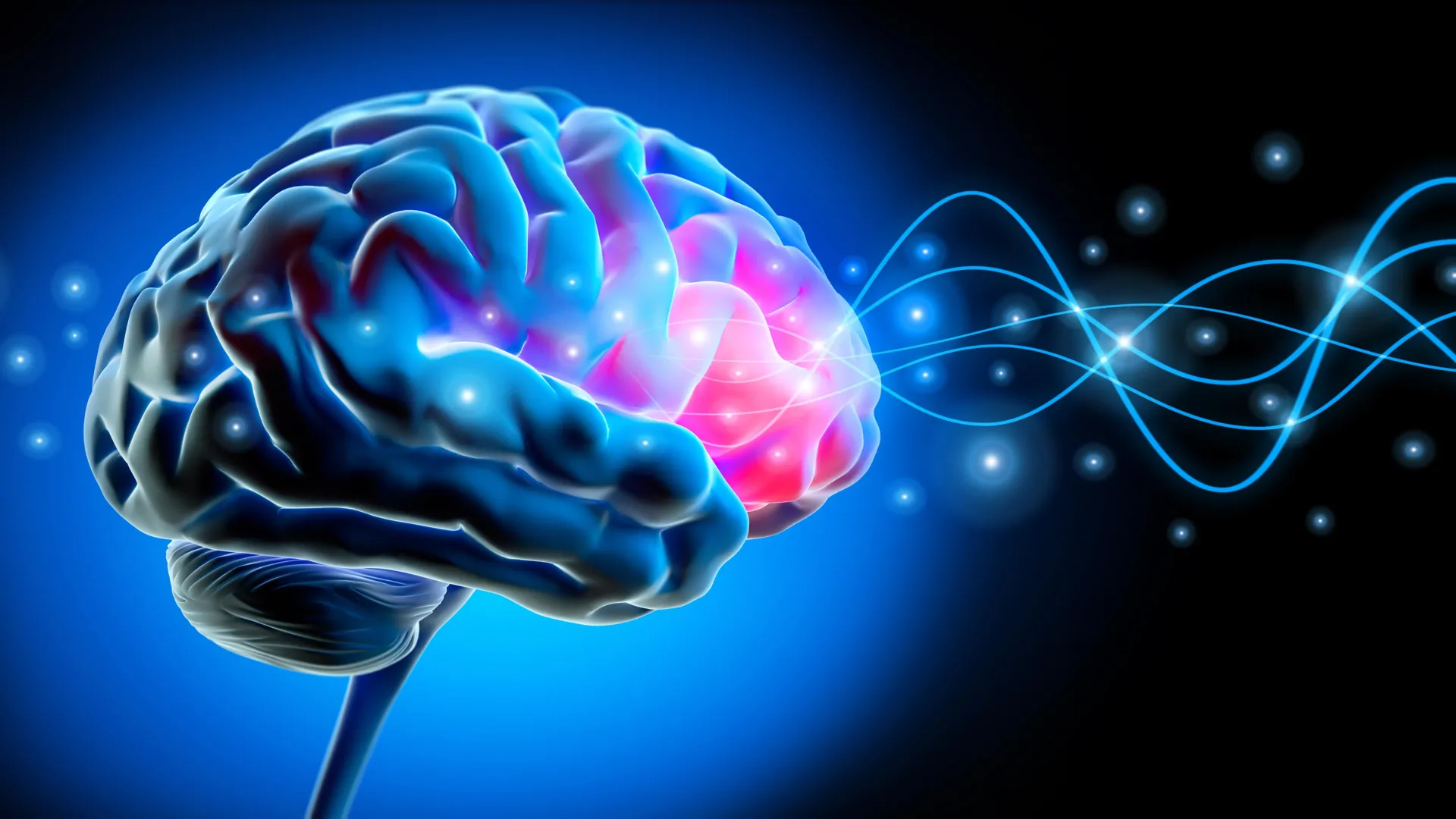
An international team of neuroscientists and clinicians, led by researchers at the University Hospitals of Cologne and Düsseldorf, working alongside colleagues from Harvard Medical School and Charité Berlin, says it has finally cracked that code. Publishing in the prestigious journal Brain, the team identified a very specific brain network — and an equally specific electrical "frequency," a fast rhythm oscillating between 20 and 35 times per second known as the high beta band — that appears to be the true communication channel behind deep brain stimulation's therapeutic effects.
Think of it like finally figuring out which exact radio frequency a broken antenna needs to be tuned to, after decades of only knowing that turning the dial roughly in the right direction sometimes fixed the static.
"For the first time, we were able to characterize the DBS response network in Parkinson's disease in terms of space and time, simultaneously," said Professor Dr. Andreas Horn of the University of Cologne, a specialist in computational neurology who led the study. "We show that Parkinson's disease can best be treated if we stimulate a very precisely defined network. This network operates synchronized within a specific frequency band, and offers an explanation for how well patients respond to deep brain stimulation."
A DISEASE THAT STEALS MOVEMENT, ONE TREMOR AT A TIME
Parkinson's disease affects an estimated 10 million people worldwide, gradually destroying the brain cells that produce dopamine, a chemical messenger crucial for smooth, controlled movement. As those cells die off, patients develop the disease's hallmark symptoms: tremors that shake a resting hand, muscles that lock up and refuse to relax, and a slowness of movement that can turn simple tasks like buttoning a shirt or walking across a room into exhausting ordeals.
Medication — usually a drug called levodopa that helps replenish dopamine — is the first line of defense, but its effectiveness often fades over years of use, and side effects can pile up. That's where deep brain stimulation comes in. Surgeons implant thin electrodes deep inside the brain, targeting a small structure called the subthalamic nucleus, and connect them to a pacemaker-like device implanted under the skin near the collarbone that delivers a continuous, gentle electrical current. For many patients, the results are dramatic and almost immediate — tremors vanish, stiffness eases, and quality of life improves substantially.
But DBS has always had an asterisk attached to it: it doesn't work equally well for everyone, and until now, doctors have had limited scientific insight into why. Adjusting the settings on a patient's implant — the voltage, the frequency, the exact contact point on the electrode — has often involved a fair amount of trial and error, with clinicians nudging dials during follow-up visits and watching to see what helps.

BRIDGING TWO WORLDS THAT NEVER TALKED TO EACH OTHER
The breakthrough came from combining two scientific approaches that had, until now, largely developed in isolation from one another. One camp of researchers has used brain imaging to map out where in the brain stimulation seems to produce the best results — essentially drawing a map of "sweet spots." A separate camp of researchers, working in electrophysiology, has instead focused on measuring the frequency and timing of the electrical signals moving through the brain, without necessarily tying those signals to a precise anatomical map.
"Previous research has provided only part of the picture," the study's authors explained. Brain imaging studies identified the locations where stimulation appeared to work most effectively, while electrophysiological research measured the frequencies of the electrical signals involved — but nobody had captured both the where and the when together, in the same patients, at the same time.
To close that gap, the Cologne-led team assembled a large multicenter study group: 50 patients, and because DBS electrodes are typically implanted on both sides of the brain, 100 brain hemispheres' worth of data in total. Using a combination of the patients' own implanted DBS electrodes and a non-invasive brain-scanning technology called magnetoencephalography, or MEG — which detects the tiny magnetic fields produced by electrical activity in the brain — researchers simultaneously recorded activity from deep inside the brain and from its outer surface.
By layering those recordings together, the team was able to map functional connections between deep brain structures and the frontal regions of the cerebral cortex — and crucially, to see not just where those connections were strongest, but at what frequency they were "talking" to each other.
THE 20-TO-35 HERTZ SWEET SPOT
What they found was striking in its precision. The critical network linking the subthalamic nucleus to frontal regions of the brain communicates predominantly through a relatively fast electrical rhythm, in the 20 to 35 Hz range — the "high beta band," in neuroscience terms. And the strength of that specific connection tracked closely with how much an individual patient's motor symptoms improved after their DBS electrodes were implanted. Patients whose brains showed a strong, well-synchronized high beta connection between those two regions tended to respond best to treatment; those with weaker connections in that same frequency band tended to see more modest benefits.
"These results suggest that a certain rhythm of the brain acts as a communication channel between the subthalamic nucleus and the cerebral cortex and may mediate the therapeutic effects of deep brain stimulation," said Dr. Bahne Bahners of Düsseldorf University Hospital, the study's first author. "By stimulating regions that are connected to the identified network, we will probably be able to adjust DBS settings more precisely in the future, especially in patients who have not yet benefited optimally from deep brain stimulation."
In plain terms: doctors may soon be able to look at a new patient's brain activity, identify whether their high beta network connection is strong or weak, and use that information to fine-tune exactly where and how to stimulate — rather than relying largely on trial and error during follow-up appointments.
EXPERT PERSPECTIVE
Outside researchers in the movement disorders field have long suspected that beta-band oscillations played some role in Parkinson's symptoms — elevated beta activity in the subthalamic nucleus has previously been linked to the disease's hallmark slowness and stiffness, and DBS is already known to suppress excess beta activity in some patients. What makes this new study different, specialists note, is the simultaneous space-and-time mapping: rather than inferring a connection between location and frequency indirectly, the Cologne-led team measured both directly, in the same large patient cohort, and tied the strength of that specific high-beta connection directly to real-world clinical outcomes.
That combination — a large sample size for this kind of invasive, multicenter neuroscience research, paired with a dual imaging-and-electrophysiology approach — is what gives the findings weight beyond a typical single-site pilot study. The research was largely funded by the Professor Klaus Thiemann Foundation, and the team says follow-up studies are already underway to test whether directly manipulating stimulation to better target this high beta network can causally improve outcomes, rather than simply correlating with them.
WHAT THIS MEANS FOR YOU
For the estimated one million Americans and roughly 10 million people worldwide living with Parkinson's disease, this discovery doesn't change treatment overnight — but it lays crucial groundwork for a more precise, personalized version of a therapy that's already transformed hundreds of thousands of lives. If you or a loved one currently has a DBS implant and feels like the settings have never quite been dialed in right, this research points toward a near-future where clinicians can use a patient's own brain rhythm signature to guide adjustments, rather than the somewhat trial-and-error tuning process common today. It's also a reminder of how much modern neuroscience still doesn't know about therapies that are, in some cases, already decades old and helping people every single day — and how closing those knowledge gaps can directly translate into better quality of life for patients managing a progressive, currently incurable disease.
For the broader field, the study also offers a template: combining anatomical mapping with frequency analysis could prove useful well beyond Parkinson's, potentially informing DBS research for other conditions the therapy is used to treat, including essential tremor, dystonia, and treatment-resistant depression.
CONCLUSION
Deep brain stimulation has quietly been one of modern medicine's great success stories for a disease that otherwise offers few options once medication stops working well. But "it works" has never been a fully satisfying answer for the scientists and clinicians who administer it, or for the patients whose results have varied. By finally identifying the precise brain network and the exact electrical rhythm — that 20-to-35 Hz high beta channel — driving DBS's benefits, the Cologne-led team has handed the field something it has lacked for nearly 30 years: a scientific explanation precise enough to actually act on. As Dr. Bahners and his colleagues continue their follow-up work testing whether direct manipulation of this network can causally improve symptoms, patients whose current DBS settings have never quite hit the mark may finally have a reason for real optimism — not just that the technology works, but that doctors are finally learning exactly how.
Published By | Tech Wiz