SCIENCE & TECH
At exactly 18:29 local time on Wednesday, the sky over the Icelandic coastal town of Búðardalur is going to go black. Streetlights will flick on. Birds will fall silent. Temperatures will drop several degrees in a matter of minutes. And for two minutes and eighteen seconds — the longest stretch of total darkness this eclipse will produce anywhere on Earth — hundreds of thousands of people who have booked flights, hotel rooms and campsites for over a year will stand in fields, on beaches and on cruise ship decks, craning their necks at a ring of fire hanging in the sky.
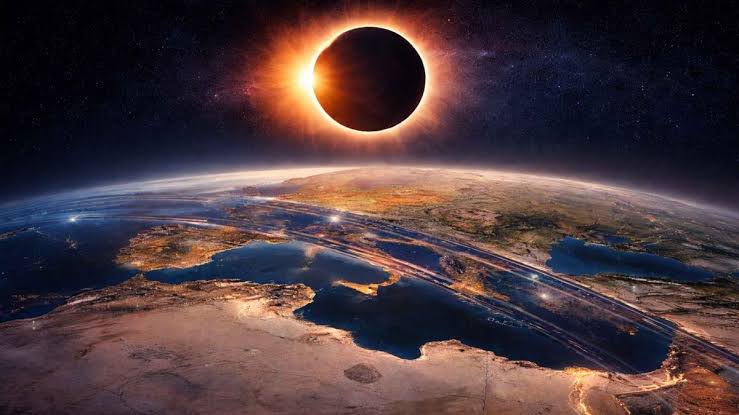
This is the total solar eclipse of August 12, 2026, and it is shaping up to be the single biggest astronomical tourism event Europe has seen in a generation. The path of totality — the narrow 294-kilometre-wide ribbon of shadow where the Moon completely covers the Sun's disc — begins near the North Pole, sweeps down across Greenland and Iceland, clips a small stretch of the North Atlantic, and finally slices through northern Spain and a corner of Portugal before the shadow lifts off the Earth entirely near Mallorca. It is the first time totality has touched continental Europe since August 11, 1999, when a similar path crossed France, Germany, Austria and Romania — an event still remembered by an entire generation of Europeans who were told to build pinhole projectors out of cereal boxes.
A Once-in-a-Generation Show
Unlike the 1999 eclipse, this one arrives in an era of budget airlines, Instagram, and a booming "eclipse chaser" tourism industry — and the numbers reflect it. Iceland's national eclipse festival sold out months in advance. Hotels along Spain's path of totality, running through cities and towns near A Coruña, Bilbao, Zaragoza and Valencia, have reported waiting lists stretching into the thousands. Cruise operators have chartered entire ships specifically to chase clear skies along the path, since a boat can reposition at the last minute if forecasters spot cloud cover — something a hotel guest in a landlocked town cannot do.
Notably, Europe's two biggest cities on the path's doorstep, Madrid and Barcelona, will both miss out on totality by a matter of kilometres. Travellers there will see a deep partial eclipse — the Sun reduced to a crescent sliver — but not the complete blackout. That geographic accident has turned smaller cities like Zaragoza and Bilbao, which do sit inside the path, into unlikely tourism hotspots for the week, with local governments scrambling to expand parking, shuttle buses and portable toilets for an influx that some regional tourism boards estimate could number in the hundreds of thousands.
Greenland, meanwhile, is bracing for a more logistically daunting version of the same problem: an island with only a handful of towns capable of hosting outside visitors is suddenly a bucket-list destination for chasers willing to pay premium prices for charter flights and expedition-ship berths. Iceland has the advantage of established tourism infrastructure from its Northern Lights industry, but even there, officials have warned that Route 1, the country's main ring road, could see its worst traffic jams in history on eclipse day as viewers converge on the narrow band of totality that clips the Snæfellsnes peninsula and the country's western fjords.

Weather Roulette: Spain vs. Iceland
For anyone chasing totality, the single biggest variable has nothing to do with astronomy and everything to do with meteorology — clouds. NASA's eclipse guidance has been blunt about the trade-off facing travellers this year: Iceland offers dramatic scenery and a longer stretch near the point of greatest eclipse, but the North Atlantic in August is notoriously fickle, and a bank of low cloud rolling in off the sea could blank out the sky at the worst possible moment. Spain, by contrast, offers a much higher statistical likelihood of clear, dry skies — northern Spain in mid-August typically sees bright, cloudless days — but comes with a different kind of discomfort: daytime highs are expected to run between 80 and 100 degrees Fahrenheit, meaning eclipse-watchers picnicking in open fields for hours beforehand will be doing so under a punishing summer sun.
That tension has split the eclipse-chasing community roughly down the middle, with weather-obsessed veterans monitoring long-range forecasts daily and swapping notes on cloud-cover models in online forums normally reserved for storm chasers. Several tour operators have built flexibility into their Icelandic itineraries specifically so clients can be bused or flown to a backup viewing site inland if coastal cloud looks likely on the morning of the 12th.
Scientists Are Chasing the Shadow Too
For all the tourist spectacle, a total solar eclipse remains one of the most valuable — and rarest — natural experiments available to solar physicists. When the Moon blocks the Sun's overwhelmingly bright disc, it briefly reveals the corona: the Sun's ghostly, superheated outer atmosphere, normally far too faint to observe against the glare of the Sun itself except with specialized coronagraph instruments. Total eclipses give scientists a few precious minutes to study the corona with the naked eye and with instruments that can't easily replicate the conditions any other way.
NASA is treating August 12 as a major science event in its own right. According to the agency's heliophysics division, science teams will be chasing the Moon's shadow using a high-altitude WB-57 research jet fitted with an instrument called SAMI — the SCIFLI Multispectral Airborne Imager — the same instrument that flew during the April 2024 total eclipse over North America. Flying above the clouds and much of the atmosphere lets the jet capture sharper imagery of the corona than ground-based telescopes can manage, and gives researchers a second dataset to compare against whatever ground stations in Iceland and Spain record. NASA-funded teams are also launching scientific balloons timed to the eclipse to study how the sudden, temporary darkening affects the upper atmosphere — a phenomenon that produces measurable ripples in atmospheric temperature, pressure and even wind patterns.
The European Space Agency has its own stake in the event. ESA researchers are using advanced computer simulations, built from the latest solar observations, to predict in advance what the corona should look like during the moments of totality — its shape, its streamers, the way its magnetic field lines will bend and loop. When the real eclipse happens, they'll compare their predictions against what cameras and telescopes actually capture on the ground in Spain and Iceland. Discrepancies between the model and reality help refine the physics used to forecast space weather: the solar wind, coronal mass ejections and geomagnetic storms that can disrupt satellites, GPS systems and power grids on Earth. Better short-term forecasting of those events gives satellite operators and even astronauts more lead time to protect hardware and people from a sudden blast of solar radiation.
"Every total eclipse is a rare chance to test our models against reality in a way no satellite instrument alone can replicate," is how solar physicists involved in similar past campaigns have described the appeal of eclipse research — the corona visible to the naked eye during totality still holds structural detail that current space-based coronagraphs struggle to capture with the same clarity. The National Science Foundation has likewise funded what it calls "once-in-a-generation" ground-based science tied to the event, positioning instrument arrays along the path in Spain to gather data that will feed directly into next-generation space weather forecasting models.

Don't Look Up (Without Protection)
For everyone else — the overwhelming majority of people on the eclipse's path who are there for the spectacle rather than the science — the golden rule of eclipse-watching hasn't changed since 1999, or for that matter since antiquity: never look directly at the Sun without certified eclipse glasses, except during the brief window of full totality itself, when the Sun's disc is completely covered and the corona is safe to view with the naked eye. Regular sunglasses, no matter how dark, do not block enough infrared and ultraviolet radiation to prevent permanent retinal damage. Opticians and astronomy retailers across Spain and Iceland have reported eclipse-glasses shortages in the run-up to the 12th, echoing shortages seen ahead of the 2024 American eclipse, and health officials in several regions have issued public reminders that solar-viewing glasses must meet the ISO 12312-2 international safety standard — a detail worth checking before buying from an unfamiliar street vendor near a viewing site.
For anyone hoping to photograph the event, astrophotography guides circulating this week stress the same point in a different form: a phone or camera lens pointed at the uneclipsed Sun needs a solar filter just as much as a human eye does, both to protect the sensor and, more importantly, to protect the photographer's eyes while framing the shot through an unfiltered viewfinder.
What This Means for You
You don't need to be in Spain or Iceland to notice something in the sky this week. A much broader partial eclipse will be visible across the rest of Europe, North Africa and parts of eastern North America, where the Sun will appear to have a bite taken out of it without ever fully disappearing. Even a modest partial eclipse is worth stepping outside for — with proper eye protection — since naked-eye partial solar eclipses of any size are still uncommon enough that most people will see only a handful in their lifetime.
If you're near the path of totality and still weighing whether to travel, the practical advice from tour operators this week boils down to three things: book accommodation now if you haven't, because options are thinning fast; build flexibility into your plans if you can, since a mobile viewing spot beats a fixed one when clouds are a coin flip; and buy certified eclipse glasses from a reputable retailer well before the day itself, because last-minute demand tends to attract counterfeit products that don't actually protect your eyes.
For skywatchers who miss this one, the wait for the next total eclipse touching a heavily populated part of the world won't be nearly as long as the 27-year gap since 1999 — but totality over major European cities specifically remains a rare enough event that anyone within striking distance this week is being urged, repeatedly, not to let the opportunity pass.
The Bottom Line
Wednesday's eclipse is, in the end, a reminder of how a purely mechanical coincidence — the Moon's disc happening to appear almost exactly the same size in our sky as the much larger, much more distant Sun — can still stop entire nations in their tracks. Airports along the flight paths into Reykjavik and northern Spanish cities are expecting some of their busiest days of the year. Scientists are flying jets into the stratosphere and launching balloons to catch three minutes of data they can't get any other way. And for a brief moment on Wednesday afternoon, a strip of Earth barely 300 kilometres wide will go as dark as twilight in the middle of the day — before the Sun reappears, the birds start singing again, and the whole spectacle is over almost as quickly as it began.
Published By | Tech Wiz