Written By | Torch Media Africa
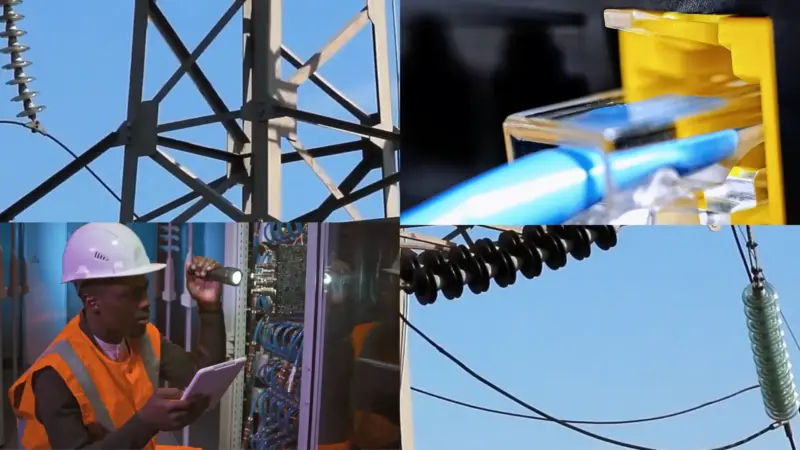
Abidjan has become the clear center of gravity for Ivorian tech entrepreneurship.
Côte d'Ivoire has spent the past several years quietly assembling the pieces of a digital economy that officials now want to formalize into a headline growth sector. The government's national digital plan, "Côte d'Ivoire Digitale 2030," sets an explicit target for the digital sector to contribute roughly 15 percent of GDP by 2030, up from a much smaller base today. That ambition sits inside a broader institutional shift: in 2025 the government began rolling out a follow-on digital roadmap built around seven strategic pillars and roughly 40 flagship projects extending through 2035, spanning connectivity, e-government, artificial intelligence, cybersecurity, digital skills and even postal-service modernization. The overarching objective, as officials have framed it, is to use digital transformation to strengthen inclusive economic growth in line with the country's National Development Plan and its longer-range Vision 2030.
A Paperless Government by 2030
The most tangible expression of this strategy is PARAE — the Electronic Administration Support Project — which aims to overhaul how citizens interact with the Ivorian state. PARAE is digitalizing public services, building interoperability between previously siloed government databases, strengthening the national Government Security Operations Center, and standing up an eco-friendly national data center intended to host government systems domestically rather than relying on external infrastructure. The African Development Bank, which has backed elements of this e-government push, has described the initiative as part of a broader effort to revolutionize public administration and service delivery. Officials have stated the explicit goal of a fully paperless public sector by 2030, alongside a biometric-based national digital identity system intended to reach universal coverage — a foundation policymakers view as prerequisite for deeper financial inclusion and more efficient tax collection.
Mobile Money: The Dominant Digital Rail
If e-government is the aspirational frontier, mobile money is the digital economy Ivorians already use every day. By 2026, mobile money accounted for an estimated 85 percent of digital transactions in the country, with more than 25 million active accounts registered across the four major operators — a striking figure in a country of roughly 30 million people, though it reflects individuals holding accounts with multiple providers as much as universal adult coverage. Orange Money remains the historical market leader by user base, built on Orange's long-standing telecom infrastructure advantage. But the more consequential story of the past several years has been Wave, the zero-fee mobile money platform backed by investors including Sequoia Heritage and Founders Fund, which has grown to more than 20 million monthly active users regionally and now holds an estimated market share above 20 percent in Côte d'Ivoire and rising. MTN Mobile Money and Moov Money round out the market, with Moov holding roughly 10 percent share. Cross-border transfers between Wave and Orange Money now operate over an open UEMOA regional corridor, though cross-border fees of 2 to 3 percent remain a friction point the regional bloc has yet to fully resolve.
Beyond the wallet layer, a payments infrastructure ecosystem has grown up around this base. CinetPay, an Abidjan-founded payment aggregation platform, has positioned itself as a unifying hub that lets merchants and platforms accept the full range of mobile money methods across Francophone Africa through a single integration — precisely the kind of interoperability infrastructure that Côte d'Ivoire's fragmented, multi-operator mobile money landscape has needed to support e-commerce growth.
Fiber, Submarine Cables and the Race for 5G
Côte d'Ivoire's connectivity infrastructure has undergone a rapid transformation. The country is now served by multiple high-capacity international submarine cables — WACS, MainOne and SAT-3, with 2Africa now landed as well. The 2Africa system alone delivers roughly 21 terabits per second per fiber pair across eight fiber pairs, for a total trunk capacity of up to 180 terabits per second, a scale of international bandwidth that positions Abidjan as one of the strongest-connected coastal gateways in West Africa. Domestically, a government-led program has been extending a nationwide fiber backbone toward a 7,000-kilometer target, with full activation targeted for completion around September 2025. The impact has been measurable: Abidjan reportedly climbed from eighth to third place in continental fiber-connectivity rankings within a single year, one of the fastest such moves recorded on the continent.
On mobile infrastructure, the telecom regulator ARTCI has been pushing operators toward a network-sharing framework intended to accelerate 5G rollout without requiring each operator to build fully duplicated infrastructure — a cost-sharing model other West African regulators are watching closely. MTN Côte d'Ivoire has also invested in physical data center capacity, commissioning a purpose-built facility in Abidjan from specialist provider Flexenclosure, part of a broader build-out of in-country hosting capacity that reduces Ivorian firms' dependence on data centers located outside the country.
Abidjan's Startup Ecosystem: Fintech-Led, Still Small but Accelerating
Abidjan has become the clear center of gravity for Ivorian tech entrepreneurship. French Tech Abidjan, founded in 2015 with only a handful of member companies, now counts 75 technology firms spanning fintech, cloud services, cybersecurity, data and artificial intelligence, and education technology. Fintech remains the dominant vertical by funding and attention, followed by agritech, e-commerce, logistics and edtech — a sector mix that mirrors the practical, infrastructure-and-payments-first character of the broader Ivorian digital economy rather than a consumer-app-first model.
Overall startup funding in Côte d'Ivoire remains modest by regional standards — annual totals are still estimated below $100 million — but multiple signals point to acceleration. Partech's 2025 Africa Tech VC report found that Côte d'Ivoire's debt financing activity jumped 307 percent year-over-year to $11 million across five deals, a 150 percent increase in deal count, suggesting investors are increasingly comfortable extending working-capital debt to Ivorian fintech and adjacent ventures rather than only pursuing early-stage equity. Domestic capital has also entered the picture: CDC-CI Capital, the investment arm of Côte d'Ivoire's public deposit and consignment fund, deployed CFA 720 million (about $1.2 million) into eight local startups in a single tranche in 2026, bringing its total disclosed startup investment over the preceding twelve months to at least CFA 2.6 billion. In June 2026, the government sent a delegation of 30 Ivorian companies — 20 startups and 10 SMEs specializing in digital technologies — to VivaTech in Paris, explicitly framing the trip as an effort to position Abidjan as a regional innovation hub capable of attracting international investors, alongside a stated long-term ambition to help a new generation of high-growth Ivorian technology companies emerge and scale.
What Stands in the Way
The gap between Côte d'Ivoire's connectivity and payments infrastructure, which is genuinely regional-leading, and its still-nascent venture funding ecosystem is the central tension in the country's digital transformation story. Mobile money interoperability, while improving, remains fragmented enough that the government's own strategy documents flag limited coordination between operators as an obstacle to full financial inclusion. And while the 2030 digital roadmap's 15-percent-of-GDP target and PARAE's paperless-government ambitions are well resourced on paper, execution over the next several years — particularly around biometric digital identity rollout and cross-agency data interoperability — will determine whether Côte d'Ivoire converts its infrastructure advantage into the kind of scaled fintech and digital-services sector that Kenya and Nigeria have already built on comparable payments rails.



