Scientists ran the numbers on one of the most popular geoengineering fixes going. The result: brighten the right clouds over the Pacific, and you could erase roughly 61% of the most powerful weather cycle on Earth. The catch? Nobody is sure what the planet does next.
Santa Barbara, Calif.
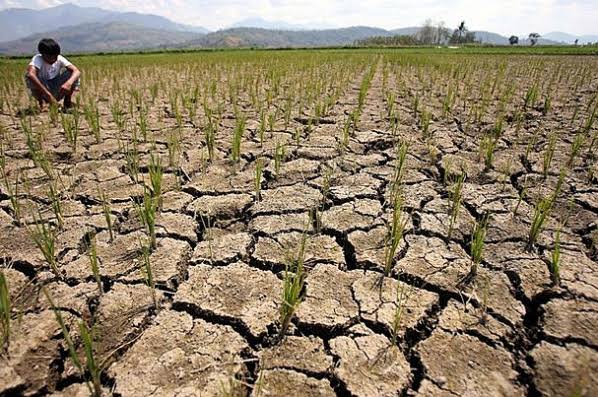
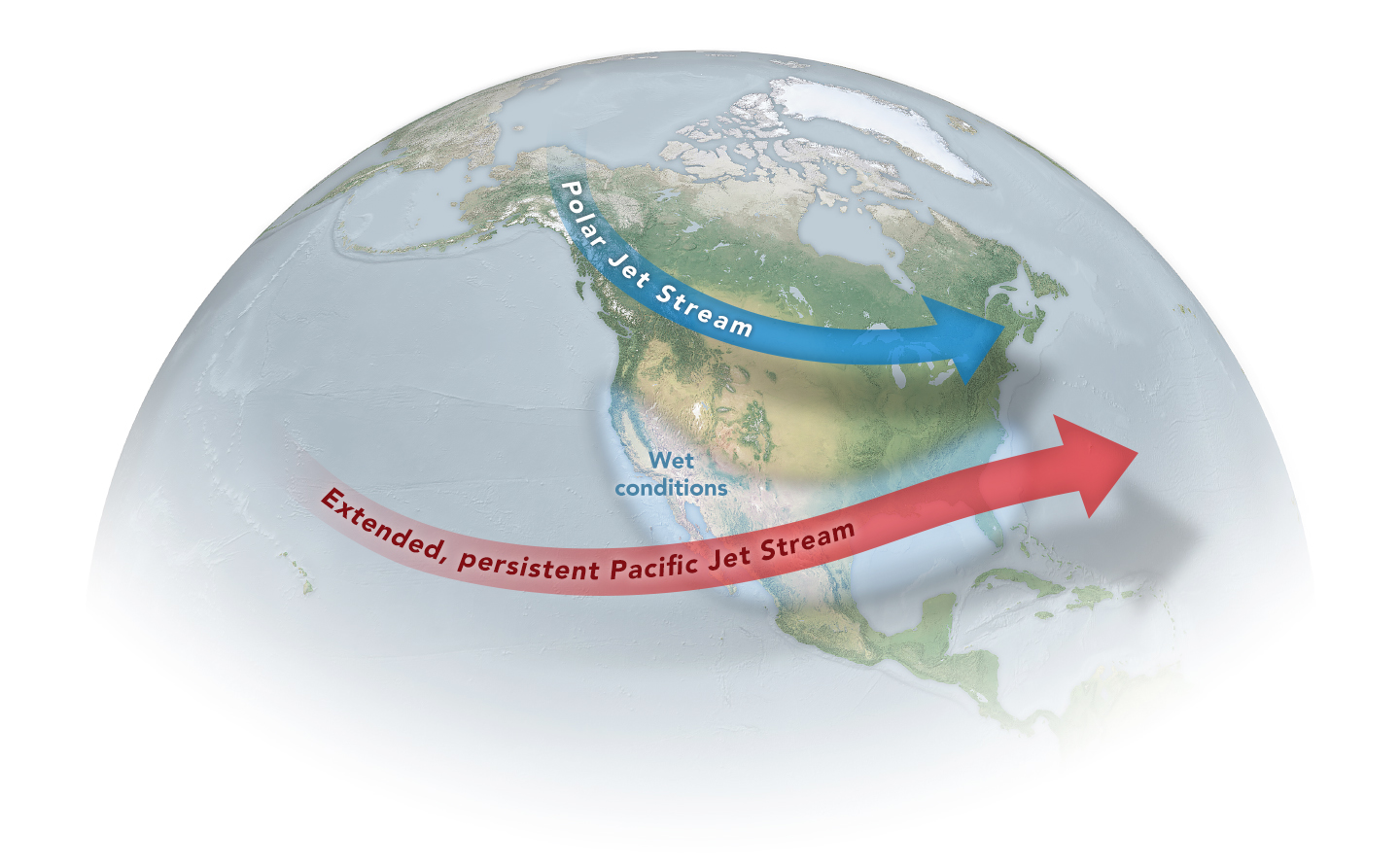
Every few years, a vast pulse of warm water sloshes across the tropical Pacific Ocean and, in doing so, quietly rewrites the weather for half the planet. It is called El Niño, and its swings — together with its cold-water twin, La Niña — decide whether California drowns or bakes, whether the monsoon reaches the farms of India and East Africa, whether hurricanes spin up in the Atlantic, and whether droughts scorch Australia and the Amazon. Billions of people who have never heard the term live and die by its moods. For as long as there have been humans, El Niño has been a force utterly beyond our control.
Now a team of scientists has published research suggesting that may no longer be strictly true — and the finding is as unsettling as it is astonishing. Using detailed climate-model simulations, researchers at the University of California, Santa Barbara have shown that a fashionable geoengineering technique, deployed in exactly the right patch of ocean, could weaken El Niño and La Niña by an extraordinary 61%. In other words, humanity may be stumbling toward a dial that could turn down the planet's most important weather cycle. The terrifying part is that we would be turning it without a manual.
The Fix That Sounds Almost Too Simple
The technique at the center of the study is called marine cloud brightening, or MCB, and on paper it is beguilingly simple. Low clouds over the ocean reflect sunlight back into space. The brighter and whiter those clouds, the more sunlight they bounce away, and the cooler the water beneath them stays. Marine cloud brightening proposes to make those clouds whiter on purpose — typically by spraying a fine mist of sea-salt particles into the air, giving water droplets more surfaces to condense on, which turns each cloud into a denser, more reflective blanket.
It is one of the most-discussed tools in the geoengineering toolkit precisely because it seems modest. Unlike stratospheric aerosol injection — the far more dramatic idea of firing sulfate particles high into the atmosphere to mimic a volcanic eruption and dim the entire sky — cloud brightening is local, uses only seawater, and can in theory be switched off simply by turning off the sprayers. Proponents pitch it as a comparatively gentle, reversible way to buy the planet time against runaway warming.
The UCSB team, including researchers advised by associate professor Samantha Stevenson, wanted to know what would happen if you actually did this at scale — not to the global average temperature, which is the usual focus, but to the intricate, interlocking machinery of the El Niño-Southern Oscillation, the technical name for the whole warm-and-cold Pacific cycle that climate scientists abbreviate as ENSO. What they found was that where you brighten the clouds matters enormously.
Sixty-One Percent
When the researchers concentrated marine cloud brightening in the subtropical eastern Pacific — a specific band of ocean off the coasts of the Americas — the effect on El Niño was dramatic. Their simulations showed the intervention slashing ENSO variability by roughly 61%. The great pendulum of the Pacific, in effect, was damped almost to a stop.
The mechanism is a beautiful, and slightly alarming, chain reaction. Brightening the clouds cools the surface of the subtropical eastern Pacific. That cooling triggers what physicists call a loss of moist static energy — essentially, the air over that patch of ocean loses some of the heat-and-moisture punch that fuels storms. The cooler, drier conditions encourage the atmosphere to sink rather than rise, which dries out the tropical Pacific further and cranks up the trade winds that blow east to west along the equator. Those strengthened trade winds throttle the delicate back-and-forth feedback between ocean and atmosphere that powers El Niño in the first place. Choke that feedback, and the whole oscillation loses its swing.
“Efforts to cool the planet could produce unexpected consequences if they are deployed without a full understanding of how Earth’s climate works.”
By contrast, when the team modeled stratospheric aerosol injection — the sky-dimming approach — they found it had little to no effect on the El Niño cycle at all. That asymmetry is one of the study's most important messages. Two different geoengineering schemes, both marketed as ways to cool the planet, do wildly different things to the weather machine underneath. One barely touches ENSO. The other could all but switch it off.
A Cure That Could Be Worse Than the Disease
Here is where the wonder curdles into worry. El Niño is not a disease to be cured. It is a load-bearing pillar of the global climate. Its rhythms deliver the rains that fill reservoirs and irrigate crops for hundreds of millions of people. Weakening it by 61% is not a cosmetic tweak; it is a structural change to how heat, moisture, and storms are distributed across the planet.
Damp down El Niño, and you might spare some regions from catastrophic flood-and-drought whiplash — while simultaneously robbing others of the seasonal rains they depend on to survive. A monsoon that fails because a well-meaning engineering project quieted the Pacific is no less devastating to the farmer beneath it than a monsoon that fails from warming. The study's authors are explicit that their results are a warning, not a recipe: efforts to cool the planet, they caution, could produce unexpected consequences if they are deployed without a full understanding of how Earth's climate actually works.
And that is the crux. This research does not tell us how to safely operate the El Niño dial. It tells us the dial exists, that it is more sensitive than anyone appreciated, and that a technique already being seriously discussed — and in small experiments, tested — could turn it hard in one direction as an accidental side effect of trying to do something else entirely.
The Expert View
Climate scientists have spent years warning that geoengineering's greatest danger is not that it fails, but that it works — unevenly. The appeal of marine cloud brightening has always been its apparent gentleness and reversibility. The UCSB findings complicate that comfortable picture by showing that a supposedly localized intervention can ripple outward to reorganize a planet-scale weather system. Cooling one carefully chosen stretch of ocean, it turns out, does not stay in that stretch of ocean.
The work lands amid a broader reckoning in the field. A separate line of geoengineering research has repeatedly stressed that the physical risks are compounded by a thornier problem: governance. Who decides where the sprayers go? If brightening clouds off the Americas eases drought in one country while triggering it in another, whose hand is on the dial — and who is liable when the harvest fails? These are not questions climate models can answer. They are questions of politics, ethics, and international law, and at the moment there is no framework remotely capable of handling them.

What This Means For You
You do not live near the subtropical eastern Pacific, and you may never see a cloud-brightening ship on the horizon. But you almost certainly live under El Niño's influence. If you have watched grocery prices spike after a bad harvest, braced for an unusually violent hurricane season, endured a punishing drought, or celebrated rains that arrived just in time, you have felt the cycle this study says we could inadvertently rewire. A 61% weakening of ENSO would reshuffle those risks for essentially everyone on Earth — some for the better, some for the worse, and in ways no one can yet predict with confidence.
The practical takeaway is not panic. No one is brightening clouds at planet-altering scale today, and this is a modeling study, not a report from a deployed system. The takeaway is caution. As global temperatures keep climbing and desperation for quick fixes grows, geoengineering will move from the fringes toward the mainstream of climate policy. Research like this is the guardrail — the work that maps the hidden trip-wires before anyone actually pulls the trigger. It is far better to discover the El Niño dial in a supercomputer than to find it by accident, after the sprayers are already running.
The Bottom Line
For the whole of human history, the great Pacific oscillation that governs the world's weather has been something we could only endure, forecast, and prepare for. This research suggests we may be approaching the moment when we could actually change it — not through some grand deliberate scheme, but as a side effect of a climate remedy already on the table. That is a staggering amount of power to acquire by accident. The scientists who found the dial are not urging us to turn it. They are urging us, with unmistakable clarity, to understand exactly what it does before we ever dare to touch it. The planet's thermostat, it turns out, has more switches than we knew — and we are only just learning where they are.
Sources: Earth’s Future (Xing et al., 2025EF006522, American Geophysical Union), ScienceDaily, UC Santa Barbara
Published By | Tech Wiz