A food-delivery giant's secret model quietly topped the world's coding charts for two months under the codename “Owl Alpha.” Then it revealed the twist that has Silicon Valley rattled: it was trained end-to-end on 50,000 home-grown Chinese chips, with zero Nvidia inside.
Beijing
For two months, developers around the world were quietly falling in love with a mysterious artificial-intelligence model. It had no marketing budget, no glossy launch event, no celebrity CEO tweeting hype. It appeared on OpenRouter — the giant marketplace where programmers rent access to AI models by the token — under a single cryptic codename: “Owl Alpha.” And it was winning. Quietly, relentlessly, it climbed the global charts, out-coding models from labs with tens of billions of dollars in funding and household names attached.
Then, on June 30, the mask came off. “Owl Alpha” was LongCat-2.0, a 1.6-trillion-parameter behemoth built not by OpenAI, not by Google, not by Anthropic — but by Meituan, the Chinese company most Westerners know, if they know it at all, as an app for ordering noodles and having them delivered to your door. And the model came with a detail that landed in Silicon Valley like a thunderclap: it had been trained from scratch, end to end, on more than 50,000 Chinese-made AI chips. Not one Nvidia graphics card was involved.
In the escalating technology cold war between Washington and Beijing, that single fact may prove more consequential than any benchmark score. For three years, the entire American strategy for staying ahead in artificial intelligence has rested on one assumption: that China cannot build frontier AI without Nvidia's chips, and that by choking off the supply, the United States can keep China perpetually a step or two behind. LongCat-2.0 is Meituan's way of saying, in plain language, that the assumption is wrong.
The Stealth Champion
What makes the LongCat story so unusual is that the model had already proven itself in the wild before anyone knew who built it. Running incognito as “Owl Alpha,” it spent roughly two months near the very top of OpenRouter's global usage charts — the closest thing the AI industry has to a real-world popularity contest, because developers vote with their wallets. According to Meituan, the model reached first place on the Hermes Agent workspace, second on Claude Code integrations, and third across so-called OpenClaw deployments measured by sheer call volume.
This was not a lab-benchmark darling that crumbles the moment real users touch it. It was a workhorse that thousands of professional programmers were already trusting with real code, in real projects, often without realizing they were routing their work through a Chinese model built on Chinese silicon. When Meituan finally lifted the veil, it was less a product launch than a reveal: the champion had been hiding in plain sight the whole time.
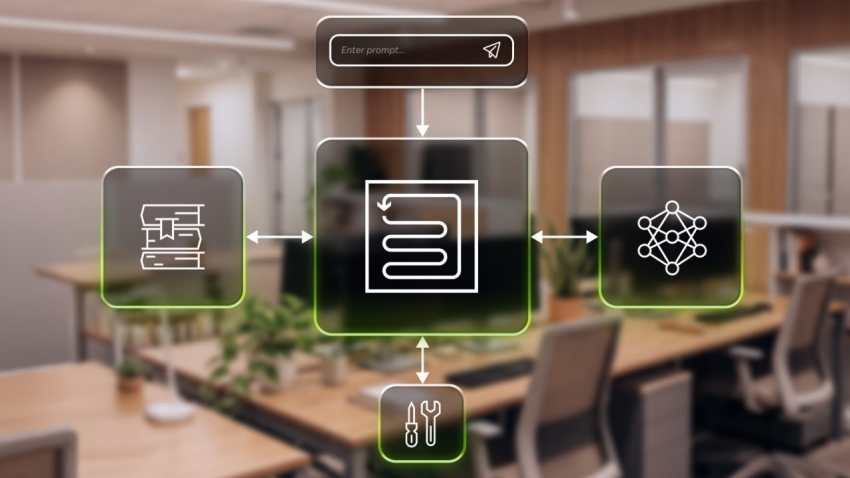
LongCat-2.0 is what engineers call an “agentic coding model” — built specifically to write, debug, and execute software with minimal human hand-holding, the kind of AI that can be pointed at a messy codebase and told to fix it. It is a Mixture-of-Experts design, meaning that although it contains a staggering 1.6 trillion parameters in total, it only activates roughly 48 billion of them for any given token (dynamically flexing between 33 and 56 billion). That trick keeps the model fast and comparatively cheap to run while retaining the vast knowledge of a much larger network. It ships with a native one-million-token context window, enough to swallow an entire large software project in a single gulp.
The Numbers That Made Silicon Valley Blink
Meituan's engineers came armed with benchmarks. On SWE-bench Pro — an industry-standard test that measures whether a model can actually resolve real-world software-engineering problems pulled from live code repositories — LongCat-2.0 scored 59.5. That edges past the 58.6 posted by OpenAI's GPT-5.5 and, by Meituan's accounting, tops Google's Gemini 3.1 Pro as well. On SWE-bench Multilingual it hit 77.3. On Terminal-Bench, which grades a model's ability to survive and recover from errors while operating inside a real command-line environment, it logged 70.8.
The model was trained across more than 35 trillion tokens of data. And in a detail that borders on the recursive, Meituan is far from alone in the industry now using AI to help build AI — a feedback loop that keeps compressing development timelines that once ran for years into a matter of months.
“LongCat-2.0 has demonstrated that we now have the capability to train large-scale models on domestic computing clusters.” — Meituan
There are honest caveats, and responsible readers should keep them front of mind. The headline benchmark numbers come from Meituan's own internal testing, not from a neutral third party, and the AI industry has a long and colorful history of companies grading their own homework generously. As of this writing the full model weights had not yet been released to the public, meaning outside researchers had not been able to independently reproduce the claims. And it is worth noting that even by Meituan's own figures, LongCat-2.0 falls short of Anthropic's top-tier Claude Opus models on some of the hardest coding tasks. This is a near-frontier model, not necessarily the outright best on Earth. But “near-frontier, built entirely without American chips” is precisely the combination that keeps national-security officials in Washington awake at night.
Why “No Nvidia” Changes Everything
To understand why this release matters far beyond the coding community, you have to understand the chip war. Since 2022, the U.S. government has rolled out wave after wave of export controls designed to keep Nvidia's most powerful AI accelerators — and the machines that make them — out of Chinese hands. The theory was elegant: modern frontier AI is fantastically compute-hungry, Nvidia utterly dominates the market for that compute, and so denying China the chips would deny China the models.
Chinese labs found workarounds. DeepSeek shocked the world in early 2026 with its V4 series, another 1.6-trillion-parameter model released under a permissive license. But even DeepSeek, according to industry analysts, leaned on domestic chips primarily for inference — the comparatively lighter task of running a finished model — while the brutally demanding work of pre-training still benefited from more capable hardware. LongCat-2.0 is being described as the first time a model of this scale has completed both full pre-training and inference end-to-end on non-Nvidia, non-Google-TPU hardware. The entire life cycle, cradle to grave, ran on a 50,000-card cluster of Chinese-made AI ASICs.
That is the line that gets crossed here. It is one thing to run someone else's engine on your own fuel. It is another to build the engine, the fuel, and the factory yourself. If Meituan's claims hold up under independent scrutiny, the argument that export controls can keep China from training frontier models has not been won or lost — but it has narrowed dramatically.
The Expert View
Analysts tracking the release framed it as a genuine inflection point rather than mere propaganda. The achievement's significance, as industry watchers put it, lies in its demonstration of Chinese independence from Nvidia — a proof of concept that competitive, large-scale models can now be produced entirely on home-grown silicon. That, they warned, could accelerate “sovereign AI” initiatives in other countries too, as governments from the Gulf to Southeast Asia watch a delivery company clear the so-called “GPT barrier” without touching a restricted American chip.
There is also a pointed irony that has not been lost on observers. The company that just planted this flag is not one of China's celebrated AI champions or a state-backed research institute. It is Meituan — a firm whose core business is dispatching scooters loaded with hot meals across Chinese cities. That a food-delivery platform could quietly assemble a 50,000-chip cluster and train a trillion-parameter-class model on it says something sobering about how deep China's AI capacity now runs, and how far it has spread beyond the usual suspects.
What This Means For You
If you have never heard of OpenRouter and have no intention of writing a line of code, you might reasonably wonder why any of this touches your life. Here is why. First, price. LongCat-2.0 has reportedly undercut GPT-5.5 and Claude Sonnet on cost, and because it is open source under the permissive MIT license, anyone can download it (once weights ship), run it, and build on it for free. A capable, cheap, open coding model puts downward pressure on the entire market — which over time means cheaper AI features baked into the apps, tools, and services you already use.
Second, geopolitics you can feel. The chip war is not an abstraction; it shapes everything from the price of electronics to the stability of global supply chains to the odds of a confrontation over Taiwan, where most of the world's advanced chips are actually manufactured. Every time China demonstrates it can route around American restrictions, the calculus in Washington shifts — and the pressure to either tighten the screws further or change strategy entirely grows. LongCat-2.0 is a data point that will be cited in policy debates for months.
Third, the balance of power in the technology that is quietly reorganizing the modern economy. For years the comforting story in the West was that the most advanced AI would remain a largely American product, gated by American hardware. A trillion-parameter model that was born, raised, and put to work entirely on Chinese chips is a direct challenge to that story.
The Bottom Line
LongCat-2.0 is not proof that China has won the AI race. Its most spectacular claims still await independent verification, its weights are not yet in outside hands, and the best American models remain ahead on the hardest tasks. But it is powerful evidence that the wall the United States has spent three years building around advanced AI has a door in it — and that Chinese engineers have found the handle. A model that spent two months winning a global popularity contest in disguise, then revealed it needed nothing from Silicon Valley to do it, is exactly the kind of quiet bombshell that redraws the map. The delivery-app company from Beijing did not just ship a coding model this week. It shipped a message: the era in which American chips were the price of admission to the AI frontier may be ending.
Sources: VentureBeat, South China Morning Post, The Decoder, Decrypt, Cryptopolitan, Crypto Briefing, AI Market Watch, Seoul Economic Daily, LongCat AI
Published By | Tech Wiz