Written By | Torch Media Africa
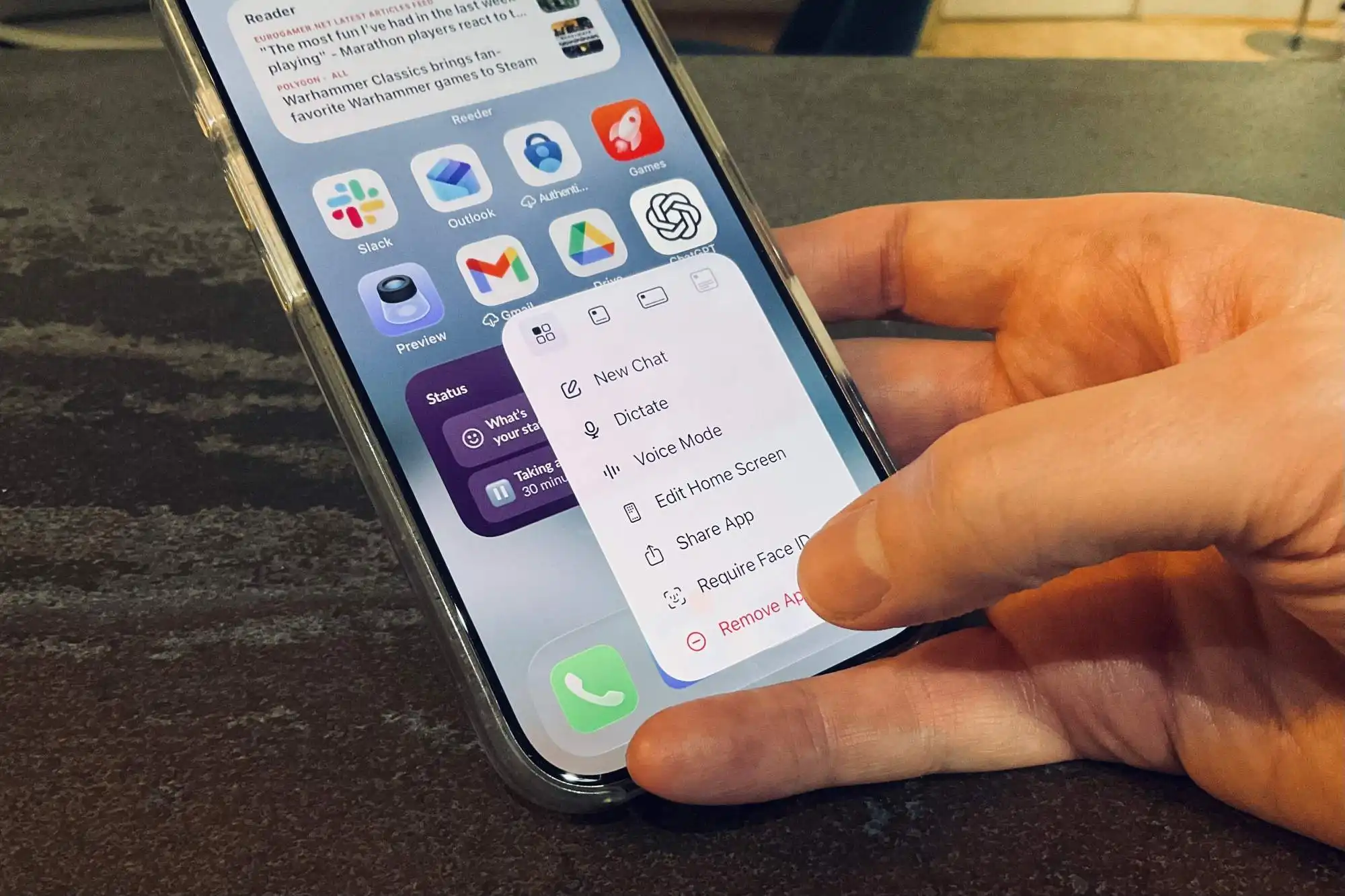
The European Commission just handed Google's AI rivals a master key to the world's biggest mobile operating system — and Google is warning it could blow the doors off user privacy in the process
SCIENCE & TECH
For nearly two decades, Android has run on an unwritten rule: Google's apps get the penthouse suite, and everyone else waits in the lobby. This week, European regulators tore up that rule for good.
In a landmark decision now rippling through the tech world, the European Commission has ordered Google to give rival AI assistants — chiefly OpenAI's ChatGPT and Anthropic's Claude — the exact same deep, system-level access to Android that the company has jealously reserved for its own Gemini assistant. Under the ruling, issued under the EU's Digital Markets Act (DMA), competing AI apps will be able to sit on the home button, listen for their own wake words, read what's on a user's screen, and take actions on a user's behalf — ordering food, drafting emails, booking flights — without ever having to leave the app the user is already in.
For thirty billion euros' worth of reasons, Google is not happy about it.
The Order: Eleven Keys to the Kingdom
The Commission's decision, handed down in mid-July and clarified in fresh guidance this month, spells out precisely eleven categories of Android functionality that Google must now open to competitors. Regulators have grouped them into four buckets that, together, describe what it actually takes for a third-party assistant to feel less like a downloaded app and more like a built-in feature of the phone.
The first is invocation — the ability for a user to summon a rival assistant through the same access points Google grants Gemini, whether that's a long-press of the home button, a swipe gesture, or a dedicated hardware key. The second is context — permission for an outside AI to see what the user is doing across other apps, sensors, and the screen itself, so it can actually understand a request instead of operating blind. The third is actions — the power to execute tasks on the user's behalf inside the operating system and other apps, the same way Gemini can already fire off a text message or add a calendar event without the user touching another screen. And the fourth is resources — guaranteed access to enough hardware and software horsepower to run those tasks smoothly, rather than being throttled in the background while Google's own assistant runs unrestricted.
Put together, the order effectively tells Google: whatever backstage passes you hand Gemini, you now have to hand ChatGPT and Claude too.
A parallel, equally consequential order requires Google to share anonymized search data — rankings, queries, clicks, and views — with rival search engines and AI companies on what regulators call "fair, reasonable, and non-discriminatory" terms, starting in January 2027. That means the raw material Google has used for years to make its own AI answers sharper could soon be flowing, in stripped-down form, straight to its competitors.
The Clock Is Ticking — Slowly
Google isn't being asked to flip a switch overnight. The bulk of the Android changes are due to arrive bundled into the next major version of the operating system, widely expected to be Android 18, with a hard deadline of August 1, 2027. A narrower slice of the order — the ability for a rival assistant to respond to its own wake word simultaneously alongside Gemini's "Hey Google" — gets an extra year of breathing room, with a deadline of August 1, 2028.
That staggered timeline matters. It gives Google's engineers more than a year to figure out how to open these doors without, in the company's telling, leaving them wide open to hackers, stalkers, and data brokers. It also gives OpenAI, Anthropic, and other challengers more than a year to build Android integrations sophisticated enough to actually take advantage of the access once it arrives — a nontrivial engineering lift in its own right.
Crucially, the order applies to the European Union only. Android phones sold in the United States, most of Asia, and the rest of the world are, for now, untouched. But regulatory watchers on both sides of the Atlantic have seen this movie before: EU privacy and competition rules — from cookie consent banners to USB-C charging ports — have a track record of becoming de facto global standards once manufacturers decide it's cheaper to build one version of a product than two.
Google Comes Out Swinging
Google did not take the ruling quietly. Kent Walker, President of Global Affairs at Google and parent company Alphabet, issued a sharply worded statement calling the decision a threat to the very people it claims to protect.
"Today's decisions risk undermining vital privacy and security guardrails for millions of Europeans," Walker said. "We have repeatedly offered solutions to safeguard users while satisfying the DMA's goals, but these rulings discount extensive evidence of user harm."
Google's argument, laid out in blog posts and regulatory filings over the past month, is that the security architecture keeping Android relatively safe from malware and data theft depends on tightly controlling which apps get to see what's on a user's screen or act on their behalf. Handing that level of access to dozens of third-party AI developers, the company warns, multiplies the attack surface for phishing, spyware, and outright account takeover. Google has signaled it intends to challenge the ruling, though European antitrust decisions are notoriously difficult to overturn on appeal — as Google itself learned the hard way in its long-running, and ultimately unsuccessful, fights over Android bundling and comparison shopping dating back to the 2010s.
The penalty for simply ignoring the order is not subtle: fines of up to 10% of Alphabet's global annual revenue, a figure that could top $30 billion given the company's current scale.
The Winners: OpenAI, Anthropic, and Whoever Can Build Fast Enough
If Google is the loser here, the winners are, on paper, obvious — but not equally positioned to cash in.
OpenAI's ChatGPT and Anthropic's Claude both stand to gain the most immediate benefit, given their existing user bases and engineering resources to build deep OS-level integrations. Meta and French AI lab Mistral are also expected to push for the same access, betting that a genuinely OS-integrated assistant is worth far more to users than one more icon buried in an app drawer. For any of them, the prize is enormous: the ability to become a phone's default, always-listening, screen-aware assistant — a position currently monopolized by Gemini on hundreds of millions of European Android devices.
But regulators and analysts caution that opening the door doesn't guarantee anyone walks through it well. Building an assistant that can safely read a user's screen, act inside third-party apps, and respond to a always-on wake word — without becoming its own privacy nightmare — is a serious technical undertaking. The DMA order removes Google's structural advantage; it doesn't remove the engineering challenge.
Why This Fight Sounds Familiar
This is not Brussels' first swing at Google's Android empire. The company has been in the regulators' crosshairs for the better part of a decade, dating back to a 2018 case that found Google had illegally used Android's dominance to squeeze out rival search engines and browsers — a case that cost the company over $4 billion in fines and forced changes to how Android phones are set up out of the box. The current AI-era clash is, in many ways, that same fight replayed with a new cast of characters: instead of default browsers and search bars, the battleground is now voice assistants and on-screen AI agents.
What's different this time is the stakes. Search was a mature, well-understood market when regulators intervened. AI assistants are still being defined in real time — which means this ruling isn't just correcting an old imbalance, it's actively shaping what the next decade of how people interact with their phones will look like.
What This Means for You
If you're an Android user in the European Union, the practical upshot won't be visible for a while — most of these changes aren't required until Android 18 ships in 2027. But when they do land, it will mean the assistant that greets you when you press and hold your home button, or the one that responds when you say a custom wake word, could genuinely be Claude or ChatGPT instead of Gemini, with the same depth of access to your apps, calendar, and messages that Google currently reserves for itself.
Outside the EU, the direct effect is currently zero — but history suggests that won't last. If Google decides it's cheaper to build one open Android architecture than maintain two separate versions of the OS for different regulatory regimes, the features unlocked in Europe could quietly show up on phones everywhere else too. It's also worth watching whether this becomes a template other regulators — including in the US, UK, and South Korea — decide to copy, the way GDPR-style privacy rules and USB-C mandates spread well beyond the borders of the EU that first imposed them.
There's also a genuine privacy trade-off buried in this story that's easy to wave away in the excitement over "more choice." An AI assistant with system-level access to your screen, your apps, and your context is, by definition, an AI assistant that can see almost everything you do on your phone. Multiplying the number of companies with that kind of access — even under strict EU rules — is not a purely upside proposition, and it's the crux of the argument Google is making, self-interested as it may be.
The Bottom Line
For years, "open Android" has mostly meant open in name only — a phone you could technically customize, running on a platform where Google's own apps always got first-class treatment. This ruling is Brussels' attempt to make that openness real, at least for the AI assistants that are quickly becoming the primary way people interact with their devices. Google is fighting it in public and likely in court. OpenAI and Anthropic are almost certainly already building for a 2027 launch date. And thanks to the DMA, Android's next chapter may be written not by Google's engineers alone, but by regulators in Brussels who have decided the operating system belongs, at least a little more, to everyone.



