Written By | Torch Media Africa
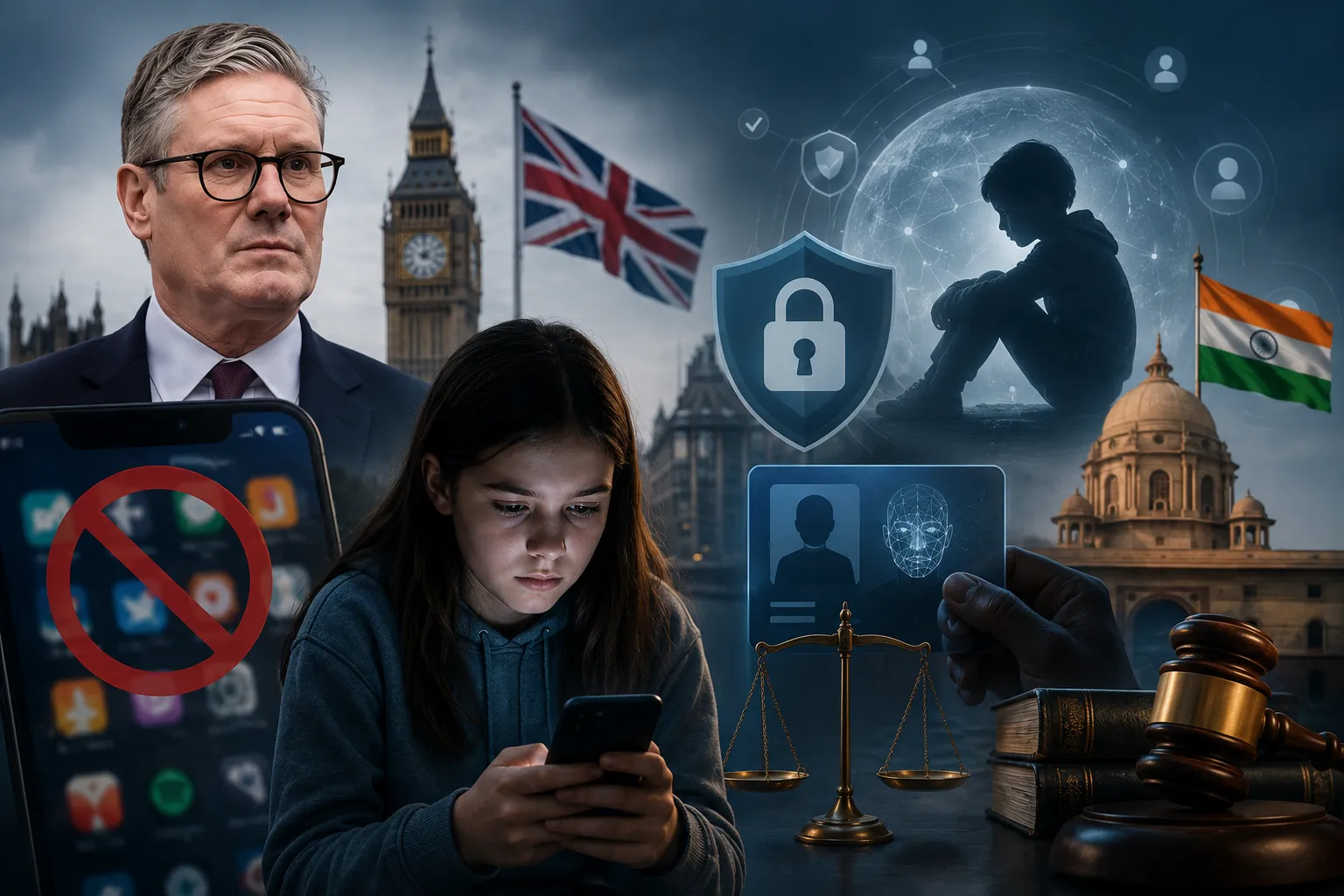
Under the new plan, under-16s will be legally barred from "high-risk" social media features on platforms including Snapchat, TikTok, YouTube, Instagram, Facebook, and X
LONDON
For years, the debate over kids and social media in Britain went in circles. This month, the circling stopped. Keir Starmer's government has now spelled out exactly how it intends to lock under-16s out of major platforms — and, in a twist few saw coming, how it plans to police AI chatbots designed to act like virtual boyfriends or girlfriends.
Under the new plan, under-16s will be legally barred from "high-risk" social media features on platforms including Snapchat, TikTok, YouTube, Instagram, Facebook, and X. Separately, AI "romantic companion" chatbots — services built to simulate sexual or romantic relationships — will be required to enforce a minimum user age of 18, with restrictions on "intimate functionalities" extended to AI chatbots more broadly for anyone under that age.
The Legal Machinery
The announcement sits on legislation that received Royal Assent in April: the Children's Wellbeing and Schools Act 2026 and the Crime and Policing Act 2026. The latter gives the Secretary of State power to amend the Online Safety Act to address harms from illegal AI-generated content — including bringing AI chatbot services within its scope for the first time.
The ban itself won't take effect until spring 2027, meaning Britain is now in the planning phase of a policy that will reshape how a generation of children accesses the internet.
What's Actually Banned
The plan targets specific high-risk features: disappearing messages, livestreaming, and any functionality deemed elevated risk for younger users. Messaging apps like WhatsApp and Signal are exempt.
For 16- and 17-year-olds, the approach shifts to defaults rather than bans — "harmful functionalities" will be switched off by default, with overnight curfews and mandatory breaks in infinite-scroll feeds under consideration.
The AI Chatbot Problem
This is the part that has caught policy watchers off guard. "Romantic companion" AI chatbots — apps designed to simulate girlfriends, boyfriends, or intimate roleplay — have exploded in popularity, often marketed to lonely or socially isolated users, including teenagers.
The government now requires these services to enforce an 18+ age limit. But the rules extend beyond apps explicitly marketed as romantic — even general-purpose AI assistants will need to restrict intimate roleplay for anyone under 18.
This puts AI chatbot developers — many of them small startups — in uncharted territory. Age verification has been a messy, unresolved problem for social media; now an entirely new category of software must solve it from scratch.
Why Now
Child psychologists have long linked heavy social media use to anxiety, depression, and sleep disruption among teens. But it's the newer phenomenon — AI companions engaging in increasingly intimate conversation with minors — that injected fresh urgency into Westminster's timeline. By using the Online Safety Act as the legal vehicle for chatbot regulation, the UK is treating AI chatbots as another flavor of online platform, subject to the same duties of care as TikTok or Instagram.
Industry Reaction
Tech companies have raised concerns about implementation and privacy — age verification without forcing every user to upload a passport remains a genuine challenge. Child safety organizations have broadly welcomed the move while pushing for faster action, arguing the spring 2027 timeline gives platforms too long to lobby for carve-outs.
What This Means
For UK parents, the changes won't hit overnight — the social media ban launches in spring 2027, and chatbot rules will follow their own timeline. But the direction is clear: platforms your kids use will soon need to verify ages, switch off features by default for teens, and lock under-16s out entirely.
For the rest of the world, watch closely. Regulatory frameworks like this ripple outward — the EU's GDPR became a global template, and Australia's under-16 social media ban is already being cited as proof such bans can work. Britain pairing social media restrictions with AI chatbot regulation may well become the next template others adopt. For developers in the AI companion space, the message is blunt: age assurance is no longer optional. It's becoming a legal requirement.
The Bigger Picture
For two decades, lawmakers struggled to regulate social media. The UK's willingness to legislate specific, granular features — disappearing messages, livestreaming, infinite scroll, intimate AI roleplay — suggests a regulatory maturity that took years to reach.
Whether it actually works — whether teenagers simply use VPNs or migrate to unregulated alternatives — remains the open question. But for the first time, a major government has treated children's exposure to algorithmic feeds and synthetic intimacy as the same problem, to be solved with the same tools.



