For decades, Botswana's economic identity has been almost synonymous with diamonds—the gems that, managed through the De Beers joint venture Debswana, financed one of Africa's most consistent records of prudent public spending. In 2026, a parallel identity is taking shape: Botswana as a deliberate, if still modest, builder of digital infrastructure for itself and the wider Southern African Development Community (SADC), a 16-nation bloc serving more than 370 million people. The shift is visible across four fronts—a new sovereign data center, an accelerating digital ID and e-government program, a fledgling but increasingly capitalized startup ecosystem, and the application of AI to the very mining sector the digital push is meant to diversify away from.

A Sovereign Data Center and a Digital-by-Default Government
In 2026, Botswana inaugurated the Digital Delta Data Centre, its first national facility built around data sovereignty rather than reliance on offshore hosting. The 1,000-square-metre facility holds Tier III certification and sits at the Botswana Innovation Hub (BIH) campus in Gaborone. Operated by BoFiNet but carrier-neutral, it's designed to attract regional cloud and hosting business rather than simply serving government workloads.
The data center sits underneath an increasingly ambitious e-government push. The flagship 1Gov-1Citizen platform has expanded from 33 to 52 live e-services, covering teacher registration, appointment scheduling, and business facilitation, with 179 more digital services in final testing. Central to the strategy is a National Digital Identification System, intended as a single, interoperable identity layer that public agencies and private companies can verify against. The legislative scaffolding includes the Digital Services Act, a new Digital Services Authority, and a Cybersecurity Bill.
The financial commitment is significant for a country of roughly 2.5 million people: the Ministry of Communications and Innovation received 966.37 million pula (about $66.8 million) in the FY2025/2026 budget specifically for digital transformation—a deliberate doubling-down rather than incremental spending.
A Tech Fund Built for the Region, Not Just the Country
Botswana's domestic market is, by officials' admission, too small to sustain a large independent startup ecosystem. In 2026, the government-linked Botswana Tech Fund launched with a target of $64 million in venture capital aimed explicitly at startups across the wider Southern Africa region, not just within Botswana's borders. A companion program will invest at least $135,000 each into 100 startups—an approach designed to seed a far broader base of early-stage companies. A related March 2026 initiative targets clean-energy startups, addressing the energy gap that constrains digital infrastructure across the SADC region.
Industry observers describe Botswana's pitch as one of institutional readiness rather than scale: 80% internet penetration, a strong angel-investor network, a fintech regulatory sandbox, and multiple accelerators operating in and around Gaborone. What Botswana lacks in transaction volume, it attempts to offset with regulatory clarity and government-backed capital—positioning Gaborone as a potential back-office and treasury hub for fintechs seeking SADC-wide reach without building in each of the 16 jurisdictions separately.

Mobile Money and the Telecom Backbone
Underpinning any digital-economy ambition is connectivity. As of 2026, 5G is rolling out commercially, while Orange Botswana has set a target of 85% 4G coverage nationally—explicitly aiming to reach isolated rural communities rather than only urban centers, a meaningful distinction in a country where roughly 80% of land is sparsely populated Kalahari terrain. On the payments side, the mobile money market includes four competing services: Smega (BTC), Orange Money, Myzaka (Mascom), and PosoMoney (Botswana Post). Orange Money has partnered with Cellulant to enable direct card-to-wallet transfers from eight local banks, while Smega supports cross-border transfers to Zimbabwe, Zambia, Ghana, Kenya, Malawi, and Mozambique—positioning Botswana-issued mobile wallets as a node in regional remittance flows.
Artificial Intelligence Comes to the Diamond Fields
Perhaps the most striking illustration of Botswana's technology pivot is happening inside the industry the pivot is meant to diversify away from: diamond and mineral exploration. In 2026, AIM-listed Botswana Diamonds—since rebranded to Botswana Minerals—ran an AI-driven exploration campaign using 'Xplore' mineral-prospectivity technology, developed jointly by Planetary AI and International Geoscience Services. The model processed roughly 380 gigabytes of data across 260,000 files covering 95,000 square kilometres of geological terrain—output that would have taken traditional survey teams vastly longer to assess manually. The payoff arrived quickly: the company secured four new prospecting licences covering 2,644 square kilometres in regions the AI model flagged as high-probability targets.
More broadly, Botswana's diamond sector has layered in digital tools beyond exploration—remote sensing, water-recycling management, digital mine-management platforms, and blockchain-based traceability efforts certifying stones as conflict-free and environmentally accounted for, responding to shifting consumer and regulatory expectations in major markets.
A Small Market Betting on Becoming a Regional Hub
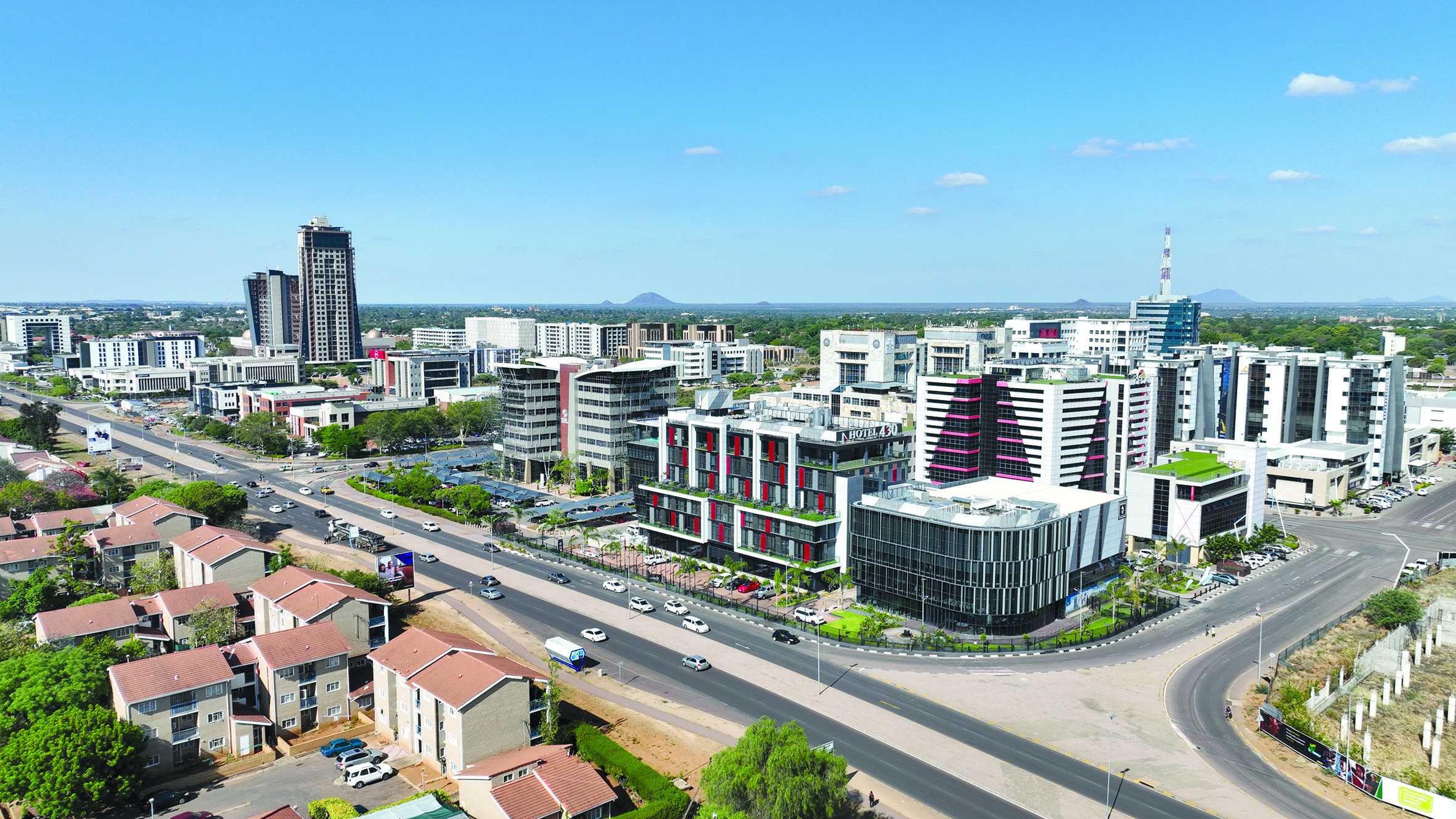
None of these initiatives individually rival the scale of fintech investment in Nigeria or Kenya, or the hyperscale data-center commitments in South Africa. What distinguishes Botswana's approach in 2026 is its explicit regional framing: a tech fund designed to invest beyond its own borders, a carrier-neutral data center built to serve SADC-wide demand, mobile wallets wired for cross-border remittances, and a government betting that political stability, fiscal discipline, and 80% internet penetration in a population of just 2.5 million can function as a financial and digital services hub for a bloc of 370 million people—much as it has long functioned as the diamond industry's most stable cutting and trading jurisdiction on the continent. Whether that bet pays off will depend less on any single initiative than on whether Gaborone can convert institutional credibility into the transaction volumes that have so far concentrated in Africa's larger digital economies.
Published By | Tech Wiz