SCIENCE & TECH
For decades, one question has quietly haunted virologists, and it is not a comfortable one.
Bats carry an extraordinary catalogue of viruses — organisms that, when they cross into humans or livestock, can cause catastrophic disease. Yet the bats themselves fly around apparently fine. No fever. No collapse. No mass die-offs. They live with passengers that would flatten almost anything else with a spine, and they do it while living far longer than a mammal of their size has any right to.
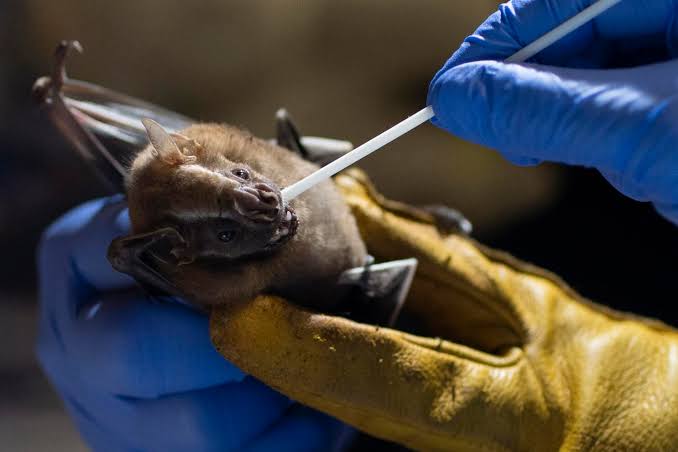
Now a team at Tulane University, working with collaborators at Stanford University and the Centers for Disease Control and Prevention, has found something inside bat DNA that nobody expected to find in a mammal at all.
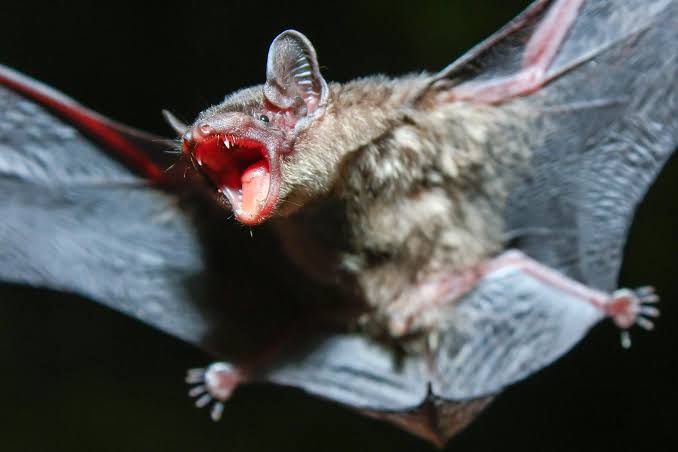
Vesper bats — the largest family of bats on the planet, with more than 500 species living on every continent except Antarctica — appear to carry two complete, separate, fully functional genetic systems for building antibodies. Not one, as in humans. Not one, as in mice, dogs, whales, elephants and every other mammal ever examined. Two.
“We've never seen anything like this in a mammal before,” said Hannah Frank, associate professor of ecology and evolutionary biology at Tulane University's School of Science and Engineering and corresponding author of the study. “This completely changes our understanding of how mammalian immune systems can be organized and raises exciting new questions about why bats have been so evolutionarily successful and how they respond to viruses.”
The findings were published in the journal Science Advances and pushed into wide circulation this week, immediately setting off a scramble among immunologists who now have to reckon with a textbook diagram that has just sprouted an extra limb.
“NO, HANNAH. THIS DOESN'T HAPPEN.”
The best part of this story is that the researchers initially assumed they had broken something.
Frank's team was examining the genomes of 26 bat species, looking at the region of DNA that builds antibody heavy chains. When two of them showed up on separate chromosomes, the obvious explanation was error — a glitch in how the genome had been stitched together after sequencing, the sort of assembly artefact that quietly wastes months of laboratory time every year.
Frank's collaborator and former graduate student, Dr. Taylor Pursell, was not convinced it was a mistake.
“She said, ‘No, Hannah; this is really weird — like, this doesn't happen,'” Frank recalled in an interview about the work. “And I said, ‘Oh my God; you're right. This is not just an experimental annoyance. This is actually super cool.'”
It was not an artefact. The team went on to demonstrate that both sets of genes were real, both were functional, and both were actively being used by living immune cells to manufacture antibodies. The duplication was confirmed in the big brown bat, Eptesicus fuscus, and in ten other species within the vesper bat family — a spread across the family tree that suggests this is not a one-off quirk but a deep, inherited feature.
“It was really surprising,” Frank said. “The only other vertebrates we see something similar in are fish.”
WHAT AN ANTIBODY ACTUALLY IS — AND WHY TWO SETS IS INSANE
To understand why immunologists are excited, you need about ninety seconds of biology.
Antibodies are Y-shaped proteins. Each one is built from two heavy chains and two light chains locked together. The tips of the Y are the business end — the part that physically grips a virus, a bacterium or a toxin. The stem determines what happens next: whether the invader gets blocked from entering your cells, or flagged for destruction by other parts of the immune system.
In humans and in every other mammal previously studied, the genes that build those heavy chains sit in a single region of the genome called a locus. Your immune system generates its staggering variety of antibodies — enough to recognise essentially any threat you will ever meet — by shuffling and recombining segments within that one locus, then refining the winners through a process called somatic hypermutation, in which antibody-producing cells make tiny genetic tweaks after meeting a pathogen and get better at gripping it.
One locus. That is the rule. It has been the rule in every mammal anyone has checked.
Vesper bats have two, sitting on different chromosomes.
TWO ARMOURIES, TWO COMPLETELY DIFFERENT STRATEGIES
Here is where it stops being a curiosity and starts being potentially important.
The two loci are not redundant copies. They do different jobs.
One of them holds a larger and more varied collection of gene segments — a broad, ready-made repertoire of antibodies capable of loosely recognising a wide range of targets straight out of the box. Think of it as a generalist arsenal: nothing perfectly fitted, but something roughly right for almost anything that walks through the door.
The other is smaller and more compact, and relies far more heavily on somatic hypermutation. It starts with fewer building blocks but refines them aggressively, mutating and improving until an antibody fits one specific target with high precision. That is the specialist workshop.
Strikingly, the researchers found that bat immune cells do not use the two systems equally. There is a measurable bias toward the smaller, more compact locus, and the two loci show different patterns of selection in antigen-experienced B cells and plasma cells — the cells that have actually met a pathogen and are producing antibodies in earnest. The bats are not just carrying two systems. They appear to be deploying them differently.
Frank reaches for an unexpected analogy to explain the layered nature of immune defence: the 1998 Disney film Mulan. When invaders appear at the Great Wall, guards light signal fires — an alarm raised before anyone knows exactly what the threat is. That is the innate immune system, the body's fast, broad, non-specific first response. Mulan herself is the adaptive immune system: precisely targeted, devastatingly effective against one particular enemy, but slower to arrive.
Every mammal has both layers. What vesper bats appear to have is a second, structurally distinct set of tools within that adaptive layer — a second cache of what Frank calls “trainable, customizable cells.”
FISH DO IT. MAMMALS DON'T. UNTIL NOW.
The evolutionary angle here is genuinely odd.
Duplicated antibody gene loci are not unheard of in vertebrates — they turn up, in a more limited form, in teleost fish, the enormous group that includes most of the fish anyone has ever eaten. But teleost fish and bats last shared a common ancestor hundreds of millions of years ago. Whatever is going on in vesper bats did not come down a shared lineage from fish. It looks like an independent invention.
That matters because it hints at convergent pressure: two wildly different branches of the vertebrate tree arriving at a similar architectural solution, presumably because something in their circumstances rewarded it.
For bats, the candidate pressures are not hard to guess. They are the only mammals capable of powered flight, which imposes metabolic and body-temperature extremes that look, biochemically, a lot like a permanent low-grade fever. They roost in enormous, dense colonies — ideal conditions for pathogens to circulate. They live extraordinarily long lives for their body size. And vesper bats in particular have been evolutionarily spectacular: more than 500 species, essentially everywhere humans live.
Researchers studying bat immunity have historically concentrated on the innate immune system — the fast, broad first line of defence. Frank argues the new findings show that the adaptive side, the antibody-producing machinery, has been badly under-examined.
EXPERT PERSPECTIVE: WHAT OUTSIDE SCIENTISTS SAY
Independent researchers not involved in the work have reacted with a mixture of enthusiasm and appropriate caution.
“The study provides a novel view into the evolution and diversity of adaptive immunity in bats,” said Daniel Becker, an associate professor of biology at the University of Oklahoma. “The duplication seen in vesper bats is really intriguing and suggests that we need more immunological study of this globally distributed family of bats.”
Michael Letko, a molecular virologist at Washington State University, focused on what the extra hardware might buy the animal. “This extra set of genes gives the animals more diversity in their antibodies,” he said. “This study suggests bats have more diversity to start with, which may allow for faster and more effective responses from the start of an infection.”
Letko also praised the rigour of the genetic work underpinning the claim, noting that it is difficult to argue with conclusions built directly on the genetic organisation of the animals themselves.
But — and this is the honest caveat that separates science from a press release — nobody has yet watched the two systems in action during a real infection. That is the next experiment, and it has not been done.
“We think this discovery is an important piece of the puzzle,” Frank said. “It doesn't fully explain why bats are such effective viral reservoirs, but it reveals a level of immune variety we didn't know existed and gives us an entirely new direction to explore.”
THE CANCER QUESTION NOBODY EXPECTED
There is a second thread here that has received less attention and may end up mattering more.
Bats have a notably low incidence of tumours and cancer relative to other mammals of similar size and lifespan. That has been observed for years without a satisfying explanation.
Letko has raised the obvious question: could the same unusual immune architecture be involved? Immune surveillance — the constant patrol that identifies and destroys cells that have started behaving badly — is one of the body's primary defences against cancer. An animal with an unusually rich and flexible antibody repertoire might, in principle, be running that patrol more effectively.
That remains speculation. But it is the kind of speculation that gets grant applications written, because if bats have stumbled onto a better way of organising immune surveillance, the eventual beneficiaries are unlikely to be bats.
WHAT THIS MEANS FOR YOU
Let us be clear about what this discovery does not do. It does not produce a drug. It does not produce a vaccine. Nobody is going to be prescribed anything derived from bat antibody loci this decade.
What it does is open three doors.
The first is spillover prediction. Understanding how bats tolerate viruses could help researchers work out which bat species pose the highest risk of passing pathogens to humans, and under what conditions. Becker has pointed to exactly this: better immunological understanding means better targeting of surveillance and mitigation efforts, rather than treating an enormous, globally distributed family of animals as one undifferentiated threat.
The second is antibody engineering. Modern medicine leans heavily on monoclonal antibodies — laboratory-designed proteins used against cancers, autoimmune disease and infections including COVID-19. Every one of those is designed within the constraints of the single-locus mammalian system we happen to have. Discovering that a mammal can run two structurally distinct antibody systems in parallel, each optimised for a different job, is a new design template. It suggests possibilities that were not previously on the table.
The third is the humbling one. Almost everything we know about immunology comes from studying two species: humans and laboratory mice.
“We've learned an enormous amount about immunity by studying humans and laboratory mice,” Frank said. “But the natural world is far more varied than that. Every time we study a species that has evolved differently, we have the opportunity to discover something entirely new.”
That is a quiet indictment of a research culture built for convenience. Mice are cheap, fast-breeding and easy to house. Bats are none of those things. And it took looking at bats to find an immune architecture nobody knew mammals were capable of.
DON'T VILLAINISE THE BAT
One more thing, and Frank is insistent about it.
Bats have spent the last several years cast as public enemies in the popular imagination — the reservoir, the source, the thing to be feared and, in too many places, exterminated. That framing is both scientifically illiterate and ecologically dangerous.
Bats pollinate. They disperse seeds. They consume agricultural pests in quantities that translate directly into billions of dollars of avoided crop damage and pesticide use every year. Culling bat colonies in response to disease fear has repeatedly backfired, sometimes by dispersing stressed animals and increasing the very contact that transmission requires.
“Let's learn from the guys who've been evolving with them for millions and millions of years,” Frank said of bats and the viruses they carry. “But let's try not to villainise them for surviving for millions and millions of years.”
THE BOTTOM LINE
A team of researchers looked at 26 bat genomes, found something that looked like a computational error, and refused to dismiss it. What they had actually found was an immune arrangement never previously documented in any mammal on Earth: two complete, functional, genetically distinct antibody heavy chain systems, sitting on separate chromosomes, used differently by the same animal.
It does not solve the bat mystery. Frank is careful to say so repeatedly. But it substantially rewrites what biologists thought was possible in a mammalian immune system, and it hands researchers a new place to look after decades of searching mostly in the innate immune system.
More than 500 species have been quietly carrying this around, on every continent except Antarctica, for millions of years — in barns, in caves, in the roof spaces of ordinary houses, flying over ordinary streets every summer evening.
We just never thought to check.
— Reporting based on the study “Immunoglobulin heavy chain locus duplication in bats,” published in Science Advances (2026), materials released by Tulane University, and interviews published by Live Science and ScienceDaily.
Published By | Tech Wiz