Written By | Torch Media Africa
A trillion-dollar seesaw match, a brutal chip-stock bloodbath, and a changing of the guard at Apple's helm collided this week in one of the wildest stretches Wall Street has seen all year.
CUPERTINO, Calif.
For a few hours on Friday, Apple was the most valuable company on Earth. Then it wasn't. Then, depending on which trading session you check, it might have been again. In one of the strangest ownership battles in stock-market history, Apple and Nvidia spent the week trading the crown for "world's most valuable public company" back and forth like a hot potato, with hundreds of billions of dollars in market value shifting between the two giants in a matter of hours. By Friday's close, Nvidia had narrowly reclaimed the top spot at roughly $4.92 trillion, edging out Apple's $4.89 trillion — but only after Apple had spent Thursday and much of Friday sitting on top, at a market capitalization of about $4.88 trillion versus Nvidia's $4.86 trillion.
It is the kind of razor-thin, back-and-forth finish that Wall Street traders will be talking about for months, and it is happening for a reason that goes well beyond two companies' quarterly numbers: investors are, for the first time in years, seriously questioning how much longer the artificial intelligence spending boom can run at its current pace — and Apple, long mocked as the tech giant that showed up late to the AI party, is suddenly looking like the smartest kid in the room.
The Trillion-Dollar Ping-Pong Match
Apple last held the title of world's most valuable company back in April 2025, before ceding it to Nvidia during the chipmaker's furious run-up on the back of insatiable demand for AI processors. Reclaiming the crown, even briefly, marks a striking reversal of fortune. Apple's stock climbed as Nvidia's slipped roughly 3.5% amid the broader wave of doubt sweeping through AI-linked stocks, and for a fleeting window it was enough to push Apple back into first place for the first time in more than a year.
The swing was not really about anything Apple did. Apple did not announce a blockbuster product, a surprise earnings beat, or a dazzling new AI feature that sent investors racing to buy the stock. Instead, the flip happened almost entirely because Nvidia — and the broader universe of AI infrastructure stocks — took a beating, while Apple simply stood still and let relative gravity do the work.
How We Got Here: AI Doubt Hits Silicon Valley
The immediate trigger was a sudden, sharp reassessment of the AI infrastructure spending story that has powered the stock market for the past three years. AI chip stocks lost more than $1 trillion in combined market value in July 2026 alone, as investors grappled with two separate but related anxieties: first, plain old valuation fatigue after years of eye-watering spending commitments from the hyperscalers building out AI data centers; and second, a more structural fear that the competitive landscape for AI chips has become suddenly, meaningfully more crowded.
That second fear has a name, and it is custom silicon. On July 8, 2026, Cerebras — the startup famous for building some of the largest computer chips ever manufactured — announced a partnership with OpenAI to co-develop a chip specifically engineered to challenge the traditional GPU architecture that has made Nvidia the most important company in the AI industry. Amazon, meanwhile, has continued ramping up shipments of its own custom AI accelerator chips, joining a growing list of deep-pocketed customers that would rather spend money designing their own silicon than keep writing enormous checks to Nvidia for off-the-shelf GPUs.
The Philadelphia Semiconductor Index, a broad barometer of chip-sector health, dropped roughly 10% as the news rippled through the market. The damage was not confined to Nvidia. Memory-chip maker Micron reportedly lost approximately $38 billion in market capitalization in a single trading session. Intel, already deep into a difficult restructuring effort, fell 21% over the course of several days. Even Samsung, which reported a staggering roughly 1,800% increase in profit for the second quarter of 2026 — numbers that in almost any other week would have triggered a celebratory rally — saw its stock decline anyway, dragged down by the broader panic gripping the sector.
The Chip Stock Bloodbath, In Context
It is worth pausing on just how unusual this moment is. For the better part of three years, the prevailing Wall Street narrative has been simple: AI is the future, Nvidia's chips are the picks and shovels of that future, and demand for those chips is effectively bottomless. That narrative helped make Nvidia, for a long stretch, the most valuable company on the planet, and it turned the company's quarterly earnings calls into some of the most closely watched events in all of business.
What changed is not that AI demand evaporated — data center construction and AI infrastructure spending remain, by any historical standard, enormous. What changed is that investors started asking a more uncomfortable question: what happens to Nvidia's pricing power and margins once its biggest customers — the very hyperscalers and AI labs writing it the biggest checks — successfully build viable alternatives to its chips? OpenAI partnering with Cerebras and Amazon expanding its in-house chip program are both, in effect, answers to that question, and Wall Street did not like the answer it heard.
Apple's "Boring" Bet Suddenly Looks Genius
Which brings the story back to Apple, a company that has spent the last two years being gently mocked by parts of the investment community for its comparatively cautious approach to the AI boom. While Microsoft, Google, Amazon and Meta collectively committed hundreds of billions of dollars to AI data centers and infrastructure, Apple's total capital expenditure for fiscal 2025 came in at a comparatively modest $12.7 billion — a figure that critics pointed to as evidence Apple was falling behind in the race that mattered most.
That framing is being rewritten in real time. "Apple was seen as a laggard in the AI race because it wasn't spending to develop models, but now sentiment has changed," said Toni Meadows, head of investment at BRI Wealth Management. "Apple is less exposed to capex intensity and better positioned to monetize AI via services, ecosystem lock-in, and hardware upgrades." In other words: while its megacap peers spent furiously to build the infrastructure underneath the AI boom, Apple mostly waited to sell AI features on top of the hardware and services it already dominates — iPhones, Macs, iCloud, the App Store — a strategy that suddenly looks a lot like financial discipline rather than timidity.
Not everyone is ready to declare the AI infrastructure race over, or Nvidia's dominance permanently dented. "I don't see any meaningful distinction should Nvidia lose its crown. It's likely to be a significant participant in whatever happens going forward," said Benjamin Hall, vice president of alpha research at Segal Marco Advisors — a reminder that a rough couple of weeks in the stock market is not the same thing as a company losing its underlying business.
A New Captain Takes The Wheel
The market drama arrives at an unusually symbolic moment for Apple internally. Tim Cook, who has run Apple since 2011, is set to step down as CEO on September 1, 2026, handing the role to John Ternus, Apple's senior vice president of hardware engineering and a 25-year veteran of the company. Cook will move into the role of executive chairman rather than leaving the company outright, but the handoff still marks the end of an era for one of the most consequential CEO tenures in corporate history.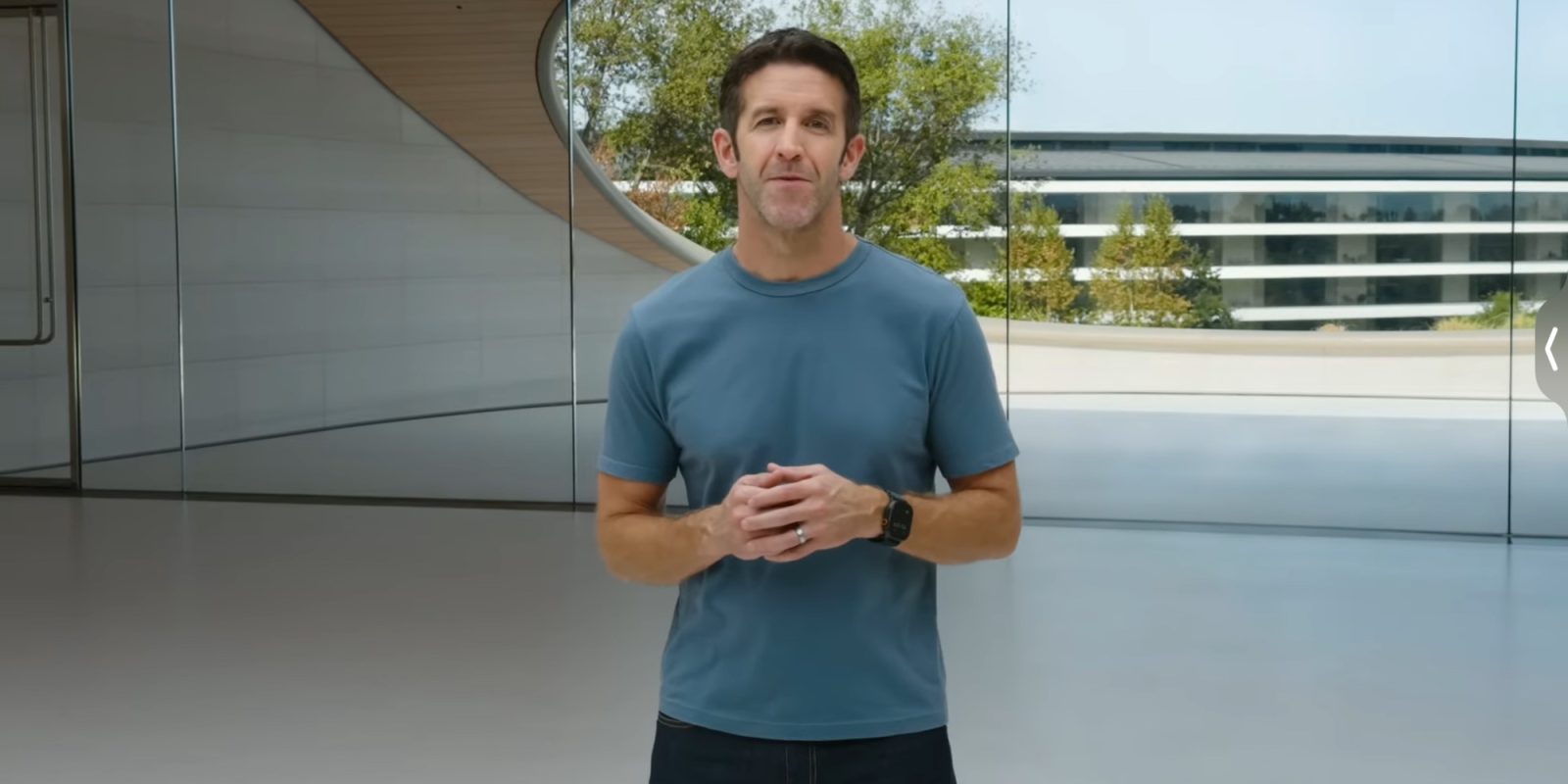
John Ternus
Ternus inherits a company that just, briefly, became the most valuable on the planet — and also a company still working to prove it belongs in the AI conversation at all. Apple's revamped Siri, featuring on-device processing, improved conversational ability and deeper personal-context awareness, was unveiled at WWDC 2026 as Cook's valedictory showcase, following a bruising, multi-year delay caused by what insiders describe as a genuine architectural problem: engineers found they could not cleanly merge the old Siri's underlying systems with the new AI-driven version, forcing large portions of it to be rebuilt from scratch. Apple has also struck a partnership with Google to weave Gemini into Apple Intelligence, an unusually humble move for a company that has historically preferred to build everything itself.
For Ternus, fixing and finishing that AI strategy — while resisting pressure to suddenly match the capital spending of Microsoft, Google, Amazon and Meta — may be the single most important task on his desk as he steps into the corner office. This week's market gyrations, whatever their ultimate cause, have handed him a useful talking point on day one: patience, apparently, pays.
What This Means For You
If you own Apple or Nvidia stock, or shares in a fund that holds either, this week's volatility is a reminder of just how much of the broader market's fortunes now ride on a handful of AI-linked companies. Trillions of dollars in paper wealth shifted between two companies in a matter of days, driven not by anything either company did wrong, but by a market-wide reassessment of how the AI spending boom will play out over the next several years. That kind of volatility can ripple into retirement accounts, index funds and 401(k)s far beyond Silicon Valley.
For consumers, the more immediate implications are subtler. If Apple's cautious, services-and-hardware-first approach to AI is validated by the market, expect the company to keep leaning into AI features baked quietly into products you already own — an improved Siri, smarter photo search, on-device AI tools — rather than flashy standalone AI products. If the custom-silicon trend that rattled Nvidia keeps gaining ground, meanwhile, it could eventually mean cheaper AI-powered products and services across the board, as competition among chipmakers chips away at the premium prices Nvidia has been able to command.
Conclusion
By Monday, the title of world's most valuable company could well have changed hands again — that is how tight, and how nervous, this market has become. But the underlying story is bigger than a single week's stock prices. A years-long consensus that unlimited AI infrastructure spending was an unambiguous good for the companies building it is being tested in real time, and the company that spent the least is, for the moment, winning the argument. Whether that holds up once John Ternus is officially in charge, and once the dust settles on the custom-chip challenge to Nvidia, is the multi-trillion-dollar question Wall Street will be watching all the way into the fall.



