Written By | Torch Media Africa

Airtel Uganda is rolling the service out through its MyAirtel App, where eligible customers can register for a complimentary 30-day trial.
SCIENCE & TECH
Ugandans in areas with no mobile network coverage at all can now send a text or a WhatsApp message straight from an ordinary smartphone to a satellite overhead, after Airtel Africa and SpaceX's Starlink switched on a commercial satellite-to-mobile service in the country this week — the second live deployment of the partnership on the African continent after the Democratic Republic of Congo went live in August.
The service, announced by Airtel Africa and Starlink on September 24, lets compatible smartphones connect directly to Starlink's low-earth-orbit constellation — now numbering roughly 650 satellites dedicated to direct-to-device connectivity — whenever a phone strays outside the reach of Airtel's terrestrial towers. Unlike traditional satellite phones, which require bulky dedicated hardware and a clear line of sight maintained by the user, the new service is designed to work with standard, unmodified smartphones; Airtel says users need nothing more than "a clear view of the sky." For now, the connection supports lightweight, low-bandwidth communication — SMS text messages and messaging apps such as WhatsApp — rather than full mobile broadband, video calls or general web browsing, reflecting the current bandwidth limits of direct-to-cell satellite technology industry-wide.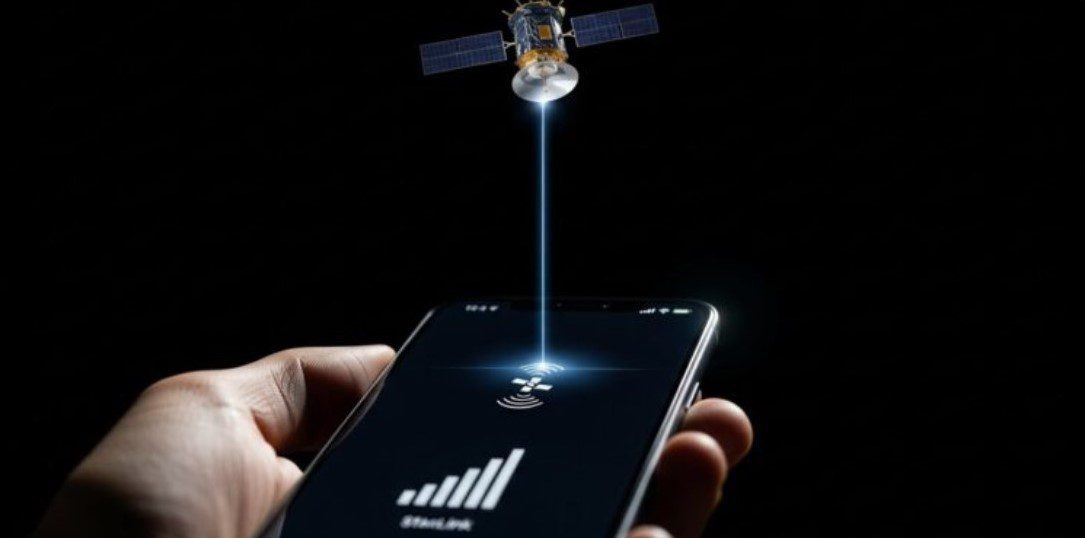
Airtel Uganda is rolling the service out through its MyAirtel App, where eligible customers can register for a complimentary 30-day trial. After the trial period, access continues through Airtel's standard data bundles rather than a separate satellite tariff, a pricing approach intended to fold the new capability into customers' existing accounts rather than positioning it as a premium add-on. Airtel Uganda's chief executive described the launch as transformative for the country's connectivity landscape, saying the partnership is "transforming how connectivity is delivered across Uganda" by complementing, rather than replacing, the company's continued investment in physical towers and fibre.
The deployment follows a partnership Airtel Africa and Starlink first announced in December 2025 covering 14 of Airtel's African markets, positioning Uganda as one of the earlier countries to go live under that broader agreement. It also builds on groundwork laid earlier this year: Uganda's Communications Commission (UCC) granted Starlink an operational licence in May 2026 after a protracted regulatory process, clearing the way for the satellite operator to offer both its existing direct-to-home internet service — aimed at homes, schools and businesses with a dedicated dish — and now this direct-to-phone capability layered on top of a local mobile carrier's network.
For Uganda's telecoms regulator, the appeal is straightforward: closing the country's persistent rural coverage gap without the years and capital it would take to extend fibre and tower infrastructure into every remote corner of the country. Uganda Communications Commission's executive director noted that mobile network operators are required to achieve 90% geographical coverage nationally, and pointed to satellite-to-mobile technology as a practical way to reach the "challenging terrains such as islands, mountainous regions, forests" that make conventional tower construction slow, expensive, or in some cases impractical. Uganda's terrain includes Lake Victoria's scattered islands, the Rwenzori and Elgon mountain ranges, and dense forest reserves in the west and north — all areas where past efforts to extend terrestrial mobile coverage have lagged.
Airtel and Starlink are pitching the service at several distinct groups who stand to benefit most from coverage in traditionally unconnected areas: long-haul transport operators and truck drivers moving goods along highway corridors that pass through dead zones; humanitarian and aid organizations operating in remote or hard-to-reach districts; farmers and agricultural cooperatives in rural areas who currently have no way to check market prices or communicate digitally from their fields; and mining operations in Uganda's more isolated mineral-producing regions. The companies also highlight emergency use cases — the ability to send a message during floods, landslides or other disasters that knock out local infrastructure, when conventional networks are often the first thing to fail.
The Uganda rollout sits within a broader and increasingly crowded race among satellite operators, mobile carriers and equipment makers to commercialize direct-to-cell connectivity worldwide, a technology that has moved from demonstration projects to live commercial service only in the past two to three years. Starlink's approach — partnering with an existing terrestrial carrier like Airtel rather than seeking its own mobile spectrum and subscriber base in each market — mirrors the model it has used elsewhere and lets it scale quickly across Airtel's African footprint without negotiating a fresh regulatory and commercial relationship from scratch in every country. Following the DRC launch in August and Uganda's this month, additional markets among Airtel's 14-country satellite partnership are expected to go live in the coming months, though neither company has published a public rollout schedule.
The launch also lands amid a period of rapid change in Uganda's broader digital and space ambitions. The country has separately been pursuing its own satellite manufacturing capability, building on lessons learned from its first satellite, PearlAfricaSat-1, and has discussed plans to establish a national space agency. Those efforts are geared toward long-term technological self-sufficiency and earth-observation applications such as agriculture and disaster monitoring, distinct from the Airtel-Starlink service, but both threads reflect the same underlying push: using orbital technology to solve connectivity and development problems that terrestrial infrastructure alone has struggled to fix. Separately, this week also saw Makerere University's College of Engineering, Design, Art and Technology and the UCC convene the 10th National Conference on Communication (NCC 2026) in Kampala, with organizers and UCC officials calling for closer academia-industry links to turn Ugandan research into market-ready innovation — part of a wider government push, backed by the science and technology ministry, to position science and innovation as a pillar of the country's economic growth targets.
What happens next will depend largely on uptake during the free trial period and on whether Airtel and Starlink can keep the service affordable enough for the low-income rural users it is nominally designed to reach, given that access reverts to standard data-bundle pricing after 30 days. Digital-rights and rural-development advocates in Uganda have welcomed the technology in principle while cautioning that connectivity alone does not guarantee affordability or digital literacy in the communities it targets. If the Uganda deployment performs well, it is likely to be cited as a template as Airtel and Starlink push satellite-to-mobile service into further markets across the 14-country partnership over the next year.



