Written By | Torch Media Africa
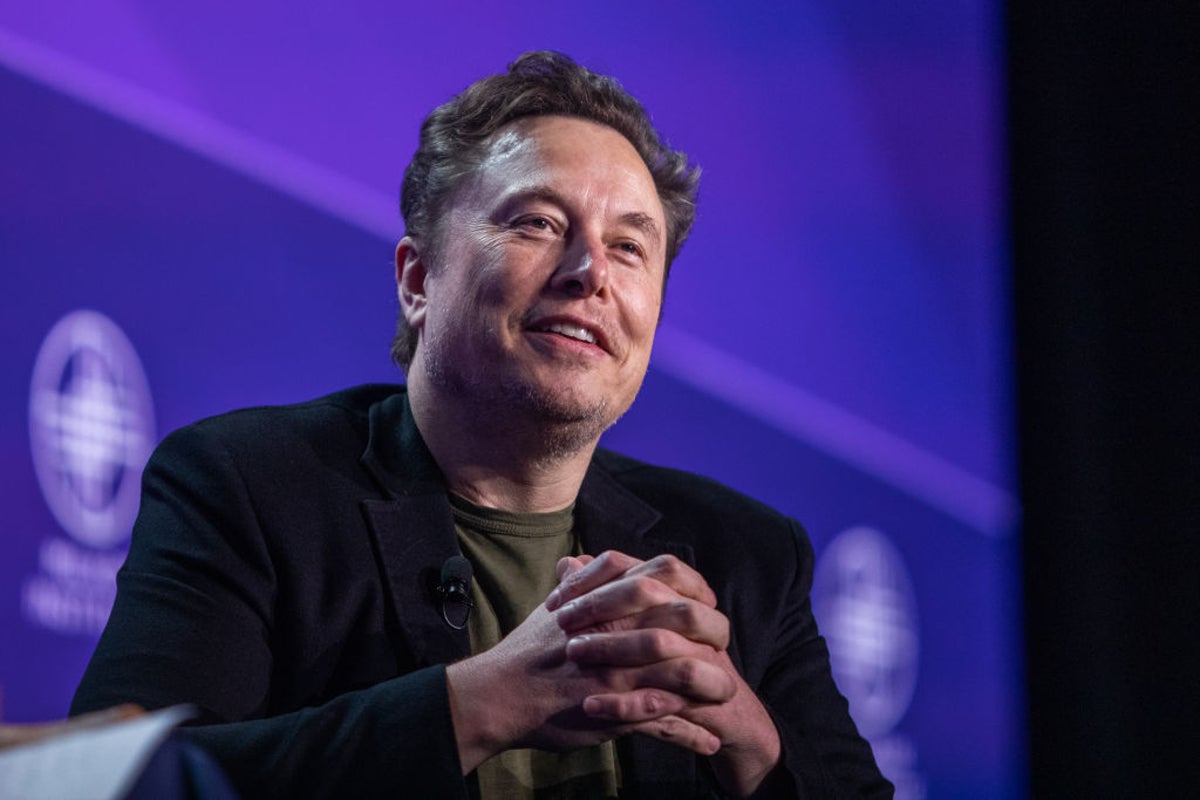
Elon Musk's rocket company has only been a publicly traded business for about a week, and it is already on a shopping spree that's rattling both Silicon Valley and Wall Street
CAPE CANAVERAL / SAN FRANCISCO
Elon Musk's rocket company has only been a publicly traded business for about a week, and it is already on a shopping spree that's rattling both Silicon Valley and Wall Street. On June 16, SpaceX announced an all-stock deal to acquire Cursor, the AI-powered coding assistant built by a four-year-old startup called Anysphere, in a transaction that values the company at a jaw-dropping $60 billion.
For a startup that didn't exist before 2022, founded by a 25-year-old MIT graduate, that's an almost unfathomable number. For SpaceX, fresh off a record-shattering IPO that made Musk the world's first trillionaire, it's a declaration of intent: rockets and AI are about to become the same business.
The announcement sent SpaceX's freshly minted public shares surging roughly 16% in a single trading session, pushing the company's market capitalization past $2.7 trillion and briefly vaulting it above Amazon to become the fourth most valuable company in the United States — an extraordinary feat for a stock that has been trading for barely a week.
FROM MIT DORM ROOM TO $60 BILLION DEAL
The story of how Cursor ended up in Elon Musk's shopping cart starts with Michael Truell, the now 25-year-old CEO who co-founded Anysphere alongside three fellow MIT graduates in 2022. The company's flagship product, Cursor, is an AI-powered code editor that uses large language models to help software developers write, edit, debug, and review code dramatically faster than they could unassisted.
What happened next was one of the fastest ascents in startup history. Cursor crossed $1 million in annualized revenue in October 2025. By February 2026, that figure had rocketed to a $2 billion annual run rate. By May 2026, the company's annualized recurring revenue had reportedly reached roughly $3 billion, with more than half of the Fortune 500 now paying for it and corporate clients accounting for roughly 60% of total revenue.
Each new funding round told the same story of accelerating momentum: a $2.3 billion Series D in November 2025 valued the company at $29.3 billion. By April 2026, the company was reportedly already in talks to raise another $2 billion at a $50 billion valuation. Two months later, SpaceX is paying $60 billion — in stock, not cash — to own the whole thing outright.
"We are excited to share that SpaceX has exercised their option to acquire Cursor in an all-stock transaction with the goal of building the world's most useful AI models," Truell said in a statement announcing the deal. He followed up on X with a more personal note, saying he's "excited to partner with the SpaceX team to scale up Composer" — referring to Cursor's in-house AI model — and calling the acquisition "a meaningful step on our path to build the best place to code with AI." Notably, the language in Truell's statement — "exercised their option" — suggests this wasn't a cold-call buyout but the execution of a deal structure that had been negotiated and agreed to in advance, giving SpaceX the right to acquire Cursor once certain conditions were met. The transaction is expected to close in the third quarter of 2026, pending the usual regulatory approvals that accompany any deal of this size.
WHY WOULD A ROCKET COMPANY BUY A CODING APP?
On the surface, pairing a rocket manufacturer with an AI coding assistant might look like an odd-couple merger. But Musk's businesses have increasingly converged around a single thesis: whoever controls the most capable AI systems controls the next decade of technology, regardless of industry.
SpaceX's own IPO filing reportedly flagged that Cursor's unique access to developers' real-world coding requests and design decisions could help improve the performance of SpaceX-linked AI models — including Grok, the AI chatbot developed by Musk's xAI. In other words, this isn't really about helping SpaceX engineers write better flight software, though that's a side benefit. It's about data. Cursor sits in front of millions of working software developers every day, watching how they think through problems, what mistakes they make, and how they fix them. That stream of real-world coding behavior is exactly the kind of training data that's becoming scarce and valuable as AI labs exhaust the readily available text on the internet.
It's also a direct shot across the bow of SpaceX's AI rivals. The coding assistant market has become one of the most cutthroat battlegrounds in the entire AI industry, with Cursor, Anthropic's Claude Code, GitHub Copilot, and OpenAI's Codex all racing for the loyalty of professional developers. Reports indicate Anthropic's Claude Code had actually overtaken both Cursor and GitHub Copilot to become the most-used AI coding tool among engineers by late 2025 — meaning Cursor, for all its revenue growth, was already fighting to defend its position even before the SpaceX deal. Folding Cursor into the SpaceX/xAI orbit gives Musk's ecosystem a coding-specific AI asset to throw into that fight, backed by SpaceX's enormous balance sheet and compute ambitions.
There's also the matter of timing. SpaceX completed what's been described as the largest IPO in history just days before this acquisition was announced, reportedly raising around $75 billion and valuing the company north of $1.7 trillion, with Musk becoming the world's first trillionaire in the process. An all-stock acquisition like the Cursor deal allows SpaceX to use its newly liquid, sky-high public valuation as a kind of currency — buying real revenue and real technology without touching a dollar of cash reserves needed for Starship development, Starlink expansion, or Mars ambitions.
WALL STREET'S VERDICT: BUY THE ROCKET
Investors, for their part, reacted to the acquisition with enthusiasm rather than skepticism — a notable vote of confidence given how often big tech acquisitions get punished by the market on announcement day. SpaceX shares jumping 16% on the news suggests Wall Street sees the Cursor deal as additive rather than dilutive, expanding SpaceX's addressable market well beyond rockets and satellites into enterprise software and AI infrastructure.
That reaction pushed SpaceX's market cap past $2.7 trillion intraday, putting it ahead of Amazon and squarely into the company of Apple, Microsoft, and Nvidia among the most valuable corporations on the planet. For a company that, less than two weeks ago, was still a private business best known for landing rockets on floating barges, the speed of that ascent up the corporate valuation ladder is almost as remarkable as the Cursor deal itself.
Analysts following the deal have framed it as part of a broader pattern: AI labs and AI-adjacent companies racing to vertically integrate everything from chips to cloud infrastructure to the software tools developers use every day, rather than relying on partnerships and licensing deals that can be renegotiated or revoked. By owning Cursor outright, SpaceX and the broader Musk ecosystem no longer have to negotiate access to one of the most valuable developer-data streams in the industry — they simply own it.
THE HUMAN STORY: A 25-YEAR-OLD'S OVERNIGHT FORTUNE
Lost in the headline numbers is the almost cinematic personal story at the center of this deal. Michael Truell was, by several accounts, still effectively a student-turned-intern figure just a few years ago before co-founding Anysphere with his MIT classmates. In the span of roughly four years, he went from building a coding tool in a dorm-adjacent startup environment to negotiating a $60 billion exit with one of the most famous entrepreneurs alive.
It's the kind of trajectory that Silicon Valley mythologizes — and one that's increasingly common in the current AI boom, where technical founders barely out of college are commanding valuations that took previous generations of tech companies decades to reach. Whether Truell and his team will retain meaningful independence as "Composer" gets folded into SpaceX's broader AI ambitions, or whether Cursor as a distinct product gradually dissolves into the larger Musk AI machine, remains one of the open questions hanging over the deal's third-quarter close.
WHAT THIS MEANS FOR YOU
If you're a software developer who uses Cursor, Claude Code, GitHub Copilot, or any other AI coding assistant, this deal is worth watching closely. Consolidation at this scale often changes a product's roadmap, pricing, and priorities — sometimes for the better, as a flush new owner pours in resources, and sometimes for the worse, as a product gets deprioritized in favor of the parent company's strategic goals. Developers who've built workflows around Cursor specifically should keep an eye on how SpaceX's ownership changes the tool's independence, data practices, and competitive positioning relative to rivals like Claude Code and Codex.
If you're an investor, the deal is a fresh data point in the ongoing debate over whether AI valuations have detached from fundamentals. A four-year-old company commanding $60 billion, on the heels of a $29 billion valuation just seven months earlier, is either a sign of an industry genuinely compounding in value at an unprecedented rate — or a sign of a bubble inflating in real time. Reasonable people, including plenty of seasoned Wall Street analysts, disagree sharply on which story is true, and this deal alone won't settle the argument.
And if you're simply a consumer of consumer tech news, the bigger picture here is that the line between "rocket company," "AI company," and "software company" is rapidly disappearing. Musk's empire — SpaceX, Tesla, xAI, Neuralink, and now, soon, Cursor — increasingly behaves less like a portfolio of separate businesses and more like a single sprawling AI conglomerate that happens to also launch rockets.
A week ago, SpaceX was best known for reusable rockets and Starlink satellites. Today, it's also the prospective owner of one of the fastest-growing AI startups in history, bought not with cash but with stock minted just days earlier in the biggest IPO Wall Street has ever seen. For Michael Truell, the deal caps an improbable four-year run from MIT dorm room to multibillion-dollar exit. For Musk, it's another marker in an unmistakable pattern: in 2026, the most valuable companies on Earth are no longer choosing between hardware and AI. They're buying both, and betting the future runs on owning the entire stack.
Sources: NBC News, CNBC, CBS News, Yahoo Finance, Quartz, IBTimes UK, Fortune, Wikipedia (Michael Truell, Anysphere, Cursor), TechCrunch, Tech Funding News




