Written By | Torch Media Africa
And just like that, Musk became the world's first confirmed trillionaire
HAWTHORNE, CALIFORNIA
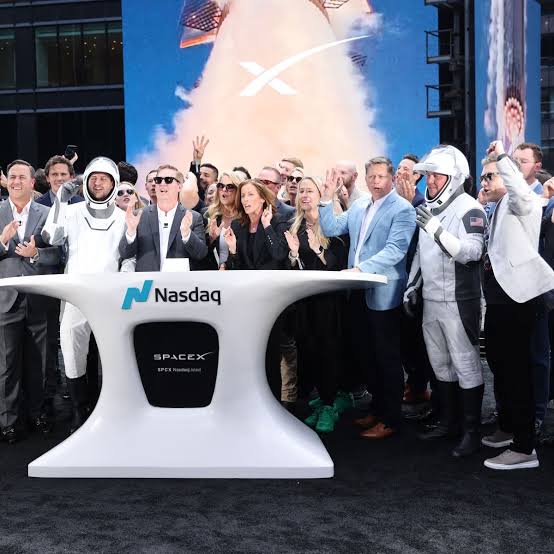
When Elon Musk stepped onto the Nasdaq trading floor shortly before 9:30 a.m. on Friday, June 12, 2026, the screen behind him told a story Wall Street had never seen before. SpaceX opened at $135 per share under the ticker SPCX. By the closing bell, shares had climbed to $160.95 — a gain of nearly 19%. The raise: $75 billion. The valuation: $1.77 trillion at IPO price, touching $2.21 trillion intraday.
And just like that, Musk became the world's first confirmed trillionaire.
It was the culmination of a 24-year journey from a scrappy upstart that blew up its first three rockets to a company that now controls roughly 70% of the global commercial launch market. The IPO was not just a financial event. It was the day the great space dream of the 21st century met the ledger books of Midtown Manhattan.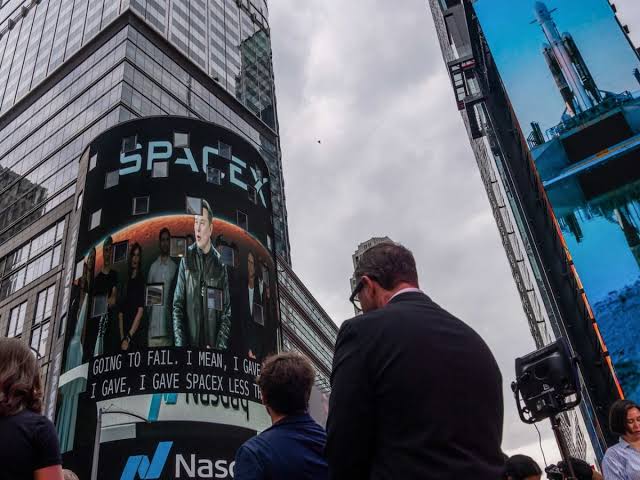
From a Warehouse in El Segundo to the World's Largest IPO
For most of its existence, Musk resisted taking SpaceX public, fearing short-term pressures would distract from making humanity multiplanetary. But costs changed his mind.
SpaceX's S-1 filing revealed a business growing fast — $18.7 billion in 2025 revenue, up 33% — but bleeding cash: a net loss of $4.94 billion in 2025, and $4.28 billion in just the first quarter of 2026.
The culprit: Starship. SpaceX has spent over $15 billion developing the next-generation fully reusable launch system. Those costs are reflected across three segments. The Space division (Falcon, Dragon, Starship) generated $4.1 billion in revenue but ran at a loss. The AI segment (orbital computing) generated $3.2 billion but posted $6.4 billion in operating losses.
The crown jewel is Starlink: $11.4 billion in 2025 revenue with $4.4 billion in operating income. The satellite internet business is the economic engine keeping SpaceX's more ambitious ventures viable.
Why Now? The Strategy Behind the Timing
Musk said SpaceX needed capital for "a significant growth phase": putting over 100,000 satellites in orbit for next-generation Starlink, and building AI data centers in space.
The timing also reflects a broader shift. With Starlink printing billions in profit, the space economy is increasingly viewed as essential infrastructure. MSCI announced SpaceX would begin entering its index products starting June 13 — meaning it will flow immediately into trillions of dollars of passive funds worldwide.
For Musk personally, the IPO crystallized a milestone: his combined stakes in SpaceX and Tesla pushed his net worth past $1 trillion, the first individual in recorded history to reach that figure.
The Street Reacts: Euphoria, Caution, and Everything Between
Not everyone greeted the debut with uncritical enthusiasm. Analysts pointed to the gap between operational brilliance and financial losses.
"The Starlink business is genuinely exceptional," one institutional investor said. "But you're being asked to pay for Starlink at a premium while also funding a bet on interplanetary civilization and orbital AI supercomputers. That's a unique investment proposition."
A publicly listed SpaceX, with obligations to shareholders alongside government contracts, will now navigate a complex set of incentives.
Starship: The Rocket That Justifies Everything — and Explains the Losses
No single technology defines SpaceX's ambitions — or its costs — more than Starship. The 122-meter fully reusable launch vehicle is designed to make every previous rocket obsolete, theoretically bringing launch costs down to a fraction of current rates.
After dramatic test flights and explosions in Boca Chica, SpaceX has demonstrated full booster recovery using the "Mechazilla" chopstick catch system. NASA has contracted SpaceX to use a modified Starship for the Artemis Moon program.
For long-term investors, the thesis is straightforward: if Starship works, SpaceX's launch economics become so dominant that competitors cannot close the gap. For skeptics, it is a colossal ongoing cash burn attached to a rocket that has yet to carry a commercial payload to orbit.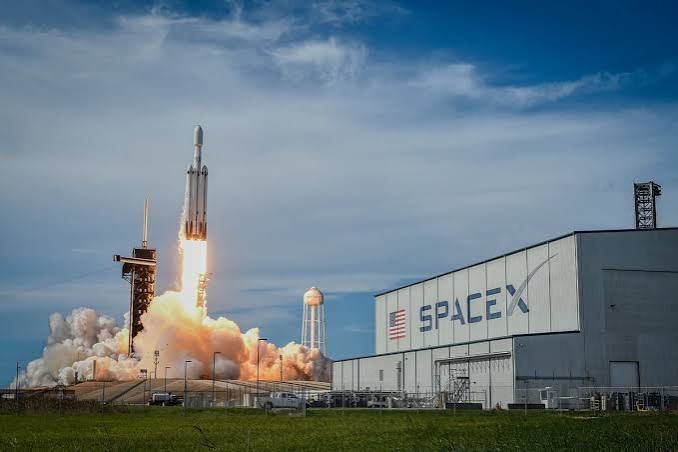
What This Means for You
If you use satellite internet — especially in rural areas — your provider is now accountable to public shareholders. This could accelerate investment or introduce pricing pressures.
If you're an investor, SPCX presents a novel risk profile: neither pure tech stock nor defense contractor nor utility, but something new. Most broad index funds will now include SPCX whether you choose it or not, starting June 13. And if you're simply a citizen of a planet where space is increasingly contested, the listing of SpaceX represents a landmark. The company most responsible for the modern space economy is now subject to public market transparency.
The Beginning, Not the End
When trading closed on June 12, SPCX sat at $160.95, up from $135 — and up from virtually nothing when the company was founded with a dream in 2002. The $75 billion raised in a single day dwarfs the GDP of most nations.
But none of those numbers is the point. SpaceX has always maintained that its ultimate metric is not dollars per share but flights per year to Mars. Friday's IPO is the mechanism to fund enough Starships, enough Starlink satellites, enough orbital AI, to make that destination reachable within a human lifetime.
Whether Wall Street has the patience for that timeline is a question only the next decade will answer.
What is not in question, as of June 12, 2026, is that the space age has entered a new phase. The rockets are publicly traded. The trillionaire is real. And the countdown to the next chapter has already begun.



