Written By | Torch Media Africa
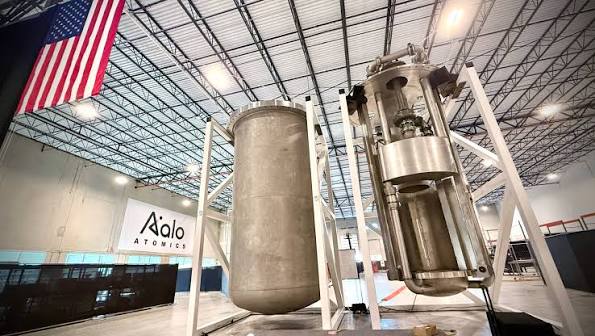
America Switches On Its First New Nuclear Reactor Design in 50 Years — Built Specifically to Feed Silicon Valley's Bottomless Appetite for Electricity
IDAHO NATIONAL LABORATORY, Idaho
In the pitch-black high desert of eastern Idaho, at 12:20 a.m. on the Fourth of July, a control room full of engineers watched a bank of instruments and waited for a number to climb past one.
It did. And when it did, something happened inside a shipping-container-sized steel vessel that hadn't happened anywhere in America in half a century: a brand-new type of nuclear reactor, designed and built by a company that didn't exist a decade ago, sustained its first self-powered chain reaction.
The reactor is called the Aalo-X. The company is Aalo Atomics, a scrappy, sub-100-person outfit out of Austin, Texas. The milestone it just hit — "criticality," the moment a reactor's core produces enough neutrons to keep its own fission reaction going without outside help — is the starting gun in what may be the fastest nuclear buildout in American history. A buildout that exists for one reason: artificial intelligence is eating the power grid alive, and somebody has to feed it.
"President Trump asked for three advanced reactors to be authorized and achieve criticality by the 250th anniversary of our great country. I'm pleased to share that through the dedication and hard work of Aalo, INL, and DOE, we have surpassed that ask and delivered four!" Energy Secretary Chris Wright said, barely containing his glee, after Aalo's reactor became the fourth design to hit criticality in a single month — following Antares Nuclear's Mark-0, Valar Atomics' Ward 250, and a reactor called Unity, all racing the same government-imposed clock.
Four unique next-generation reactor designs. Four different private companies. One deadline. All hit within about thirty days of each other. Nuclear engineers who spent entire careers watching a single reactor project take twenty years to get a license are still blinking at what just happened.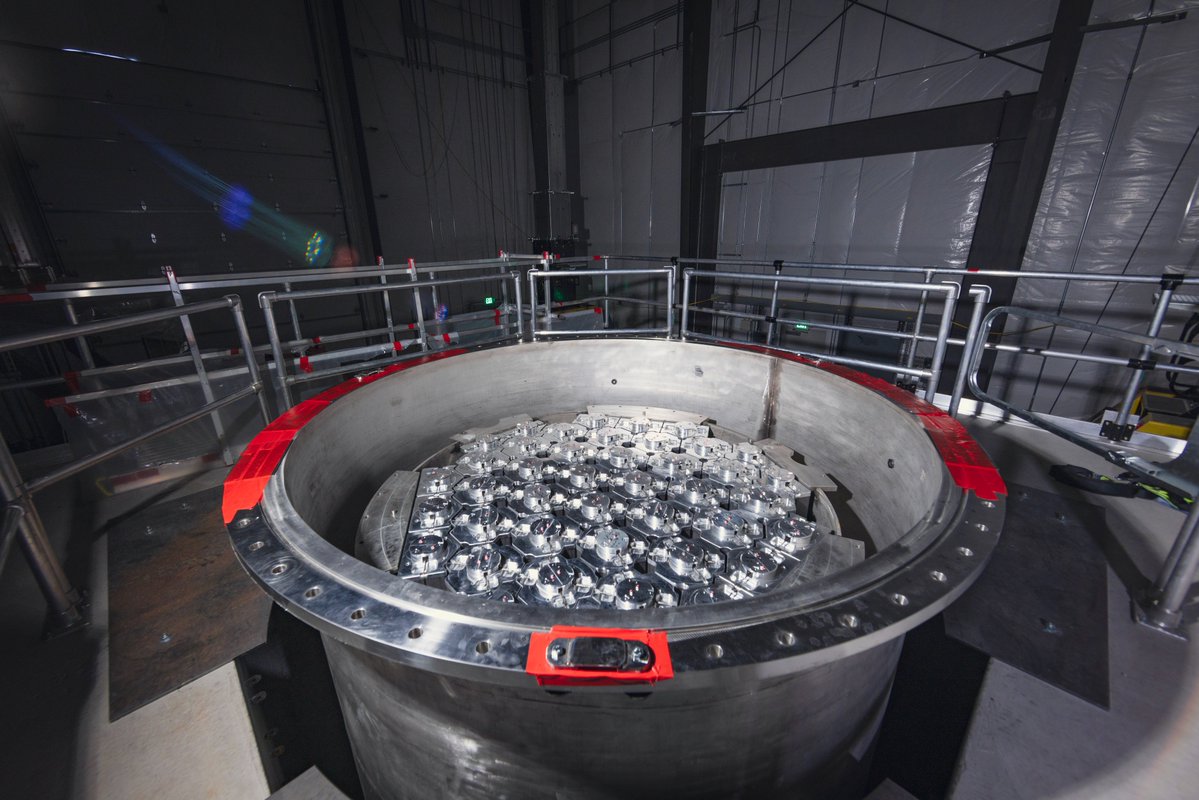
The Aalo-X Critical Test Reactor (CTR) includes a full-scale core, demonstrating the nuclear components which will be mass-manufactured in our 10 MWe reactor modules.
THE CLOCK THAT CHANGED EVERYTHING
To understand why a shipping-container reactor going critical at midnight is a genuinely big deal, you have to rewind to May 23, 2025. That's the day President Trump signed Executive Order 14301, "Reforming Nuclear Reactor Testing at the Department of Energy." Buried in the bureaucratic language was an audacious demand: the DOE was to stand up a pilot program that would authorize at least three advanced reactor designs — built by private companies, tested outside the traditional national-lab bureaucracy — and get them to criticality within about fourteen months. The deadline: July 4, 2026. America's 250th birthday.
For context, a new nuclear reactor design in the United States has historically taken anywhere from a decade to twenty years to move from concept to operation, threading through the Nuclear Regulatory Commission's famously slow licensing process. Asking private companies to go from a presidential signature to a live chain reaction in scarcely more than a year sounded, to most of the industry, like fantasy.
Aalo Atomics decided to take it literally. The company broke ground on its Aalo-X Critical Test Reactor at Idaho National Laboratory in August 2025 — the first company in the Reactor Pilot Program to get shovels in dirt. Less than a year later, at 12:20 a.m. Mountain Time on July 4, 2026, it went critical.
The Aalo-X isn't a full commercial power plant. It's a test article: a factory-built, 10-megawatt-electric, low-enriched-uranium, sodium-cooled reactor built with the same full-scale core components Aalo intends to use in its actual commercial product. Think of it as a "flight-test" prototype — proving the physics and the engineering work before the company builds the real thing.
And Aalo isn't waiting around. The company has already broken ground on a second reactor at the same INL site, code-named "Project Ascension" — a test of a commercial-scale system designed to generate real electricity for an on-site data center within months. The endgame is something called the Aalo Pod: a 50-megawatt factory-built microreactor purpose-built to sit next to — or even inside — a data center, delivering commercial power as early as 2029.
WHY A NUCLEAR REACTOR CARES ABOUT YOUR CHATBOT
None of this is happening in a vacuum. It's happening because the artificial intelligence boom has turned electricity — boring, unglamorous, taken-for-granted electricity — into the single scarcest resource in the entire tech industry.
Training and running enormous AI models requires data centers that consume electricity on a scale that used to be reserved for small cities. Big tech companies have spent the last two years quietly panicking about where all those extra gigawatts are going to come from. Some have signed deals to restart shuttered coal plants. Others have inked contracts for natural gas turbines with years-long wait lists. The DOE has even had to grant regional grid operators emergency permission to lean on diesel backup generators just to keep data centers from browning out during heat waves.
Nuclear power — carbon-free, always-on, and immune to the whims of wind and sunlight — has suddenly become the golden child of the AI infrastructure race. Tech giants have been signing power-purchase agreements with existing nuclear plants and investing directly in next-generation "small modular reactor" and "microreactor" startups like Aalo, betting that whoever solves the power problem first controls the pace of the entire AI race.
That's the real subtext behind the administration's mad dash to criticality. It isn't really about celebrating America's 250th birthday with a science project. It's an attempt to fast-track an entire new domestic industry — compact, factory-built nuclear reactors that can be parked next to a server farm — because the alternative is watching China, which is building reactors at a blistering pace, potentially win the AI arms race simply by having more electrons to spare.
THE PUSHBACK: "THESE MANUFACTURED TIMELINES ARE INCREDIBLY CONCERNING"
Not everyone is cheering. The loudest, most persistent criticism of the Reactor Pilot Program isn't about nuclear power in general — it's about speed, and who's minding the store.
Under the traditional system, the independent Nuclear Regulatory Commission, created in the wake of the 1979 Three Mile Island accident specifically to keep reactor oversight independent from the DOE's own reactor-building ambitions, would review and license any new reactor design before it could go critical. Under the Reactor Pilot Program, that's not what happened. The NRC has been relegated to a consulting role; the DOE's own Office of Nuclear Energy is running the authorization process.
Former regulators and safety researchers say that setup recreates precisely the conflict of interest the NRC was designed to eliminate. Heidy Khlaaf, chief AI scientist at the AI Now Institute, put it bluntly: "These manufactured timelines are incredibly concerning. There's no timeline for assessing a new design and making sure it's safe, especially something we haven't seen before." Critics also point to the quiet removal of "ALARA" standards — shorthand for "As Low As Reasonably Achievable" radiation exposure limits — as evidence that speed is being prioritized over traditional safety margins.
Supporters counter that the Aalo-X, like its sibling pilot reactors, is a small test unit, generating a fraction of the output of a commercial power plant, built at a national laboratory with decades of institutional safety expertise on-site, and subject to DOE oversight even without a full NRC license. They argue that the traditional licensing timeline isn't a safety feature so much as a relic of an era when nobody was in a hurry, and that America's AI ambitions simply can't wait that long.
Both things can be true at once: the achievement is real, and the debate over how fast is too fast is nowhere close to settled.
WHAT THIS MEANS FOR YOU
If you've never given a passing thought to where the electricity powering your favorite AI chatbot comes from, buckle up — you're about to hear a lot more about "microreactors" and "advanced nuclear" in the next few years. Data centers are being built in ordinary American communities at a pace that's straining local electric grids and, in some cases, pushing up regular consumers' utility bills as utilities pass along the cost of new transmission infrastructure. The nuclear buildout race is, in large part, an attempt to solve that problem by generating new power near where it's needed.
It also means a genuinely new industry is being born in real time. A decade ago, "advanced nuclear startup" sounded like a punchline. Today, companies with names like Aalo, Oklo, Radiant, Valar, and Antares are racing to build factory-produced reactors small enough to ship on a truck, with real government backing and real hardware, not just slide decks. If even a handful of these designs prove safe, reliable, and economical, it could reshape how — and where — America gets its electricity for decades.
And if the critics are right that the timelines are too compressed, the story could look very different in a few years — a cautionary tale about racing physics against a political deadline.
THE BOTTOM LINE
For one moment in the Idaho dark, on America's 250th Fourth of July, a company that didn't exist when the first iPhone launched proved a nuclear reactor could go from an executive order to a self-sustaining chain reaction in about fourteen months. Whether that turns out to be a triumph of American engineering or a cautionary tale about cutting corners in the age of AI-fueled urgency will depend on what happens next. For now, the lights — and the servers — stay on.
Sources: Department of Energy, Aalo Atomics, BusinessWire, PowerMag, Forbes, Yahoo Finance, Interesting Engineering, American Nuclear Society Nuclear Newswire, NPR, Washington Examiner



