Share
COMMENTARY
There are writers whose absence from the newspaper is hardly noticed, and there are writers whose silence leaves a peculiar emptiness. Yusufu Serunkuma belongs to the latter category.
My fellow "pen mightier" has gone silent for quite some time.
I used to enjoy reading his articles in The Observer. His was never the kind of writing one simply passed over while turning the pages of a newspaper. Whether one agreed with him or disagreed with him, Serunkuma had a way of forcing the reader to pause, think, and sometimes return to the paragraph already read.
His writing was provocative without necessarily being noisy. He could take an ordinary political event and place it under a much larger intellectual microscope. Politics, power, history, colonialism, governance, and the contradictions of African society often became subjects of his peculiar literary surgery.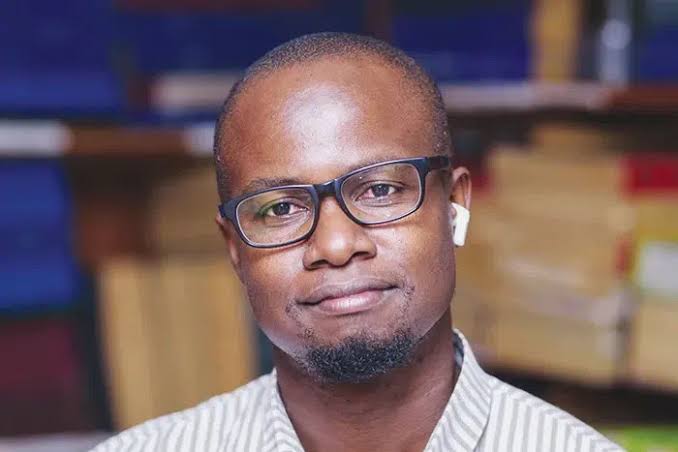
Yusuf Serunkuma [File: Courtesy]
That is why his recent silence has been noticeable.
One begins to wonder: where could Yusufu Serunkuma have gone?
I ask the question not as someone claiming to know his whereabouts, nor as someone suggesting that anything sinister has happened to him. Rather, it is the simple curiosity of a reader who has grown accustomed to finding a particular voice in the public conversation and suddenly finds that voice missing.
Writers, after all, are human beings. They get tired. They change occupations. They travel. They pursue academic work. They retreat into private life. They may simply decide that the noise of public commentary is no longer worth the cost of participation.
And perhaps Serunkuma has simply chosen silence.
But there is something interesting about the disappearance of an intellectual voice in a country such as Uganda.
Our public conversation is already crowded with political speeches, official statements, social media arguments, and carefully manufactured narratives. What is often scarce is the independent mind that sits back, examines the spectacle, and asks the uncomfortable question that everybody else has forgotten to ask.
That was part of what made Serunkuma interesting.
He was not merely reporting political events. He often attempted to interpret the deeper forces beneath them. His writing carried the temperament of someone who wanted to understand Uganda not merely as a country of politicians and elections, but as a historical and political experiment still struggling to understand itself.
Perhaps this is why one notices when such a voice becomes quiet.
I remember encountering his writings in The Observer and being drawn into the arguments even when the conclusion was not necessarily mine. That, in my view, is one of the marks of a serious writer. A writer does not have to give you opinions you already possess. Sometimes the value of a writer is precisely that he makes you uncomfortable enough to reconsider your own assumptions.
Serunkuma possessed that quality.
His prose could be mischievous, philosophical, historical, and political at the same time. He could write about an individual political character and somehow turn the subject into a meditation on the nature of power itself.
That kind of writing is becoming increasingly rare.
The modern reader is often presented with instant opinions. Something happens in the morning and by afternoon hundreds of people have already declared what it means. There is little time for reflection, little appetite for historical context, and even less patience for the slow work of thinking.
The newspaper columnist therefore performs a different function.
He gives society a mirror.
Sometimes the mirror flatters us. Sometimes it does not.
And sometimes the person holding the mirror becomes as interesting as the reflection itself.
This is why I find myself asking about Serunkuma.
Has he simply become tired of writing?
Has academia demanded more of his time?
Has he moved into another intellectual project?
Has he deliberately chosen to withdraw from the noisy theatre of public commentary?
Or is he simply preparing another intellectual surprise somewhere, away from the public eye?
Only Serunkuma can answer those questions.
What I can say, however, is that his silence has been noticed by at least some of his readers.
Perhaps that is one of the hidden powers of the written word. A writer may believe that he has merely written an article, submitted it to an editor, and moved on with his life. Yet somewhere, sometime, a reader has encountered those words and carried them away.
Years later, that reader may wonder where the writer went.
The pen may become silent, but the words remain alive.
And perhaps this is the real meaning of the "pen mightier." Its power does not necessarily lie in how loudly it speaks. Sometimes its greatest power is in what remains after it has stopped speaking.
So, my fellow "pen mightier", wherever you are, some of us have noticed the silence.
Uganda has not run out of things to write about. If anything, the country seems to produce subjects faster than writers can examine them.
There are elections, constitutional questions, questions of succession, questions of power, questions of identity, questions of poverty and inequality, questions about the future of the country, and questions about the kind of political society we are becoming.
The country remains a large, unfinished manuscript.
And therefore, when one of its familiar pens suddenly becomes quiet, the curious reader cannot help but ask:
Where has Yusufu Serunkuma gone?
Perhaps he is somewhere quietly writing.
Perhaps he is simply resting.
Perhaps he has found another battlefield for his pen.
Whatever the answer, I hope the silence is only temporary.
Because in an age in which everybody seems eager to speak, we still need those rare writers who make us think.
And for those of us who have enjoyed his work, the question remains simple:
Yusufu, where are you?
We are still waiting for the next page.
About the Writer
Evan Sande Ndahura is a Ugandan political and legal commentator, columnist, poet, and social justice advocate whose writings focus on governance, constitutionalism, democracy, and the political economy of power in Africa. He is widely published on issues of judicial accountability, electoral justice, human rights, and institutional reform, with a particular emphasis on Uganda's political and legal systems. Writing from a Pan-African critical perspective, he interrogates the failures of state institutions and the lived realities of ordinary citizens under entrenched systems of power. He strongly believes that the liberation of Africa will ultimately be achieved through the mighty pen, not a gun.



