Share
By Winter Lawyers
If there’s anything that consistently brings out the worst in families, it’s the moment a loved one dies and the issue of inheritance comes into play. What should be a time of mourning and unity too often becomes a stage for greed, betrayal, bitterness, and sibling rivalry—played out openly in family courts.
Ironically, it seems estates left behind by women (mothers) are often easier to divide peacefully than those left behind by men (fathers). Why is that? Perhaps because society unconsciously perceives a mother’s property as less contentious. Or maybe it’s because patriarchal systems leave more room for entitlement, contestation, and hidden heirs.
One of the greatest sources of confusion in estate sharing is the issue of children born in and out of wedlock. This often becomes the seed of division—leading to vicious arguments over who belongs, who doesn’t, and who deserves what. But here’s a hard truth we must all confront: when a father dies, every child who bears his name is his child, and none is lesser than the other. Whether he wronged their mother or not, his bloodline remains his legacy.
It is shameful how some individuals—often the eldest or seemingly most accomplished—suddenly assume positions of control over the estate, acting like they survived solely on its resources or contributed more to the deceased’s life. Some begin budgeting for the estate before the burial is even concluded. Others hide land titles and property documents, or sideline siblings, especially those born outside wedlock, in a bid to monopolize the inheritance.
Worse still, some children use this moment to avenge their mothers' past hardships by attempting to claim everything for themselves—treating the other women in the deceased’s life as if they were less human, less deserving.
And then there are those entrusted with the Letters of Administration, who treat this legal responsibility like an Olympic medal—boasting, controlling, and refusing to share. But let’s be clear: the law does not grant ownership to the administrator. It grants stewardship. A temporary role to facilitate fair division and ensure the estate is managed in the best interest of all beneficiaries.
Uganda’s Succession Act is explicit: the property of a deceased person should be administered and a return made to court within six months of receiving Letters of Administration. Failing to do so is not just negligent—it is legal grounds for revocation.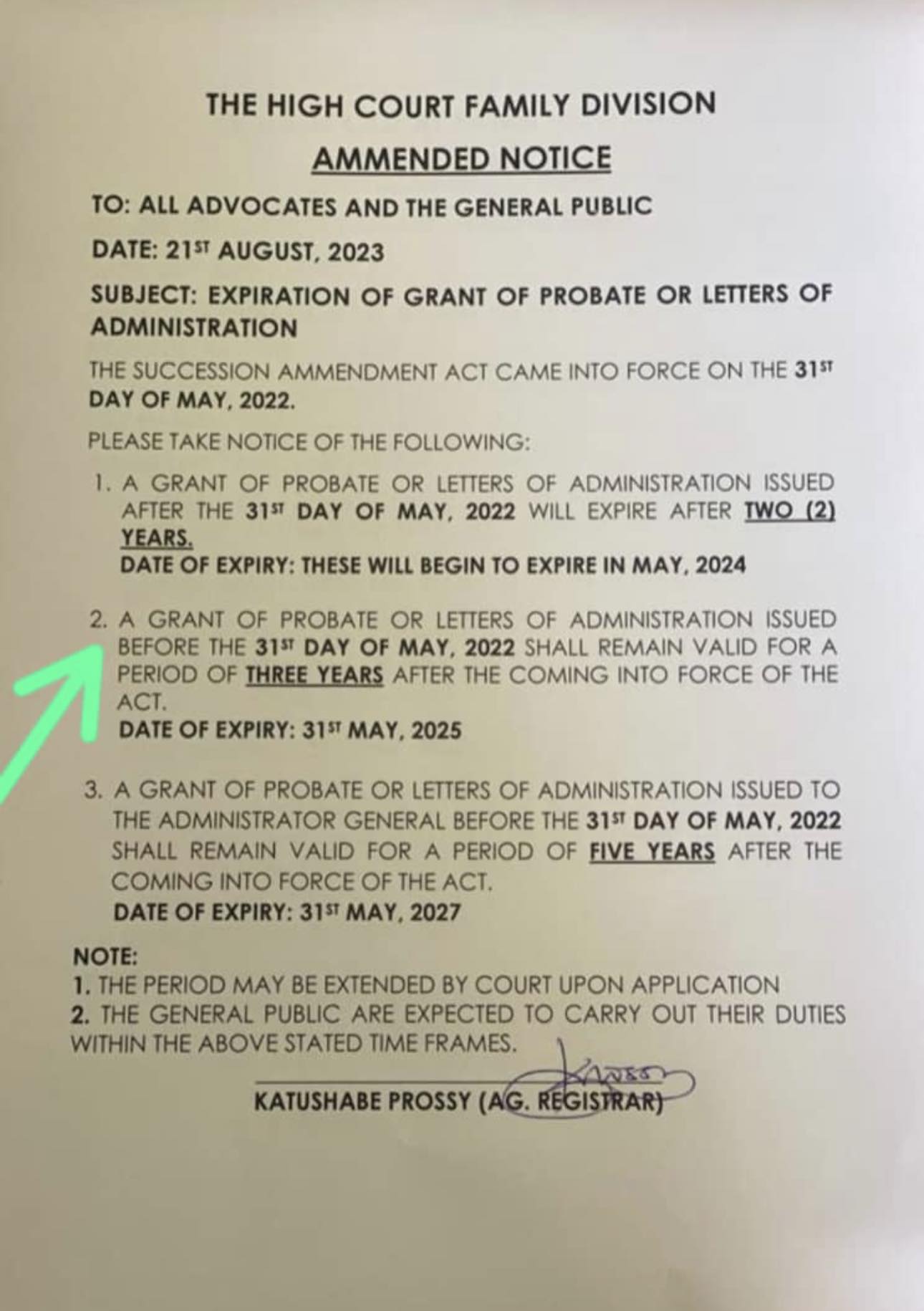
If the family cannot agree on how to divide the estate and opts instead for investment vehicles, trusts, or joint ventures, that too must be reported to court. An estate is not for personal enrichment or control. It is the legacy of someone who can no longer speak for themselves—and their true will should be respected through transparency and fairness.
And what of those administrators who only divide part of the estate—leaving the rest dormant, waiting for a time that suits them? Their day of reckoning will come. And when it does, they will wake up, perhaps like today, May 31st, 2025, stripped of any authority they once clung to. Because the estate never belonged to them. It belonged to the deceased. Their duty was to serve—not to own.
Inheritance should not tear families apart. If anything, it should remind us of the love, sacrifice, and legacy of those who came before us. May we do better—for them, and for each other.
The writer is a Lawyer



