Lusaka, Zambia
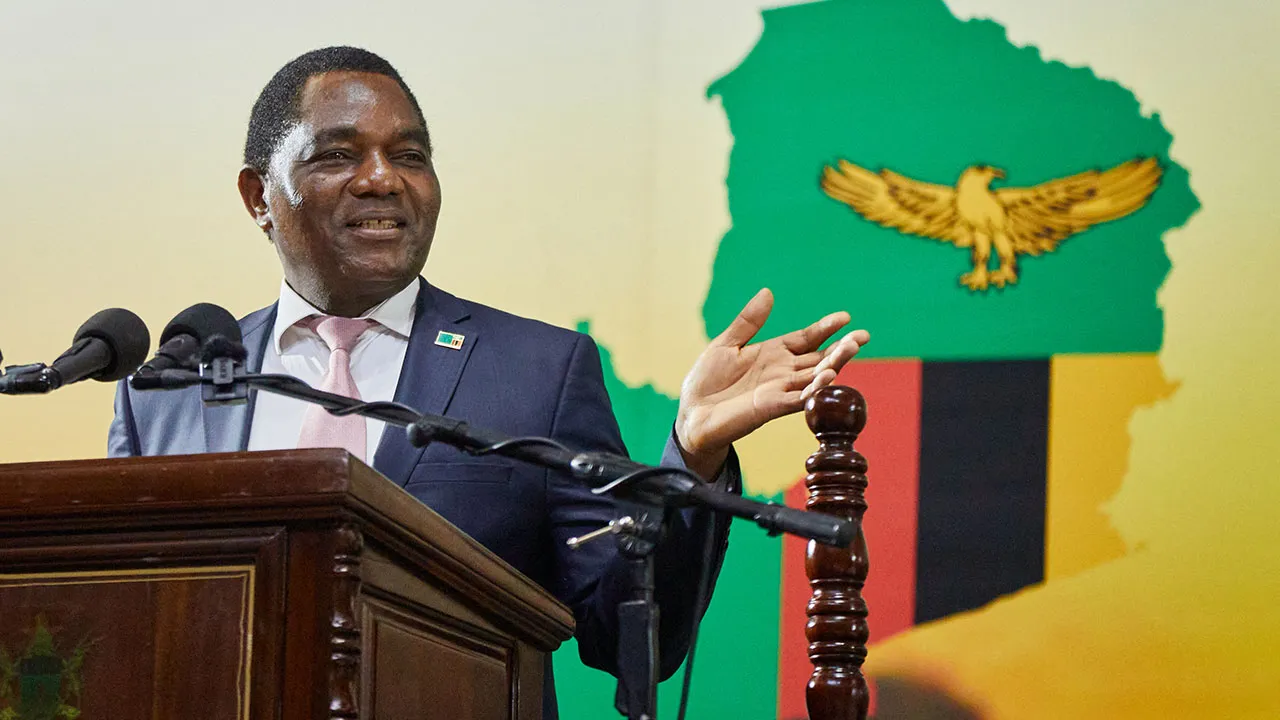
Zambians vote Aug. 13 in a presidential and parliamentary election that has narrowed, in its final stretch, into a two-way referendum on President Hakainde Hichilema's five years of economic stewardship — a record its architects call a turnaround story and its critics call a recovery most Zambians still cannot feel in their pockets. With five days of campaigning left, Hichilema, of the ruling United Party for National Development, faces Brian Mundubile, a 55-year-old lawyer and member of parliament fronting a newly merged opposition coalition, the Tonse-Pamodzi Alliance. A candidate needs more than 50% of the vote to win outright; anything less sends the country to a runoff.
From Default to Rebound
To understand what is being contested on Aug. 13, it helps to understand what Hichilema inherited when he swept to power in August 2021 with roughly 60% of the vote, defeating then-President Edgar Lungu of the Patriotic Front. Zambia was, at that point, a country in economic freefall. In November 2020, under Lungu, it had become the first African nation to default on its sovereign debt during the pandemic era, missing a $42.5 million eurobond interest payment. Inflation was running high, the kwacha was collapsing, and investor confidence had evaporated.
Hichilema's central campaign promise in 2021 was to fix that — and by most independent economic measures, his government has made real progress. Zambia reached an agreement in principle with official bilateral creditors in June 2023 to restructure $6.3 billion in debt, rescheduled over more than 20 years with a three-year grace period during which only interest is due. A separate restructuring of roughly $3 billion in international bonds, concluded with holders of eurobonds, delivered about $840 million in claim reductions and an estimated $2.5 billion in cash-flow relief over the life of Zambia's now-completed International Monetary Fund program. By October 2025, roughly 94% of Zambia's eligible external debt had been restructured, according to figures cited by the IMF, though a stubborn roughly $3.3 billion in commercial obligations — including loans from the China Development Bank — remained under negotiation into this year.
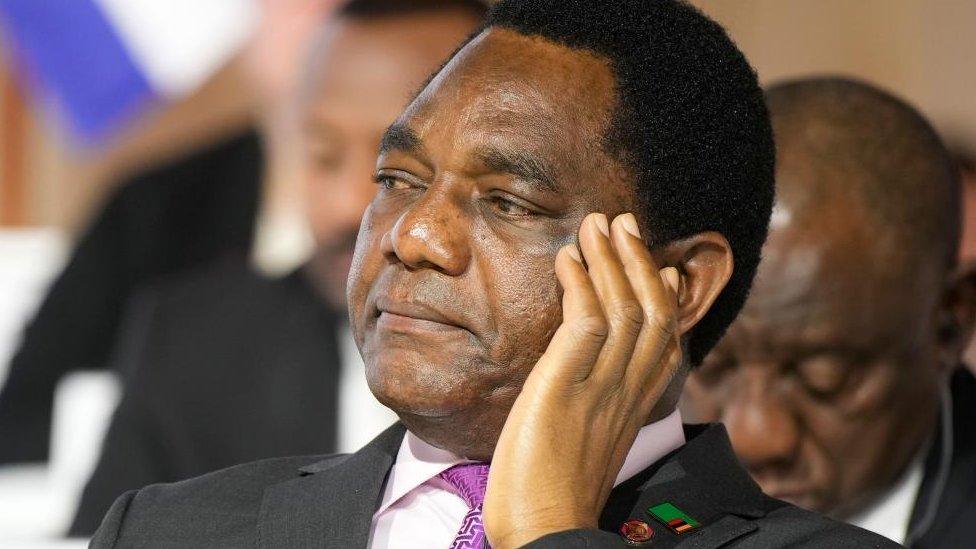
The macroeconomic dividends of that work have shown up in the numbers government officials point to on the campaign trail. Inflation, which peaked above 14% in 2022, fell to 6.5% by June 2026, back within the Bank of Zambia's 6-8% target band for the first time since 2019, driven by a stronger kwacha, copper exports and a bumper harvest, according to figures reported by Trading Economics and the IMF. Foreign exchange reserves have climbed to roughly $6.5 billion, among the strongest positions Zambia has recorded. GDP growth has recovered into the 5-6% range. The IMF's most recent staff assessment, published in May, credited Zambia with "impressive progress" on inflation, reserves and debt restructuring, while cautioning that fiscal pressure was building ahead of the election.
The Opposition's Case
Mundubile's Tonse-Pamodzi Alliance was itself born out of the turmoil that followed Lungu's 2021 defeat. The alliance is a merger, announced in May, between Mundubile's Tonse Alliance and a faction of the old Patriotic Front aligned with Lungu loyalists, running under the banner "PF Pamodzi." Mundubile's running mate, Makebi Zulu, has served as spokesperson for the family of Lungu, who died June 5, 2025, in Pretoria, South Africa, at age 68, after being flown out of Zambia for treatment of an undisclosed illness. Lungu's death was followed by a bitter, monthslong dispute between his family and Hichilema's government over funeral arrangements; the family ultimately rejected a state funeral in Zambia and buried him privately in South Africa, a rupture that still colors the relationship between the ruling party and the opposition heading into this vote.
Mundubile, an accountant and lawyer who served as government chief whip in Zambia's National Assembly before breaking with the PF, had never previously run for the presidency. He became a viable challenger only once the fractured opposition — badly split since Lungu's 2021 loss and further disoriented by his death last year — coalesced around him earlier this year. On the campaign trail, Mundubile and Zulu have sought to turn the macroeconomic recovery Hichilema's government touts into a liability, arguing that copper-driven GDP growth and falling headline inflation have not translated into relief for ordinary Zambians still grappling with the cost of living. Zambia's opposition has also seized on rolling power cuts, which have persisted as drought-diminished hydropower output has left the state utility short of the country's peak energy needs, forcing emergency electricity imports from regional neighbors. Mundubile has pledged, according to Zambian outlets covering the campaign, that a Tonse-Pamodzi government would rule out political vengeance against the UPND, framing the alliance's message around unity: "It will end with us," he has told supporters, referring to Zambia's cycles of post-election recrimination between ruling and opposition camps.
Hichilema's Closing Argument
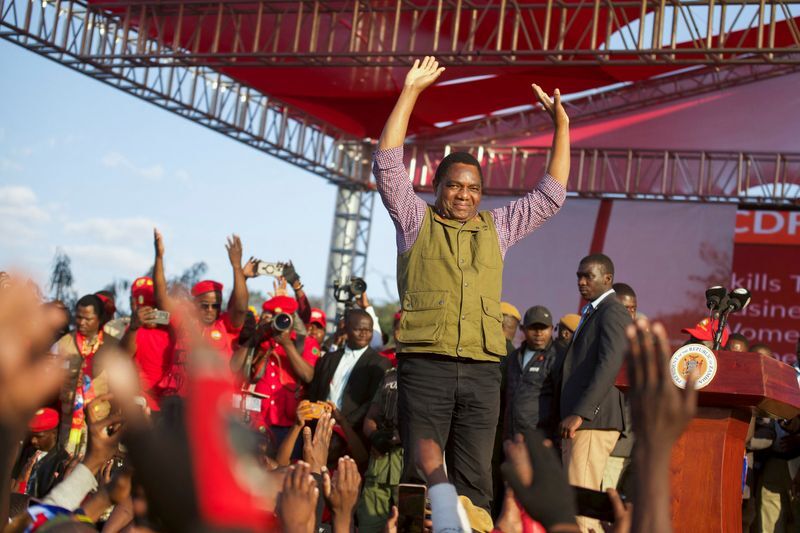
Hichilema, for his part, has spent the campaign's final days projecting confidence that the opposition has already lost the contest psychologically. Addressing supporters in Chipata on a recent Sunday, the president said Mundubile's campaign had "lost momentum" and argued that his rival and Zulu "appeared demoralized" and had effectively conceded defeat before votes were cast — a characterization Mundubile's camp has rejected. Hichilema is campaigning on a platform of continued economic revival, expanded service delivery, and mass recruitment of young Zambians into the civil service and security services, aiming to convert the macroeconomic recovery into a jobs message that speaks more directly to voters' daily concerns than debt-restructuring percentages can.
Political analysts covering the race, including in reporting by the Mail & Guardian and CNBC Africa, describe it as a genuine two-horse contest, a notable shift from 2021, when the opposition was in disarray. Still, most coverage treats Hichilema as the favorite, both because incumbency typically confers structural advantages in Zambian elections and because his government controls a dominant majority in the outgoing Parliament.
Analysis: What's Really Being Tested
The deeper significance of Tuesday's vote extends beyond Zambia's borders. As Africa's second-largest copper producer — with government targets to push production toward 3 million tonnes annually over the long term — Zambia has become something of a test case for whether an African government that submits to painful debt restructuring and IMF-supervised fiscal discipline can translate that credibility into durable domestic political support. Investors and multilateral lenders are watching Aug. 13 closely, in part because the IMF has signaled that talks on a successor lending arrangement will resume only once a new government is seated, meaning the composition of the next administration will directly shape the terms of Zambia's ongoing economic reconstruction.
The election also tests whether Zambia's opposition, badly weakened by the 2021 defeat and further scrambled by the death of its dominant figure last year, can reconstitute itself into a durable political force through alliance-building rather than personality. If Mundubile performs credibly — even in a loss — it would suggest the Tonse-Pamodzi merger has created lasting infrastructure for future contests. If the alliance underperforms badly, it could accelerate further opposition fragmentation heading into the next electoral cycle.
What to Watch Next
The most immediate question is whether either candidate can clear the 50% threshold outright on Aug. 13 or whether Zambia heads to a runoff, which would extend the uncertainty and campaign spending for weeks. Turnout will also be closely watched as a signal of whether the cost-of-living argument mobilized younger and urban voters who have grown up entirely under the post-2021 economic reset. Finally, watch how quickly — and how gracefully — the losing side accepts the result: Zambia's post-2021 political history has been marked by bitterness between the Hichilema government and the Lungu family, and how Mundubile's alliance responds to defeat, if it comes, will be an early test of the unity message it has built its campaign around.
Published By | News Editor