Written By | Evan Sande Ndahura

Evan Sande Ndahura is a Ugandan writer, political essayist, and emerging public intellectual whose work interrogates power, liberty, and social responsibility in Africa.
In Uganda, elections are not merely contests of popularity; they are battles between unequal political universes. For nearly four decades, President Yoweri Kaguta Museveni and the National Resistance Movement (NRM) have remained electorally dominant. This endurance is not explained by charisma alone, nor by voter ignorance, as some opposition voices simplistically argue. Rather, it is the product of structure, strategy, and political environment—areas where Uganda’s opposition remains profoundly disadvantaged and, at times, self-defeating.
Why the Opposition Cannot Defeat Museveni and the NRM
1. Politics Played on Unequal Ground
The Ugandan opposition operates in a political space where the ruling party enjoys near-total institutional advantage. State resources, security agencies, local government structures, and patronage networks overwhelmingly lean toward the NRM. Elections are therefore not conducted on neutral terrain but within a system already tilted before campaigns even begin.
Political scientist Giovanni Sartori once posed a question relevant here:
“Can opposition parties truly compete where the rules of competition are written and enforced by their rival?”
In Uganda’s case, the answer has consistently been no.
2. Fragmentation and the Illusion of Multiparty Strength
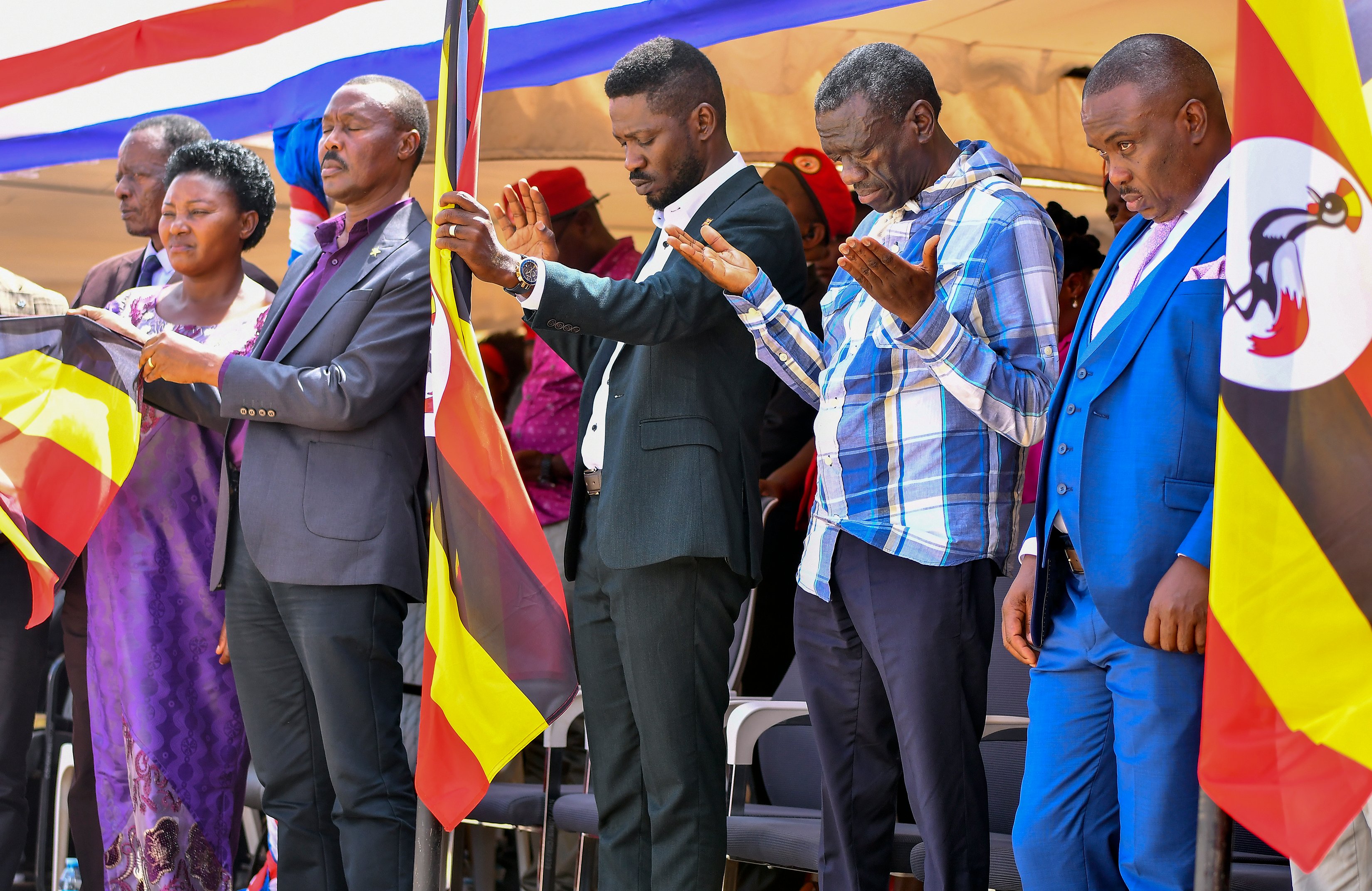
Uganda’s opposition has mistaken numerical plurality for political power. Parties proliferate, leaders multiply, but strategy fragments. Each election cycle witnesses multiple opposition candidates vying separately against a single, well-oiled ruling party machine.
Sociologist Robert Michels, in his theory of political organization, warned:
“Where leadership becomes personalized and competitive, collective purpose weakens.”
Opposition politics in Uganda has become leader-centered rather than mission-centered, resulting in duplicated messages, conflicting mobilization, and voter confusion.
3. Campaigns Without Infrastructure
Elections are won long before nomination day—through grassroots structures, consistent messaging, and sustained civic engagement. The NRM has permanent structures from village to national level. Most opposition parties awaken only months before elections, relying on rallies rather than organization.
As political theorist Francis Fukuyama argues:
“Political success depends less on ideas than on the capacity to organize and implement them.”
Ideas without machinery remain slogans.
4. Urban Noise, Rural Silence
Opposition strength remains largely urban, vocal on social media and in city rallies, but thin in rural Uganda where elections are actually decided. The NRM’s long-standing presence in rural patronage systems continues to outmatch opposition outreach.
Ugandan scholar Mahmood Mamdani critically asked:
“What happens when opposition politics speaks the language of protest but not the language of governance?”
The rural voter listens less to outrage and more to perceived stability, however flawed.
A Hard Truth: The Coming Election Is Not Winnable
Based on the current political balance, institutional control, fragmented opposition, and restricted civic space, the opposition cannot win the imminent election against Museveni and the NRM. To suggest otherwise is to mislead supporters and exhaust public hope. Elections under these conditions serve more as tests of endurance than moments of transition.
The Only Viable Path: 2031 and Beyond
The opposition’s survival—and eventual victory—depends on long-term restructuring, not short-term excitement.
Key Strategic Advice:
Unity imposed too late collapses under pressure; unity built patiently endures.
About the Writer
Evan Sande Ndahura is a Ugandan writer, political essayist, and emerging public intellectual whose work interrogates power, liberty, and social responsibility in Africa. His essays—such as “With a Mighty Pen, Not the Gun,” “Sports Betting: The New Mental Prison of the Unemployed Youth,” and reflective critiques on governance and opposition politics—blend moral philosophy with grounded political analysis. Ndahura’s writing advocates intellectual resistance, youth consciousness, and non-violent struggle as tools for African renewal. He believes that ideas, when disciplined by organization and ethics, outlive regimes.
In politics, hope without strategy is a sermon; strategy without unity is a myth. Uganda’s opposition must choose whether it wants to protest forever—or govern one day.



