Written By | Fashion and Design Desk
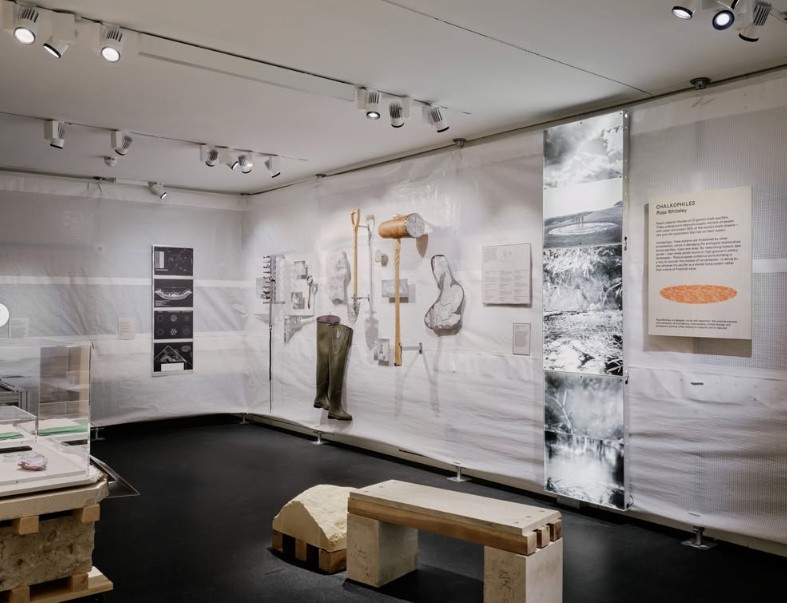
The display, simply titled "Mineral," opened to the public on June 13 and runs free through September 20
LONDON
Walk into the Design Museum's Level 2 gallery this week and you won't find chairs, posters, or consumer objects. You'll find rock. Specifically, four young designers' attempts to grapple with what's locked inside it — lithium, copper, silica, and chalk, four minerals pulled from four corners of the UK's geology, each a quiet protagonist in the story of how the world intends to power itself for the rest of the century.
The display, simply titled "Mineral," opened to the public on June 13 and runs free through September 20. It's the latest installment of the museum's Design Researchers in Residence program, which hands a small cohort of early-career designers a budget and roughly a year to turn an abstract brief into a physical body of work. This year's brief was about as timely as it gets: respond to "mineral," with an eye toward the green transition — the global pivot toward renewable energy that depends, in ways most people never think about, on digging a great deal of specific rock out of the ground.
Four Designers, Four Geologies
The 2025/26 cohort — Alfred Yatlong Yeung, Elise Limon, Rafael El Baz, and Rosa Whiteley — split the brief along geological lines. Lithium, shorthand for the entire battery economy, anchors one strand; copper, quietly underpinning every wind turbine and EV motor, anchors another. Silica and chalk round out the quartet — less glamorous, but no less foundational to construction, glass, and electronics.
What makes the residency distinctive is its refusal to let "design" mean only the finished object. The result is less a tidy product showcase than a set of investigations: material samples, research ephemera, and speculative objects that ask visitors to think about extraction, landscape, and consumption as a single continuous process.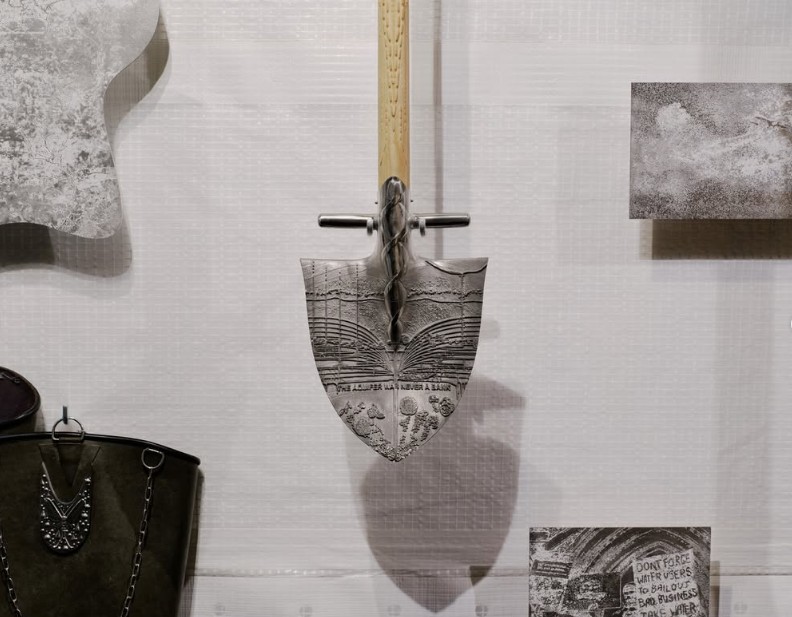
The Numbers Behind the Theme
The brief's urgency isn't abstract. The International Energy Agency estimates that by 2040, global demand for critical minerals will run roughly four times higher than today's levels — driven almost entirely by renewable energy infrastructure, EV batteries, and grid storage. That quadrupling implies a quadrupling of mining, processing, and disturbed landscapes, much of it occurring in places — including, pointedly, the UK — that don't typically register as "extraction zones."
That's the gap the Mineral researchers seem most interested in closing. Britain has its own lithium ambitions in Cornwall, and its own complicated relationship with chalk downland, copper mining history, and silica quarrying. By grounding a global supply-chain problem in specifically British geology, the exhibition asks visitors to consider the green transition as something with a literal footprint under their own feet.
A Museum Format Built for Friction
The museum's choice to make this a free, modestly scaled display rather than a blockbuster is worth noting. Major institutions worldwide have spent years racing to stage ever-larger, ever-more-Instagrammable shows. Mineral sits deliberately apart: smaller, freely accessible, and positioned as research rather than spectacle. It's a format that suits extraction industries, which don't lend themselves to glamour, and gives the four researchers room to show process and material rather than resolved, sellable objects.
It also reflects what the museum's Future Observatory initiative has leaned into: treating design research itself as a legitimate museum subject, worthy of display even when it doesn't resolve into a finished consumer product.
What This Means for the Rest of Us
For visitors expecting a conventional design show, Mineral will likely read as something stranger and more demanding — closer to an art-school research project than a polished exhibition. That's by design. The minerals this display interrogates are already inside the phone in your pocket, the battery in your car, the solar panels on rooftops, and the wind turbines reshaping coastlines. The IEA's projected quadrupling of demand isn't a distant forecast; it's a trajectory already underway.
By giving four young designers a year, a budget, and a single unglamorous word — mineral — to chew on, the Design Museum has produced something genuinely useful: a small, free, unpretentious display that makes one of the green transition's least-discussed costs impossible to ignore. It runs through September 20, conveniently spanning a summer in which most visitors will, at some point, plug something in without thinking once about where the materials inside it came from.
Sources: Design Museum London; International Energy Agency; Future Observatory



