Written By |
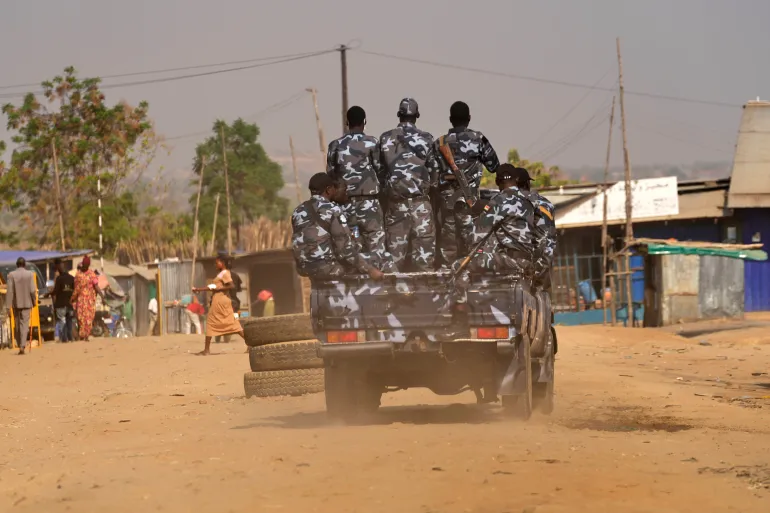
South Sudanese soldiers patrol a street in Juba, South Sudan [Photo: AP]
INTERNATIONAL NEWS DESK
Deadly clashes have erupted between the armies of Uganda and South Sudan over disputed border demarcations, resulting in at least four soldiers killed and thousands of civilians displaced.
The skirmish, which broke out on Monday, July 29, 2025, marks a rare armed confrontation between the two allied countries. The gunfight began at around 4:25 p.m. local time and escalated into a heavy exchange of fire involving artillery and tanks, according to local and military sources from both nations.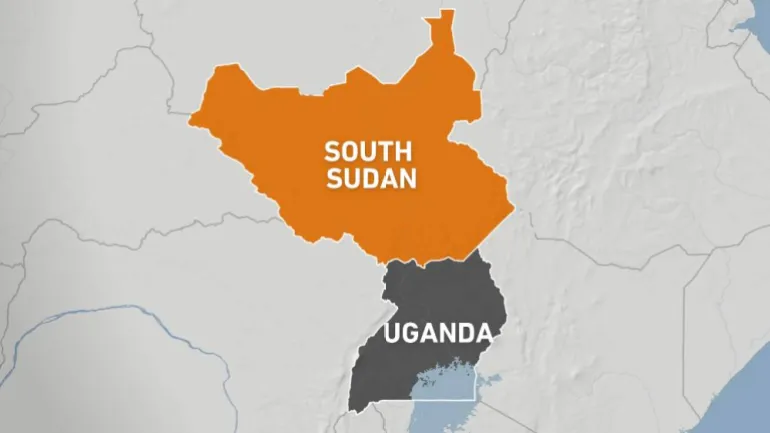
Uganda Sudan, Border
What triggered the violence?
The clash occurred in a disputed border region, with each side claiming the area as its own.
Ugandan military spokesperson Maj. Gen. Felix Kulayigye said South Sudanese soldiers had crossed into Uganda’s West Nile region and refused to leave when ordered, forcing Uganda’s army “to apply force.”
One Ugandan soldier was killed in the confrontation, and Ugandan troops reportedly killed three South Sudanese soldiers in retaliation.
In contrast, South Sudanese military spokesperson Maj. Gen. Lul Ruai Koang claimed the incident took place within South Sudan’s Kajo Keji County, stating that both armies exchanged fire and suffered casualties. A local leader in the county, Wani Jackson Mule, accused Uganda of launching a “surprise attack,” resulting in the deaths of five South Sudanese security officers—including two police and one prison officer.
The fighting sent residents fleeing for safety, with reports of families being separated in the chaos. Photos posted on social media showed priests helping collect bodies as tension gripped border communities.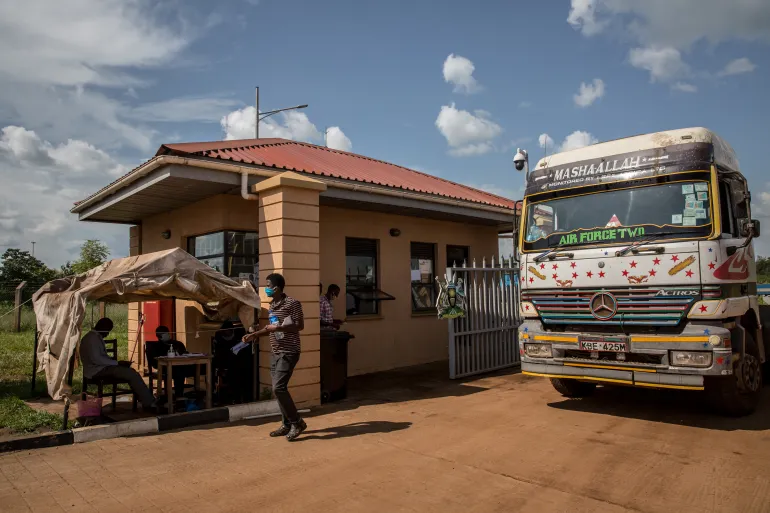
A truck enters a checkpoint at the Elegu border point between Uganda and South Sudan [Photo: Getty Images]
Border tensions: A historical dispute
Uganda and South Sudan share a long, porous border whose demarcation has been contested since the colonial era. Despite establishing a joint border committee, efforts to clearly mark the boundary have failed repeatedly. In 2010, tensions flared when Uganda accused Sudanese troops (before South Sudan’s independence) of attacking Ugandan territory in Moyo District. Clashes also occurred in 2020, leaving four soldiers dead in Pogee, another disputed area. In September 2024, the Ugandan Parliament urged the government to expedite the border demarcation process, citing insecurity and cross-border criminal activity, including cattle rustling.
Following this week's escalation, both countries have agreed to form a new joint investigation committee to examine the causes of the violence and address recurring border disputes, according to South Sudan’s military.
Uganda’s role in South Sudan’s internal affairs
Uganda has been a longstanding ally of South Sudanese President Salva Kiir and his SPLM (Sudan People’s Liberation Movement) party. President Yoweri Museveni supported South Sudan’s independence struggle and, in 2013, deployed troops to assist Kiir during the civil war against rival Riek Machar, now Vice President. 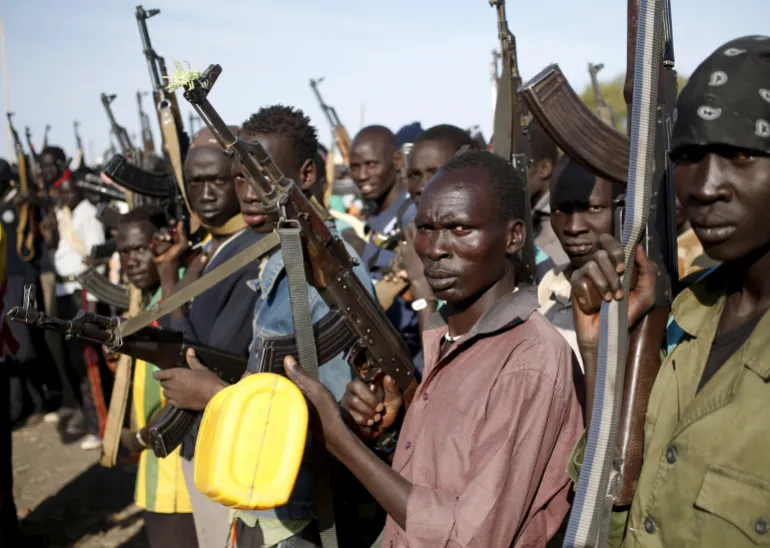
Jikany Nuer White Army fighters hold their weapons in Upper Nile State, South Sudan, on February 10, 2014 during the country’s civil war [Photo: Reuters]
Earlier this year, with tensions resurfacing between Kiir and Machar, Uganda again deployed special forces to support government troops against the White Army, a Nuer militia allegedly backed by Machar.
However, Uganda’s presence in South Sudan has sparked growing resentment. Supporters of Machar accuse Uganda of interfering in internal affairs, violating the UN arms embargo, and backing human rights abuses, including the alleged use of barrel bombs—claims Uganda has denied.
A fragile alliance in peril?
The border clash comes amid rising internal strife in South Sudan and questions about the strength of the Uganda-South Sudan alliance. Despite official statements referring to the countries as "sisterly republics," tensions on the ground tell a different story. Some South Sudanese social media users have expressed anger at Uganda’s growing influence, while human rights organizations like Amnesty International have warned that Kampala’s actions could destabilize the fragile peace process.
As the two governments seek to calm the situation with diplomacy and joint investigation efforts, the broader concern remains: will these repeated flare-ups escalate into something more dangerous?
SOURCE: ALJAZEERA / Shola Lawal
READ ORIGINAL STORY HERE:
What has triggered deadly clashes at Uganda’s border with South Sudan?



