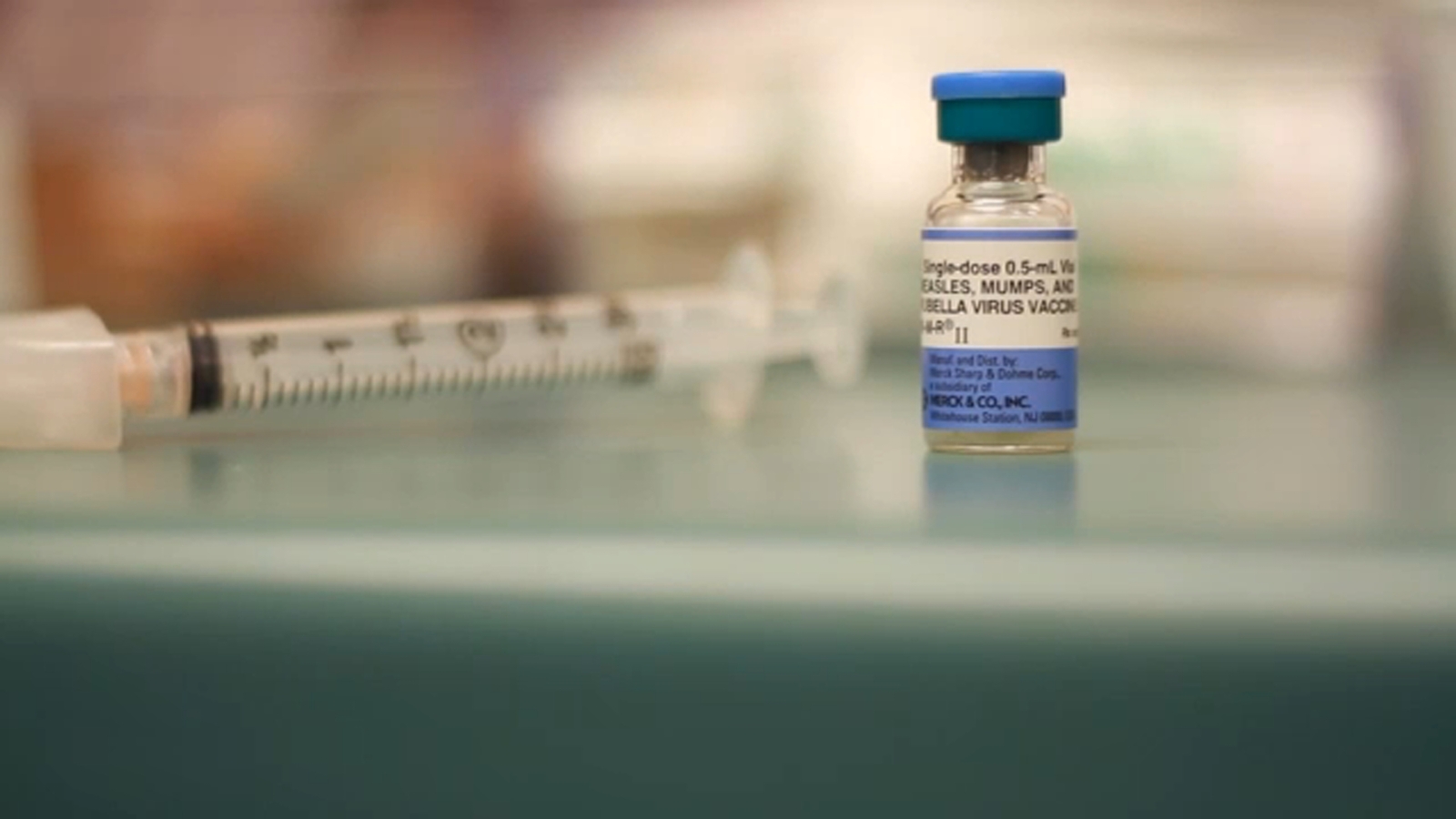
Washington, D.C. / Mexico City
The numbers read like a public health nightmare pulled from a pre-vaccine era: 47,459 confirmed measles cases. Forty-four deaths across three countries. A regional infection rate that has not been seen in the Western Hemisphere since 2004 — before smartphones, before Instagram, before an entire generation of parents grew up never having seen a child gasp for breath through measles-induced pneumonia.
It is happening right now, and it is happening close to home.
The Pan American Health Organization (PAHO), the regional arm of the World Health Organization, sounded the alarm this month in stark terms: measles transmission across the Americas has reached its highest level in 22 years, and the public health risk remains “very high.” The virus that many believed had been chased into extinction on this side of the globe is instead ripping through communities from Central America to the northern United States and Canada, exploiting exactly the kind of vaccination gaps doctors have been warning about for years.
“Measles leaves no room for complacency,” said Dr. Daniel Salas, Executive Manager of PAHO's Special Program for Comprehensive Immunization, in the organization's August 8 alert. “We know how to stop it: achieving high vaccination coverage, detecting suspected cases early, and responding rapidly to interrupt chains of transmission. Every outbreak exposes immunity gaps that must be urgently addressed, particularly among children, under-vaccinated communities, and populations with limited access to health services.”
His warning lands against a grim backdrop. As of epidemiological week 28 of 2026 — the week ending July 18 — the region had already logged more than three times the total number of cases recorded in all of 2025, when 15,011 infections and 32 deaths were documented for the entire year. Four countries alone — Guatemala, Mexico, the United States and Peru — now account for 95% of every confirmed case on the continent.
Ground Zero: Guatemala's Crisis
At the center of the outbreak is Guatemala, which has reported a staggering 30,371 confirmed cases and 26 deaths — by far the largest toll anywhere in the Americas this year. To put that in perspective, that is more confirmed measles cases in a single Central American nation this year than the United States recorded across the entire country during the peak of its worst modern outbreak years combined.
Mexico follows with 12,255 cases and 17 deaths. The United States has confirmed 2,260 cases so far in 2026 — already surpassing its full-year 2025 total — while Peru has logged 1,277 cases and Canada 1,107.
Health workers on the ground describe a virus exploiting every crack in the system: overcrowded clinics, remote Indigenous communities with little access to vaccination campaigns, and population movement across borders that lets outbreaks leapfrog from one country to the next. PAHO's risk assessment specifically flags the disproportionate toll on Indigenous communities, migrants, and displaced populations — the same groups that have historically borne the brunt of vaccine-preventable disease outbreaks in the region.
And it is not just a Western Hemisphere problem. According to the World Health Organization, 186,168 measles cases were reported worldwide through July 2026 — a 12% jump over the same period the year before. The Americas outbreak is the sharpest edge of a broader global resurgence.

Why Is This Happening Now?
Measles is, by nearly every epidemiologist's account, one of the most contagious pathogens known to humankind. A single infected person can transmit the virus to 12 to 18 others in a fully susceptible population — far more contagious than COVID-19 or seasonal flu. The disease spreads through the air, lingering in a room for up to two hours after an infected person has left it. Symptoms start deceptively mild: fever, cough, runny nose, red watery eyes. Then comes the telltale rash. In serious cases, measles causes pneumonia, encephalitis (brain swelling), permanent blindness and death.
There is only one thing standing between measles and a population: vaccination. And that wall has been crumbling.
To stop transmission, health authorities need at least 95% of a population covered with two doses of the measles-containing vaccine — the threshold for so-called “herd immunity.” PAHO's own alert delivers a sobering statistic: only 33% of countries in the Americas have achieved that 95% threshold for a first MMR dose, and just 20% have hit it for the second dose.
In the United States specifically, the erosion has been slow but steady. According to CDC data released in August, kindergarten vaccination coverage fell to 92.4% for the 2025-2026 school year — continuing an unbroken downward slide from 95.2% coverage in the 2019-2020 school year, the last year before the pandemic scrambled routine childhood immunization schedules. That decline leaves an estimated 280,000 American kindergartners without full protection against measles, mumps, rubella and polio.
Vaccine exemptions, meanwhile, are climbing in the opposite direction. Exemptions from one or more required vaccines rose to 4.2% nationally, up from 3.6% the year before, with 24 states now reporting exemption rates above 5% — well past the danger line epidemiologists watch for local outbreaks to take hold. Exemption rates rose in 41 states and Washington, D.C.
What Experts Are Watching
Public health officials say the current wave is a preview of what happens when vaccination coverage slips even a few percentage points below the herd-immunity threshold — the effect isn't gradual, it's explosive, because measles is so ferociously contagious that even small pockets of unvaccinated people can ignite large, fast-moving outbreaks.
PAHO's risk assessment, updated in early August following a string of mass gathering events across the region, specifically calls out international travel and large public gatherings as accelerants — crowded conditions where one infected traveler can seed outbreaks in cities that had gone years without a single case.
Encouragingly, PAHO notes that some of the region's largest outbreaks “have recently shown signs of slowing.” But officials are far from declaring victory. Transmission remains active in multiple countries, and the accumulation of unvaccinated children over several years means the region's pool of susceptible people keeps growing even as individual outbreaks ebb and flow.
The stakes go beyond case counts. The Americas region achieved measles elimination status — meaning the disease was no longer continuously transmitting locally — back in 2016, a milestone that took decades of coordinated vaccination campaigns to achieve. Health officials warn that status could formally be revoked if transmission chains continue uninterrupted, a black mark that would signal a genuine reversal of one of public health's proudest achievements.
What This Means For You
If you're a parent, the advice from every major health authority remains unchanged and unambiguous: check your child's vaccination records. The MMR vaccine is typically given in two doses — the first at 12 to 15 months of age, the second between 4 and 6 years old — and is roughly 97% effective at preventing infection after both doses.
If you're an adult born after 1957 who isn't sure of your vaccination status, or who only received a single dose (common before the two-dose schedule became standard in 1989), talk to your doctor about a booster, especially if you're planning international travel, live in a community with lower vaccination rates, or work in healthcare, education or childcare.
Travelers heading to Guatemala, Mexico or other outbreak-affected areas should confirm their MMR status at least two weeks before departure — vaccine-derived immunity takes time to build. And if you or your child develop a fever alongside a spreading rash after recent travel or exposure to a confirmed case, call your doctor before showing up at a waiting room, since measles is so contagious that walking into a crowded clinic unannounced risks exposing dozens of other people, including infants too young to be vaccinated and immunocompromised patients for whom the virus can be lethal.
Public health officials are also urging communities to support, rather than resist, local vaccination outreach — school clinics, pop-up vaccination drives, and catch-up campaigns that are often the only practical way to close coverage gaps in under-resourced or remote areas.
The Bottom Line
Measles is not a disease of the past. It is a disease that is only kept in the past by sustained, high vaccination coverage — and the moment that coverage slips, the virus is more than ready to come roaring back. That is exactly what's happening across the Americas right now, in real time, with a death toll that is rising by the week.
“Every outbreak exposes immunity gaps,” Salas warned. The question hanging over the region now is how many more outbreaks — and how many more deaths — it will take before those gaps start closing instead of widening.
Published By | Features Editor