Written By |
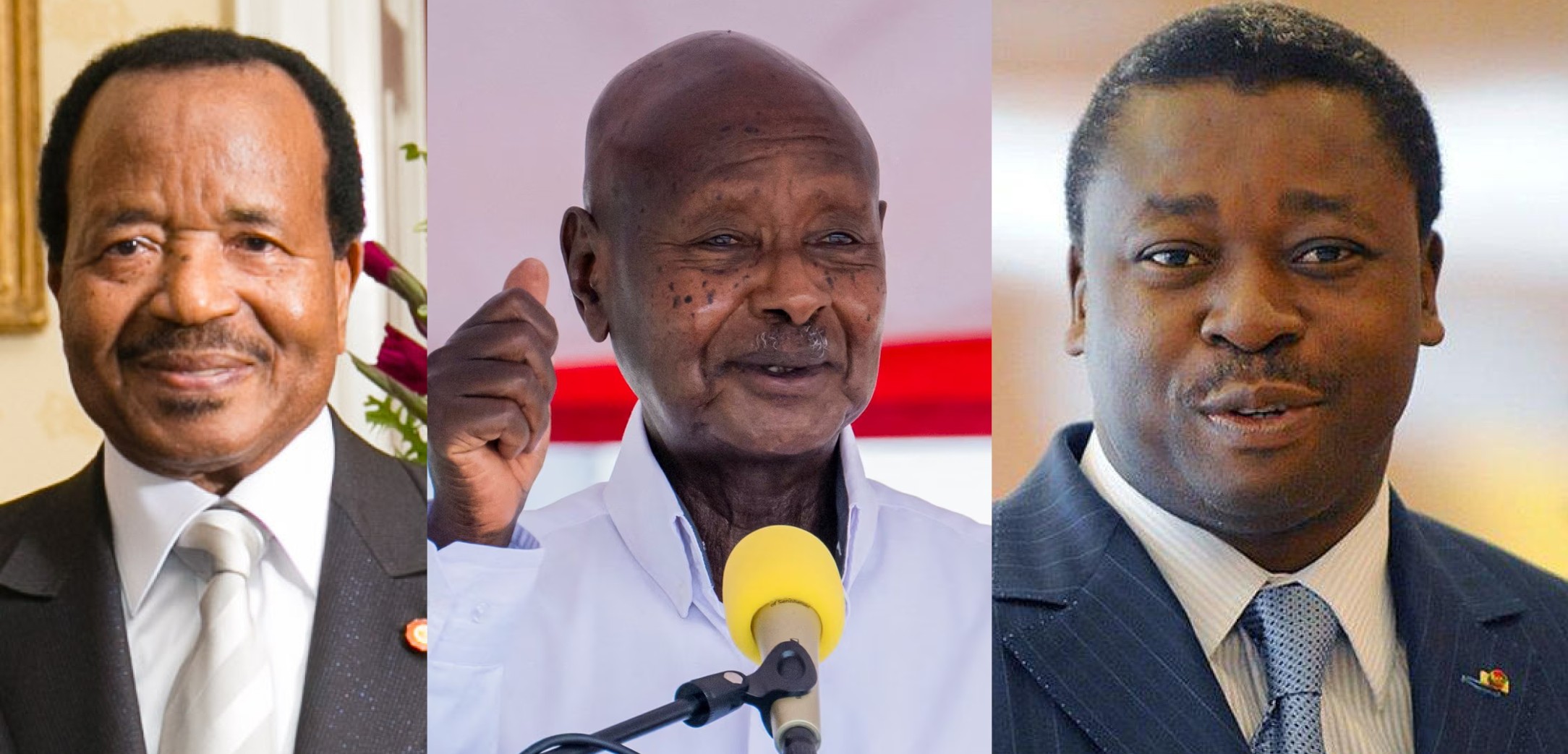
African presidents have masterd the art of entrenchment
By Evan Sande Ndahura
When citizens ask whether long-serving leaders remain because of witchcraft, luck, or superior politics, the answer is prosaic: there is no magic — only a playbook. Constitutional rewriting, rigged elections, co-opted security forces, captured judiciaries, personalised patronage, dynastic succession and information control combine into a durable machine that looks legitimate while shutting down alternatives. This is visible from Yaoundé to Lomé to Kampala — and from the Arab world’s post-2011 trauma we learn the cost of overthrowing that machine without a plan. “There is no mystic circle around presidents’ palaces — only cordons of soldiers, pliant courts and networks of patronage masquerading as governance.”
1. Change the rules of the game (constitutional engineering).
Leaders remove term limits, extend mandates or reinterpret constitutions to legalise their stay. This is a staple tactic: a façade of legality hides an existential overhaul of democratic guardrails. Cameroon’s long constitutional and institutional maneuvering around the presidency has been analysed by scholars using Afrobarometer data; similar tricks were used in other Francophone and Anglophone Africa.
2. Control the security apparatus.
Regimes keep the army, police and intelligence loyal through promotions, exclusive budgets and fear. When the security sector is a regime’s first loyalty, elections become theatre: outcomes are protected by force if necessary. Reports from Togo and other patrimonial states detail how the military backing of rulers blunts opposition challenges.
3. Capture institutions — especially the judiciary and electoral bodies.
A predictable legal verdict from a pliant Constitutional Court can wipe out real electoral gains; an electoral management body that’s stacked with allies announces "victory." Togo’s rapid post-succession legalisation of a dynastic transfer is an example of this institutional capture.
4. Patronage and political economy: buy loyalty, starve rivals.
Jobs, contracts, and access to state resources create a network of dependent elites. This clientelist system is central to regimes that look democratic on paper but are sustained by personalised largesse in practice. Scholarly syntheses of African politics show how patronage networks are the backbone of many long-running regimes.
5. Control information and space for dissent.
Media capture, internet restrictions, harassment of journalists and NGOs blunt opposition organizing and shape the narrative. During recent Cameroonian electoral crises, internet blackouts and media pressure were reported alongside arrests.
6. Dynastic succession and family rule.
Where succession is foreclosed, leaders install relatives or trusted lieutenants (Togo’s Gnassingbé dynasty being the clearest regional example). Constitutional fixes, pseudo-elections and military backing are used to normalise family transfer of power.
7. International realpolitik and selective enforcement.
External actors often prioritise “stability” or strategic relationships over democratic purity; that tolerance buys overstayers time. As Henry Kissinger’s realist logic reminds us, geopolitics can tolerate unsavoury stability. That international permissiveness matters
Case study: Paul Biya — longevity by legalism, networks and repression
Paul Biya’s tenure (prime minister in the 1970s; president since 1982) is the textbook case of durability through institutional entrenchment, co-optation and repression. Analyses combining Afrobarometer and other data show Biya’s regime remained durable by mixing patronage, regional balancing, control over security and suppression of dissent — while deploying constitutional and electoral procedures to claim legitimacy. In practice this meant: limiting the operational space of opposition parties, using state resources in key regions, and relying on pliant courts and administrative controls to validate electoral outcomes. Recent elections (2025) produced deadly protests, internet restrictions and arrests after the announcement of official results — the latest episode in a pattern where formal institutions are used to contain real political competition.
Effect on Cameroon: prolonged personal rule has coincided with stunted democratic institutions, uneven development (especially in Anglophone regions where a violent conflict has festered), and periodic spikes of unrest that depress investment and human security. The long-term cost is weakened state capacity and fractured national cohesion.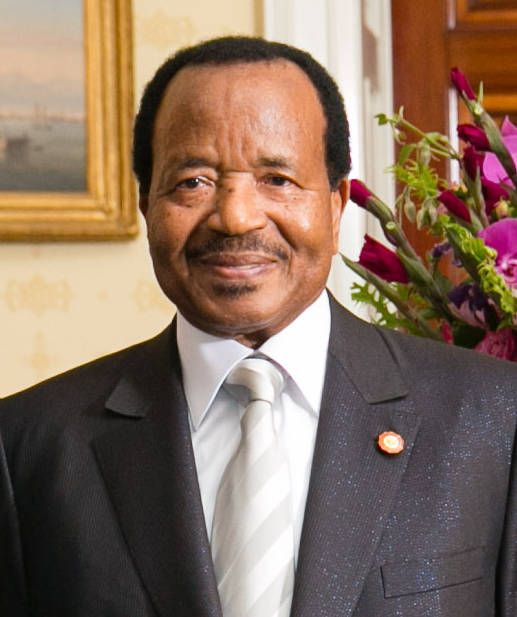
Paul Biya
Case study: Togo — the family machine
Togo’s post-1967 trajectory shows how a single family plus military alliance can normalise dynastic rule. After Eyadéma’s coup and decades of entrenched rule, ’s succession was rapidly legalised by constitutional and parliamentary moves that masked military backing as legality. The system depends on a small network of elites and security guarantees, making peaceful transition extraordinarily difficult without elite fracture or external pressure.
Case study: Uganda — revolution to entrenchment
Yoweri Museveni rose to power promising a break from patrimonialism, but over the decades has transformed the state into a personalised political machine: constitutional amendments to remove term and age limits, co-optation of regional elites, control over security forces, heavy use of patronage and tactics to sideline strong challengers. The result is a hybrid system: some developmental gains mixed with democratic erosion and shrinking civic space. Recent confirmations of Museveni’s candidacies underscore the persistence of these tactics.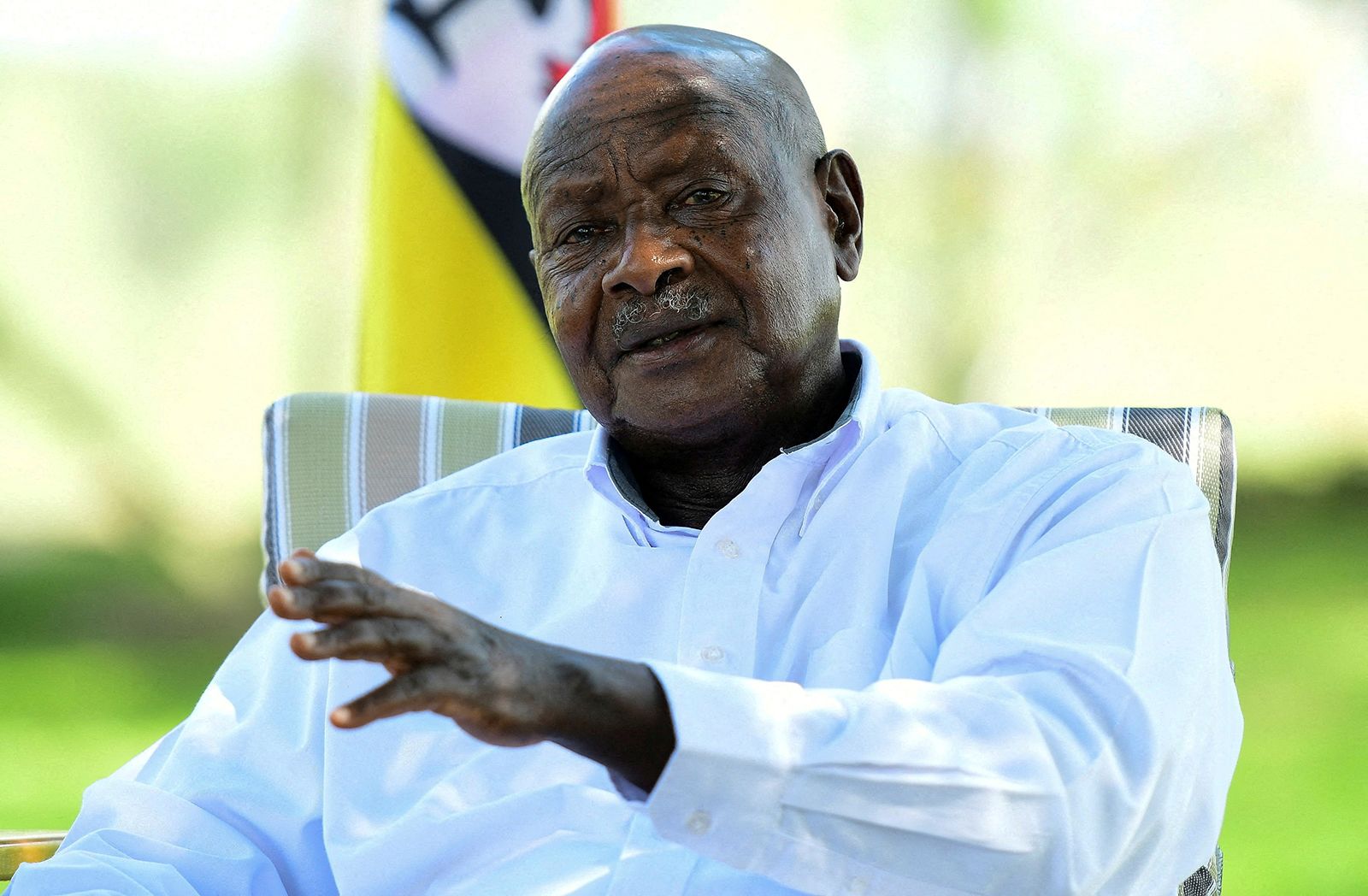
President Museveni
The costs of overthrowing — lessons from Tunisia, Egypt, Libya
When change does come, it is often messy and costly. The Arab Spring showed that removing an entrenched leader can lead to (depending on context) democratic openings, military counter-coups, or state collapse: Tunisia: the 2011 revolution briefly produced democratic gains, but recent backsliding and President Kais Saied’s centralisation have shown how fragile transitions can be; arbitrary detention and a power grab since 2021 reversed many gains.
Egypt: Mubarak’s removal led to a short democratic window and then a military return to power under Sisi — with consolidation of repression and economic difficulties that blunted the revolution’s social promises.
Libya: the overthrow of Gaddafi removed a dictator but also produced fragmentation, civil war and a crippled state, costing the country billions and leaving persistent insecurity.
Lesson: Removing a dictator without a credible plan for security, institution-building, reconciliation and the economy can replace one monster with many. That is why both reformers and international partners must plan transitions — not only regime departure.
What scholars tell us
Mahmood Mamdani highlights how colonial legacies of indirect rule and “decentralised despotism” create political forms that are easily repurposed for post-colonial authoritarianism: power is often exercised through customary or personalised hierarchies rather than impersonal institutions.
Goran Hyden and comparative Africanists emphasise that durability is a function of institutional capture and a patronage political economy — not mystical skill. Hyden’s synthesis points to the predictable logics of elite bargaining, clientelism and state weakness.
Michael Twaddle (and editors on Uganda) chart how revolutionary legitimacy can calcify into entrenched rule when movements institutionalise without building checks on executive power.
These scholars converge: overstaying is structural, not supernatural. The “magic” is a coalition of legal manipulation, coercive power and economic dependence.
1. Restore and lock term limits into constitutions with entrenchment clauses (harder to amend without wide support).
2. Security-sector reform and civilian oversight: break personal chains of loyalty by professionalising the military and police.
3. Independent electoral management and judiciary: international support for technical capacity and local civil-society monitoring.
4. Targeted sanctions and diplomatic isolation for clear abuses — calibrated to avoid civilian harm.
5. Economic transparency and dismantling of personalised patronage networks: public procurement reforms, asset disclosure, and anti-corruption enforcement.
6. Support decentralisation and local government capacity so politics is less winner-takes-all at the center.
7. Invest in civic education, free media and youth employment — the social base for durable democratic norms.
8. Plan transitions: international and local actors should design security, justice and economic plans before a regime collapses to avoid chaos — the Libyan case is a warning.
Final word — a realistic optimism
Overstaying in power is not supernatural. It is created and maintained by choices — legal tweaks, bribed elites, silenced voices and armed men. That means it can be unmade by choices too: political courage, institutional repair, and patient, strategic action. The Arab Spring taught us that toppling a despot is the easy, noisy part; building a resilient politics that prevents the next despot is the long, quiet, and urgent work. The only real “magic” that can stop overstaying is a coalition — citizens, opposition, civic institutions, reforming elites and international partners — committed to building institutions that no single person can own.
Torch Media Africa



