Written By | Health News Agencies
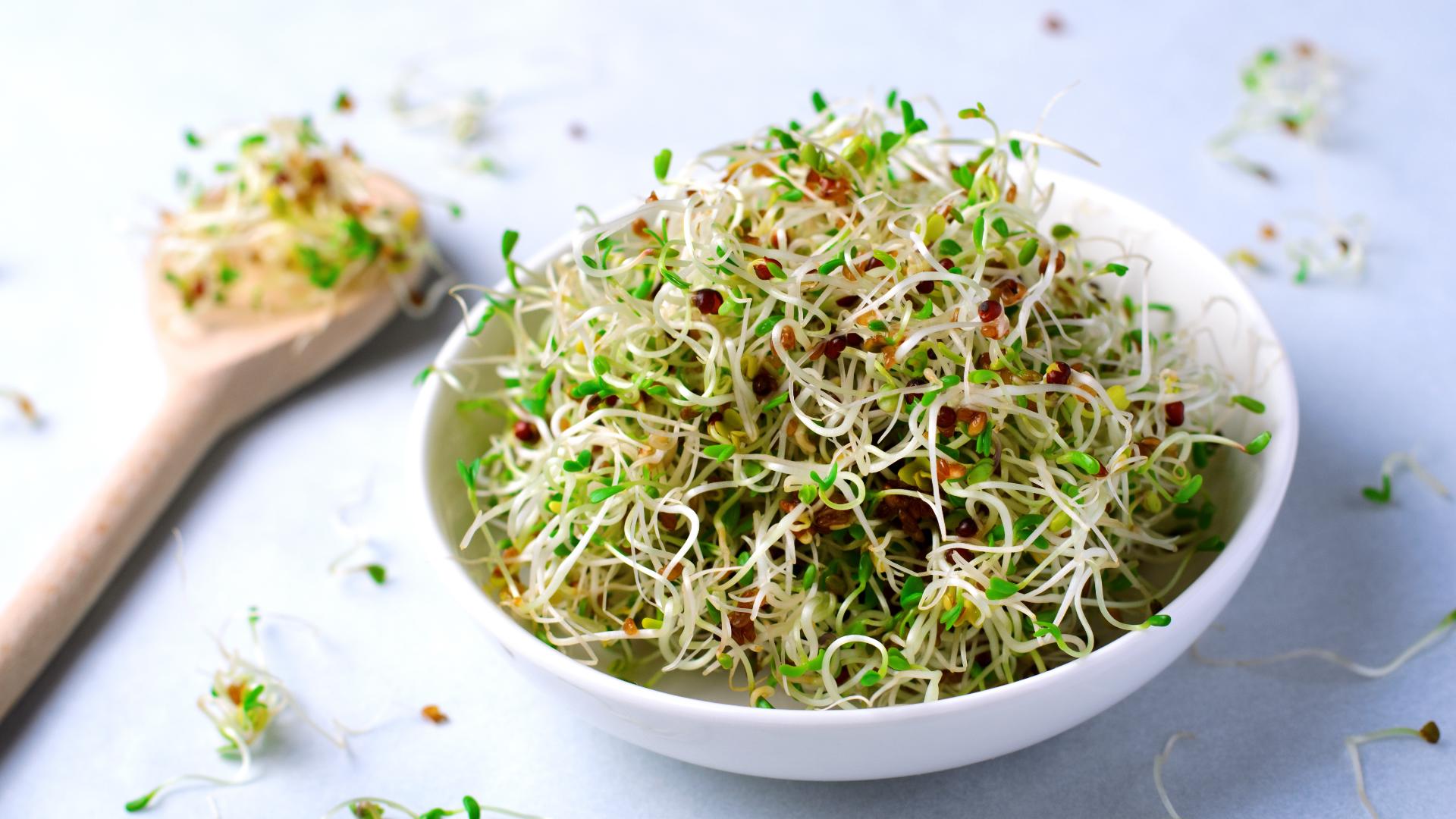
Two sprout companies. Two open federal investigations. Seventy-seven confirmed illnesses across 17 states — and two people unlucky enough to catch both bugs at once
HEALTH
It starts the way it always starts. Someone buys a clamshell box of pale, tangled, faintly peppery sprouts, because a dietitian told them to, or a health blogger told them to, or because the packet said "superfood" and they were trying to do better this year.
They pile it on a sandwich. They blitz it into a smoothie. They think they are doing something virtuous.
And then, for 77 Americans this summer, comes the fever. The cramps that fold a grown adult in half. The diarrhoea that will not stop. For six of them, a hospital bed.
Right now, as of this morning, the Centers for Disease Control and Prevention is running two separate open outbreak investigations into sprouts at the same time — a situation food-safety veterans describe as unusual even for a product with sprouts' notorious history. One involves broccoli sprouts. One involves alfalfa and radish sprouts. Different companies. Different states. Different bacteria. Different seeds.
Same crop. Same fundamental problem. Same warning that American regulators have been issuing, in nearly identical language, since 1998.
OUTBREAK ONE: THE BROCCOLI SPROUTS
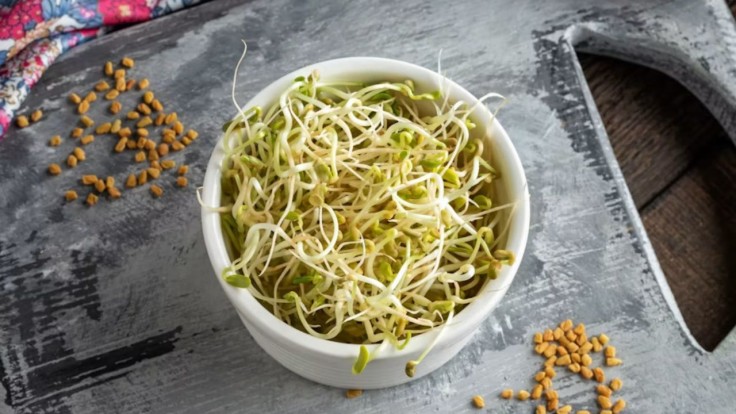
The newer of the two investigations was opened by the CDC on 9 September and last updated on 11 September. It concerns broccoli sprouts produced by Evergreen Fresh Sprouts, LLC, of Moyie Springs, Idaho — a town of a few hundred people tucked up against the Canadian border.
The numbers as they stand: 22 confirmed cases, two hospitalisations, no deaths, four states. Idaho, Montana, Washington and Utah.
The pathogen is Salmonella Bovismorbificans — not one of the household-name serotypes, but a perfectly capable cause of misery. Illness onset dates run from 7 July to 26 August 2026, meaning people were getting sick for the better part of two months before the recall landed.
The epidemiology is about as clean as this kind of investigation ever gets. Of the 19 people interviewed by health officials, all 19 — 100 per cent — reported eating sprouts. Seventeen of them, 89 per cent, specifically named broccoli sprouts. When every single person you interview reports eating the same food, investigators do not need to agonise for long.
The recall came in two stages. On 4 September, Evergreen Fresh Sprouts initiated a recall after a broccoli sprout sample collected and analysed by Montana state officials tested positive for Salmonella. On 10 September, the company recalled 215 cases of broccoli sprouts outright, covering product in plastic bags and clamshell containers with use-by dates of 9/7, 9/9, 9/11, 9/14 and 9/16 — sold to food co-ops, restaurants, foodservice customers and grocery stores across Idaho, Montana and Washington.
That last detail carries a sting. The FDA's notice includes the standard caveat that product "may have been distributed further, reaching additional states." Translation: nobody is entirely certain where all of it went.
Montana's Department of Public Health and Human Services issued its own alert on 3 September, when the state count stood at two Montana cases, 13 in Washington and one in Idaho. State health officials said at the time that they expected Montana's numbers to rise once additional laboratory testing was completed. Local sanitarians were dispatched to contact stores known to have sold the product and have it pulled from shelves. Samples went to the Montana Public Health Laboratory.
The department's advice was unambiguous: do not eat them, throw them away or return them, and wash and sanitise anything they touched.
OUTBREAK TWO: THE ONE WITH TWO BUGS
The second investigation is bigger, older, and carries a detail that made even seasoned food-safety watchers sit up.
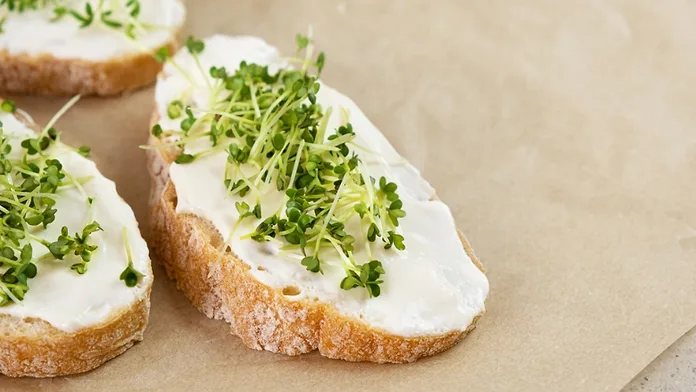
Opened by the CDC on 21 August and last updated on 1 September, it concerns alfalfa sprouts produced by Everything Sprouts, LLC, of Minnesota, sold under the Calco and Everything Sprouts brands. On 28 August the company expanded its recall to include certain lots of a Robust Radish Sprout Mix, over the risk of cross-contamination with the recalled alfalfa.
The numbers: 55 confirmed cases, four hospitalisations, no deaths, 15 states.
And then the line that sets this outbreak apart, flagged as urgent on the CDC's own page: this outbreak involves *two pathogens — Salmonella and E. coli — and two people have been infected with both at once.*
Catching Shiga toxin-producing E. coli is bad. Catching Salmonella is bad. Catching both simultaneously from the same product is the kind of thing that happens when contamination is not a single unlucky event but a systemic one — when whatever went wrong went wrong broadly enough to carry more than one organism into the same batch.
E. coli is the more frightening of the two. Most people get severe stomach cramps, diarrhoea that is often bloody, and vomiting. Some develop haemolytic uraemic syndrome — a form of kidney failure that requires hospitalisation and can cause permanent damage. It disproportionately strikes children.
The CDC has been explicit that the two sprout investigations are not connected. Montana's health department said the same thing in its release: the broccoli sprout outbreak "appears unrelated" to the alfalfa sprout outbreak. Two entirely separate companies, in two different states, failing independently, in the same season.
Add them together and you get 77 confirmed illnesses, six hospitalisations, and 17 states — from a single category of food that sits, at most, on the periphery of the American diet.
WHY SPROUTS? THE ANSWER IS UNCOMFORTABLE
Here is the question that ought to be asked more often: why is it always sprouts?
The answer is not bad luck, and it is not one careless operator. It is baked into what a sprout is.
Every other vegetable you eat raw is grown in a field, where sunlight, wind and time work against bacteria. A sprout is grown in a warm, dark, humid, nutrient-rich chamber — conditions chosen precisely because they make seeds germinate fast. Those are also, unfortunately, close to ideal laboratory conditions for growing bacteria.
So the sprouting process does not merely fail to kill contamination. It amplifies it. A handful of Salmonella cells riding on a seed can multiply dramatically over the days it takes that seed to become a sprout.
And the contamination usually arrives on the seed, long before the sprouting facility ever sees it. Pathogens on seed can survive for several years. The FDA has documented how they get there: rodent and bird activity inside seed conditioning operations; chicken manure used to fertilise the fields where seed was grown; transport in unclean vehicles; irrigation water contaminated by runoff from neighbouring fields where manure was spread.
Seeds and sprouts can pick up pathogens at any point in the chain — the seed farm, the conditioner, the supplier, the transport, the sprouting operation, the distributor, the retailer, even the consumer's own kitchen. And the seed used for sprouting is frequently agricultural seed, produced for planting rather than eating, held to agricultural rather than food-grade standards.
Then comes the final problem: there is no kill step. Cooking destroys Salmonella and E. coli. But the entire appeal of sprouts is that you eat them raw, alive and crunchy. Cook them and you lose the texture and much of the point. Washing does not solve it either — the bacteria can live inside the sprout tissue, not just on the surface, beyond the reach of any rinse.
A THIRTY-YEAR RAP SHEET
If this all sounds like a recently discovered problem, it is not. The record is long and the numbers are grim.
Between 1996 and 2020, the FDA counted 52 reported foodborne illness outbreaks in the United States associated with contaminated sprouts, causing an estimated 2,700-plus illnesses.
The international record is worse. In 1996, an outbreak of E. coli O157:H7 traced to radish sprouts in Japan caused 9,451 illnesses and 12 deaths — every one of the dead a child. It remains one of the largest foodborne outbreaks ever recorded.
In May 2011, an outbreak of an unusual E. coli strain, O104:H4, swept mainly through Germany and central Europe, killing 54 people. European investigators traced it to bean and fenugreek sprouts and identified a single lot of fenugreek seeds imported from Egypt as the source behind outbreaks in both Germany and France. One seed lot. Dozens of deaths across two countries.
Compiled across three decades and four continents, food-safety trackers have logged 27 major sprout outbreaks accounting for more than 14,000 confirmed illnesses and at least 57 deaths.
American regulators have understood this for a long time. Experts have been saying so publicly, in essentially the same words, since 1998.
THE RULES THAT WERE SUPPOSED TO FIX IT
Because of that history, sprouts are not treated like other produce under United States law. The Food Safety Modernization Act's Produce Safety Rule singles them out for additional, more prescriptive requirements that no other fresh vegetable faces.
Sprout operations are required to take measures to prevent dangerous microbes being introduced into or onto seeds used for sprouting, and to treat those seeds — or rely on documented prior treatment by the grower, distributor or supplier.
They must test spent sprout irrigation water from each production batch, or in-process sprouts from each batch, for specified pathogens, and obtain negative results before the product enters commerce. The logic is that if pathogens are present anywhere in a batch, the water running through it should carry evidence of them.
They must monitor the growing, harvesting, packing and holding environment for Listeria species. And they must discontinue use of a seed lot when spent irrigation water or sprouts are associated with a foodborne illness or a positive pathogen finding.
On paper, it is a genuinely rigorous regime — batch-by-batch testing of a kind that lettuce and tomato growers are never asked to perform.
And here are two open federal investigations into two different companies in the same season.
The rules were not written by people who failed to understand the risk. They were written by people who understood it precisely. The gap between a regulation on paper and a batch of sprouts on a shelf in Bozeman is where these 77 illnesses live.
THE SUPERFOOD PARADOX
There is a bitter irony in which sprout is at the centre of the newer outbreak.
Broccoli sprouts are not an ordinary salad garnish. They are arguably the most scientifically decorated vegetable in the health-food aisle, and the reason traces back to one laboratory at Johns Hopkins.
In 1992, the pharmacologist Paul Talalay published findings that sulforaphane — a compound in broccoli — substantially boosts the body's own defences against cancer. The discovery put him on the front page of The New York Times and later on Popular Mechanics' list of the greatest scientific discoveries of the twentieth century.
Then, in 1994, Talalay's mentee Jed Fahey had the idea of analysing the sprout rather than the mature head. Three-day-old broccoli sprouts, it turned out, consistently contain 20 to 50 times the concentration of those chemoprotective compounds found in fully grown broccoli.
That single finding created an industry. In the decades since, researchers have tested broccoli sprout compounds against ulcers, autism, schizophrenia, cardiovascular disease, colds, COVID and cancer. Published studies in the field have gone from a handful a year to hundreds. Broccoli sprouts became the reliable recommendation of dietitians, health bloggers and wellness influencers alike.
Which means the people most likely to be eating them are, by definition, the people trying hardest to be healthy.
And that population skews in a direction that matters here. The CDC notes that children under five, adults over 65 and people with weakened immune systems are at highest risk of severe Salmonella illness requiring hospitalisation. Cancer patients. Transplant recipients. People on immunosuppressants. People managing chronic illness.
These are, very often, exactly the people who have been told that broccoli sprouts might help. It is a genuinely cruel overlap: the food marketed hardest to the vulnerable is the one the vulnerable can least afford to get wrong.
WHAT THIS MEANS FOR YOU
Check your fridge right now. If you have broccoli sprouts from Evergreen Fresh Sprouts, LLC with use-by dates of 9/7, 9/9, 9/11, 9/14 or 9/16 — in a bag or a clamshell — throw them out or return them. If you have alfalfa sprouts or Robust Radish Sprout Mix under the Calco or Everything Sprouts brands, check the FDA's recall notices for lot codes and do the same.
Do not try to wash the problem away. These bacteria can live inside sprout tissue. Rinsing will not make a recalled product safe. Neither will trimming it.
Clean what they touched. Both the CDC and state health departments are explicit: wash items and surfaces that may have contacted recalled sprouts, using hot soapy water or a dishwasher. That means the crisper drawer, the cutting board, the salad bowl, the tongs.
Know the symptoms that mean "call now," not "wait and see." Diarrhoea with a fever above 102°F. Diarrhoea lasting more than two days without improving. Bloody diarrhoea. Vomiting so severe you cannot keep liquids down. Signs of dehydration — barely urinating, dry mouth and throat, dizziness on standing. Any of those, phone your healthcare provider straight away.
If you think sprouts made you ill, say so. Montana's health department has asked anyone who suspects they were sickened to contact their local or tribal health department with details. Outbreak case counts are built from people who pick up the phone. The 22 confirmed broccoli sprout cases are, near-certainly, an undercount.
Think about who in your house is eating them. The FDA's long-standing advice is that children, older adults, pregnant women and anyone with a weakened immune system should avoid raw sprouts entirely — not just recalled ones. If you want sulforaphane and you are in one of those groups, cooking sprouts thoroughly removes the microbial risk, and mature broccoli, while less concentrated, carries a fraction of the danger.
And be sceptical of the word "superfood." It is a marketing term, not a regulatory one. Nothing about a high sulforaphane content makes a sprout less hospitable to Salmonella.
THE BOTTOM LINE
Both investigations remain open. Both case counts can still rise — the broccoli sprout outbreak's most recent illness onset was 26 August, and reporting lags mean cases from late in the window may not yet have been counted. Testing continues at the Montana Public Health Laboratory. The FDA's warning that product may have travelled beyond the three named states has not been retired.
Nobody has died in either outbreak. Six people have been hospitalised. In a country that logs millions of foodborne illnesses a year, 77 confirmed cases is not a catastrophe.
But it is a pattern, and the pattern is thirty years old. Sprouts remain the only raw produce item the federal government regulates with batch-by-batch pathogen testing, because sprouts are the only raw produce item that reliably earns it. The conditions that make a seed sprout are the conditions that make bacteria bloom, and no amount of regulatory language changes that biology.
You can decide, informed, that the benefit is worth the risk. Plenty of people reasonably will. Just decide it knowing the actual trade — and knowing that, as of this morning, two American companies are under federal investigation for getting it wrong.



