A missile strike on the presidential palace in Aden and a closed Riyadh airport have turned a showcase diplomatic event into the latest casualty of a war that is reshaping the economics and politics of the Gulf.
Daily World Politics
A Postponement With Wider Meaning
On Thursday, October 15, the European Union and the Gulf Cooperation Council postponed the summit they had scheduled for October 24 in Riyadh. No new date was set. The European side said only that one would be announced in due course, while the Gulf bloc was more direct, pointing to what it called the Houthis’ continued attempts to target Saudi Arabia and its civilian infrastructure, and to the extended suspension of operations at King Khalid International Airport. Reuters, citing the EU announcement in Brussels, linked the delay to the security concerns raised by Houthi attacks, while noting that Brussels did not give an official reason of its own.
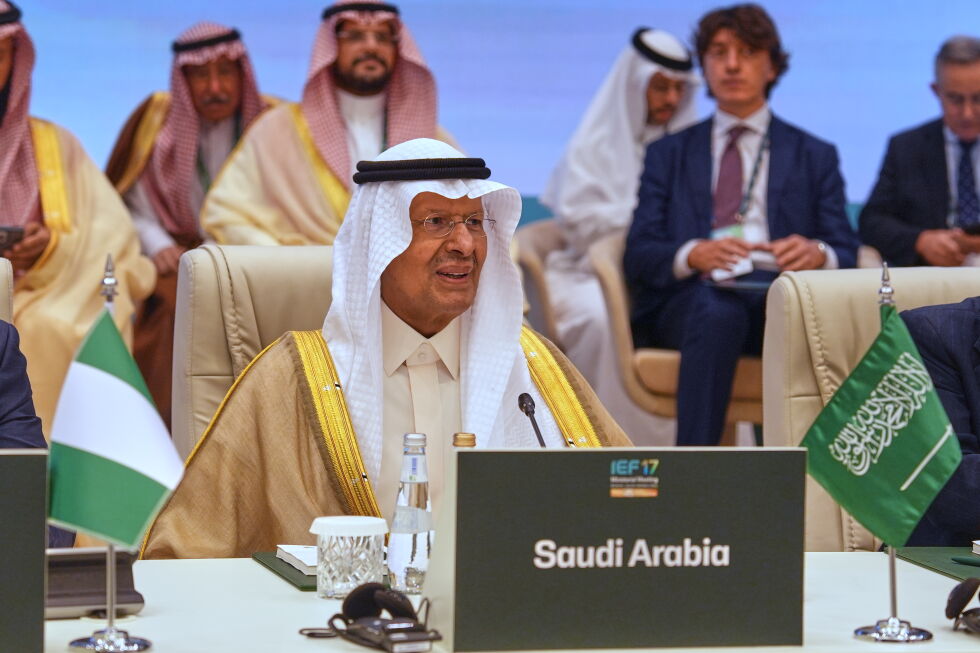
On its face, the postponement of a diplomatic meeting is a minor event beside missile strikes and sunken ships. But the summit was meant to carry real weight. The EU-GCC format was created in 2024 to deepen cooperation on security, energy and investment, and the first leaders’ meeting took place that October. The Riyadh gathering was expected to bring together European Commission President Ursula von der Leyen, representatives of EU member states, and the leaders of Saudi Arabia, Bahrain, Kuwait, Oman, Qatar and the United Arab Emirates, with energy, trade and security on the agenda. The European Union had also partly intended the event as a show of solidarity with Gulf states during the ongoing conflict. That the show of solidarity cannot safely be staged in the Saudi capital is itself the message.
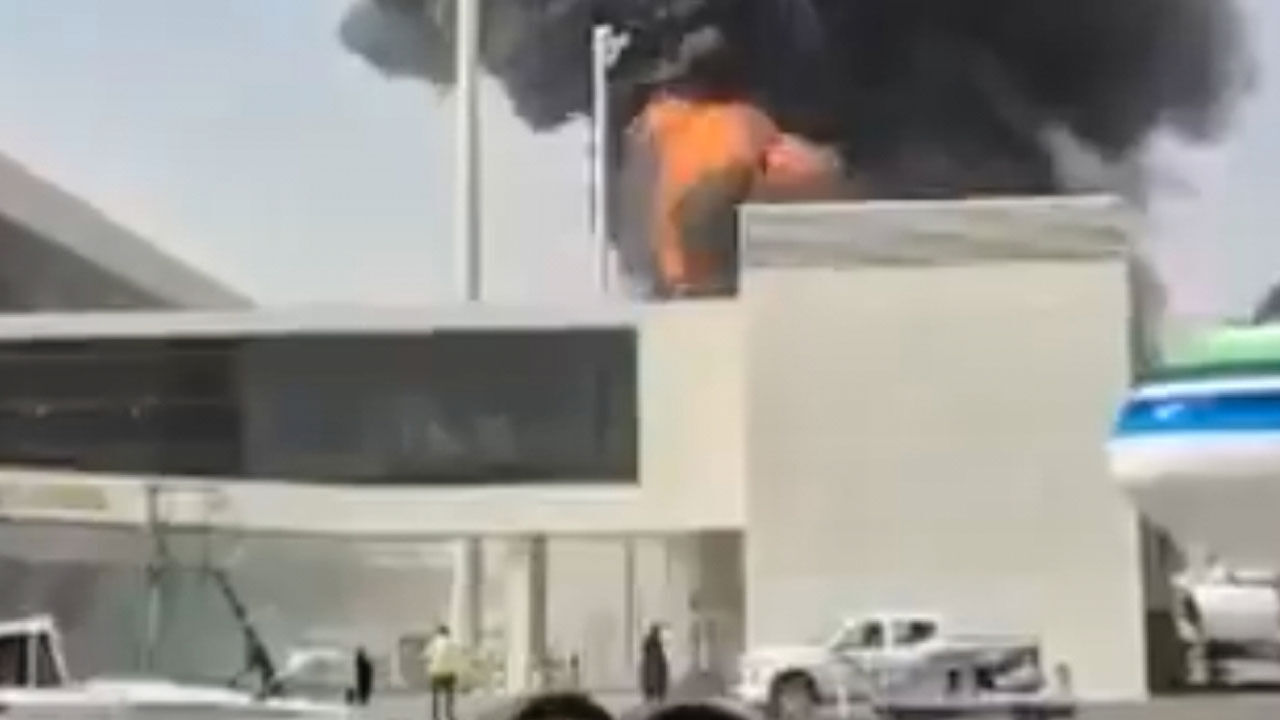
The decision is also a setback for Riyadh, which has worked to present the kingdom as open for business even as the war has intensified. Other international events have been pulled or reshaped in recent days. Reports note that the Six Kings Slam tennis tournament has moved to December, that some energy executives missed the World Petroleum Congress, that the Future Investment Initiative is weighing virtual attendance, and that FIFA postponed the FIFAe Finals in Saudi Arabia while Riyadh Fashion Week was pushed to 2027. Each cancellation is small. Together they show a country whose capital has become hard to reach.
Background: A War That Keeps Widening
The Houthi campaign against Saudi Arabia sits inside a much larger regional conflict. According to Gulf News reporting, the wider war began on February 28, when American and Israeli strikes killed Iran’s Supreme Leader, Ali Khamenei. Since then the confrontation has spread across the Gulf, the Strait of Hormuz and Yemen. Iran’s President Masoud Pezeshkian has described the current blockade as the most intense since 1979, and Gulf News’s live coverage was on its 230th day of the conflict as of October 16.
Saudi Arabia has been a repeated target. Earlier this month, an attack on Riyadh’s airport left a heavy toll, and the Houthis, a Yemeni movement aligned with Iran, claimed responsibility. The coalition led by Riyadh says King Khalid International Airport has been targeted twenty times since October 1, including an October 10 assault that reportedly involved ten drones along with missiles. The casualty figures reported by different outlets do not fully agree. Reuters, as relayed by the Arab Weekly and other outlets, put the deaths in last weekend’s strikes at 13. Bloomberg’s reporting spoke of at least 18 killed and hundreds injured over the past week, and Gulf News counted 17 dead and 333 wounded between October 7 and 11. The differences appear to reflect different time windows and tallying methods rather than competing accounts of a single event, but they are a reminder that precise numbers remain hard to pin down.
Key Developments: Aden, Medina and the Airports
The postponement came as the fighting reached new targets. On Thursday, Houthi missiles struck the Al-Maashiq Presidential Palace in Aden, the headquarters of Yemen’s internationally recognised government and its interim capital. Government military sources told AFP that at least four people were killed and ten wounded. Houthi-affiliated media said the group had hit a headquarters of military operations located at the palace. The strike matters because it reaches the seat of the government that Saudi Arabia and its coalition partners have backed, and because it demonstrates that the Houthis can strike far beyond their northern heartland.
In the same period, Saudi Arabia said it intercepted a cruise missile over Medina, one of Islam’s holiest cities. The Houthis denied launching it. Coalition spokesman Turki Al Malki described the attacks on civilian airports as violations of international humanitarian law and said the coalition would keep targeting Houthi weapons depots and launch platforms. The coalition released footage of attacks on airports in Abha, Najran and Jazan, and a hostile drone was shot down over Khamis Mushait. Saudi officials say the coalition has dismantled storage sites in Sanaa, Saada and Amran and destroyed several launch platforms, and that the Houthis refused a meeting proposed in Oman. Saudi officials also accuse Iran of arming and training the group. Iran’s ambassador to the United Nations has denied arming the Houthis, and Tehran has not confirmed the Saudi accusation.
There is also a technological dimension. Conflict Armament Research reports that the Houthis are trying to build a medium-range ballistic missile using Chinese components, a development that would extend their reach and complicate air defence. Commentary this week has asked how the group keeps breaking through Saudi Arabia’s air defences, an unusual question about one of the most heavily equipped militaries in the region. The practical effect is visible in commercial aviation: the Indian carrier IndiGo has cancelled flights to four Saudi cities until October 24.
The Hormuz Front and Washington’s Response
The Houthi attacks are one front among several. In the Strait of Hormuz, Iran’s army chief, Major General Amir Hatami, says the waterway remains closed until Tehran’s demands are met. US Central Command rejects that claim, saying commercial traffic continues and that more than 19 million barrels of crude moved through the strait in a single day. Reports count at least ten vessels struck since October 11, the most in any comparable period since the war began. The Revolutionary Guard says a container ship carrying more than 2,500 containers hit a naval mine and sank south of the strait; no independent source had verified that claim, and CENTCOM has separately rejected other Guard assertions, including one that hundreds of American personnel died in Jordan.
Washington is pressing on two tracks. Treasury Secretary Scott Bessent said pressure on Iran will continue, announcing new sanctions on Iran-linked financial networks, an Iraqi bank and shadow-banking channels as part of what the administration calls Operation Economic Outcast. “The noose is tightening around Iran’s economy,” he said. The Treasury’s FinCEN also issued an alert about Iranian abuse of religious charity networks. On the military track, CNN reported that the Pentagon is weighing use of the GBU-43/B, the largest non-nuclear bomb in the American arsenal, against Iranian energy and nuclear sites if President Donald Trump resumes combat. Mr. Trump himself has raised the possibility of a future strike on Iran. Britain, meanwhile, has said a suspected plot near RAF Fairford, a US bomber base, was probably coordinated in Iran; Tehran called the claim a clumsy false-flag operation and summoned the British ambassador.

Economic Fallout
The war’s costs are increasingly economic as well as military. Brent crude was trading around $105.50 a barrel on October 16, with West Texas Intermediate near $97.44. Jihad Azour, the International Monetary Fund’s regional director, said the Gulf will not return to its pre-war growth path in the medium term, citing a scarring impact on several sectors and damaged infrastructure. The IMF projects the Middle East and Central Asia region to contract by 0.3 percent in 2026. Bloomberg reporting says the war has cut the Gulf’s pool of overseas investment by roughly two-thirds as governments redirect spending at home. High energy prices cushion some producers, and Oman is described as a relative beneficiary, but Bahrain and Iraq face mounting pressure. Bahrain’s debt is around 160 percent of gross domestic product, and its borrowing costs have reached levels last seen around its 2018 bailout, when Kuwait, Saudi Arabia and the UAE pledged $10 billion. UNDP chief Alexander de Croo has warned that energy prices, El Niño and higher interest rates could push millions of people into poverty.
For Europe, the economic link is direct. The Gulf is a major energy supplier and an investor, and the postponed summit was intended in part to advance cooperation on exactly those subjects. A delay leaves unresolved questions about energy security at a time when oil is above $100.
Reactions and Competing Narratives
Reactions have followed familiar lines. The Gulf states frame the attacks as assaults on civilians and civilian infrastructure and call on partners to stand with them. The EU insists that the relationship retains great strategic importance and that it remains committed to deepening it. The Houthis present their strikes as attacks on military targets, as they did in Aden, and deny some of the incidents attributed to them, such as the Medina missile. Iran denies arming the group and disputes Western and Saudi accounts of its role. American officials emphasise sanctions pressure and keep military options visible.
Readers should treat several claims with caution. The mine strike on the container ship rests on an Iranian military assertion without independent confirmation. The Medina interception is a Saudi claim that the Houthis deny. Casualty totals for the Riyadh attacks vary by source and by period. These discrepancies do not change the broad picture, but they matter for anyone trying to measure the scale of the damage.
What Comes Next
The immediate question is whether the summit can be rescheduled at all while Riyadh’s main airport remains closed. A virtual or relocated meeting is conceivable, but both sides have framed physical presence in Saudi Arabia as part of the point. The more important questions are military and diplomatic. If Washington resumes combat operations against Iran, as officials have said it is preparing to consider, the Houthis and the Revolutionary Guard may escalate further against Gulf infrastructure and shipping. If, instead, the Omani channel that Saudi officials say the Houthis spurned were to reopen, the war could acquire an off-ramp, though nothing in the past week suggests one is imminent.
For now the postponement stands as a barometer. Diplomats can fly into most capitals, and until they can again fly into Riyadh, the Gulf’s attempt to show that normal life and international politics continue alongside the war will remain unconvincing. Watch for a rescheduling announcement, the status of King Khalid International Airport, further strikes on Aden or Saudi cities, any American decision on large-scale military action, and the next round of shipping incidents in the Strait of Hormuz.
Published By | News Editor