Written By | Mwine Bejuura
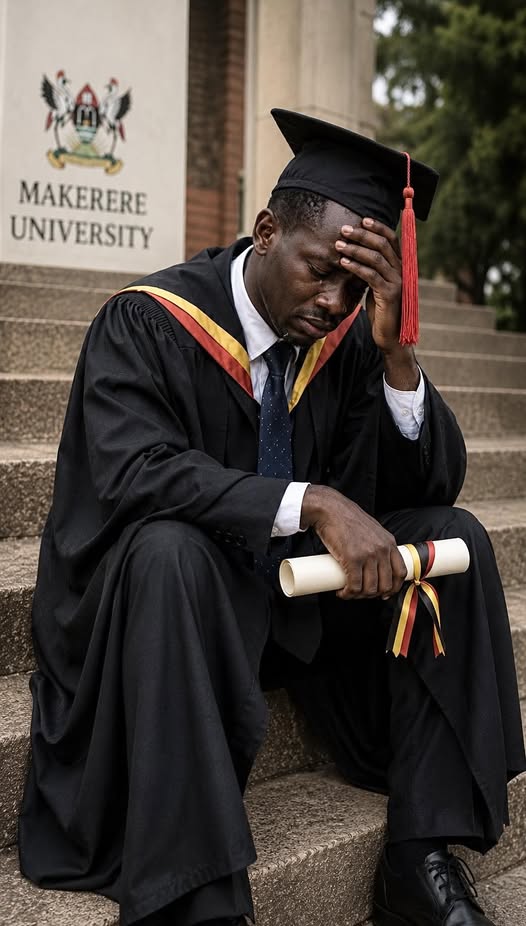
One of the greatest tragedies of parenthood is that appreciation often arrives after irreversible loss
Parenthood is often discussed through the visible language of affection — warm embraces, comforting words, laughter at school events, birthday gifts, and emotional presence. Society easily recognizes the parent who openly expresses tenderness. Yet hidden beneath many ordinary homes is another form of love, one that rarely announces itself loudly. It is the quiet, exhausting, and frequently misunderstood language of sacrifice.
Many children grow up emotionally closer to one parent than the other. This is natural. The nurturing parent is often easier to understand. The stricter, distant, or emotionally restrained parent may instead appear harsh, unavailable, or uncaring. In countless families, fathers particularly occupy this difficult space.
For generations, many men were raised not to communicate vulnerability but to suppress it. They were taught that providing mattered more than expressing emotion, that endurance was more important than tenderness, and that love was demonstrated through responsibility rather than words. As a result, many fathers became providers before they became companions.
To a child, however, sacrifice is rarely visible.
Children do not see unpaid debts, postponed dreams, skipped meals, untreated illnesses, sleepless nights, or the psychological burden carried by struggling parents. They mostly experience outcomes: school fees paid, uniforms bought, rent covered, food available, and opportunities created. The machinery behind those outcomes remains invisible until adulthood provides the emotional maturity to understand what survival truly costs.
This is why many people only fully understand their parents later in life — often painfully late.
Across Africa and many developing societies, fatherhood has traditionally been tied to provision under extremely difficult economic conditions. Millions of fathers wake before sunrise to perform physically exhausting labor, endure humiliation at workplaces, survive unstable incomes, and absorb financial pressure silently so their families can maintain dignity. Some return home emotionally depleted, not because they lack love, but because life itself has exhausted them.
Unfortunately, emotional exhaustion is often mistaken for emotional absence.
A father returning home from construction work, farming, boda boda riding, factory shifts, or informal labor may not possess the emotional energy to perform the softer dimensions of parenting. Yet his labor may still be the very reason his child remains educated, sheltered, clothed, and hopeful about the future.
This does not mean emotional presence is unimportant. Children need affection, reassurance, communication, and warmth from both parents. Healthy parenthood requires emotional connection alongside provision. However, society must also recognize that many parents, especially fathers shaped by hardship, were never taught how to communicate love beyond sacrifice.
Their affection appears through action rather than vocabulary.
Some fathers say “I love you” by repairing a leaking roof during the rainy season.
Others say it by walking long distances to pay school fees.
Some say it through worn-out shoes, delayed medical treatment, and years of silent self-denial.
And many children do not recognize that language until adulthood translates it for them.
One of the greatest tragedies of parenthood is that appreciation often arrives after irreversible loss. Countless adults today carry deep regret over misunderstandings with parents they once judged too harshly. Only later do they realize that the strict father, the tired mother, or the emotionally distant parent was carrying burdens beyond the child’s comprehension.
Modern society also places enormous pressure on men to remain emotionally strong while simultaneously condemning them for emotional silence. Fathers are expected to provide financially, absorb pressure quietly, remain dependable during crisis, and never collapse publicly. Yet beneath that expectation are ordinary human beings with fears, disappointments, physical pain, and emotional wounds of their own.
Many die carrying those burdens in silence.
The lesson here is not to romanticize suffering or excuse harmful parenting. Some parents genuinely fail their responsibilities. Some households are shaped by abuse, neglect, addiction, or violence, and such realities must never be minimized.
But there is also a quieter reality that deserves recognition: many imperfect parents love deeply in the only ways they know how.
Parenthood is rarely performed perfectly. It is often improvised under pressure, uncertainty, poverty, emotional limitation, and personal sacrifice. Mothers and fathers alike carry invisible scars while trying to build safer futures for their children.
As younger generations become parents themselves, many begin discovering uncomfortable truths. Raising children is expensive. Protecting a family is emotionally draining. Sacrifice is constant. Fear never completely disappears. And suddenly, the once misunderstood parent begins to make sense.
The older one grows, the more one realizes that responsible parenthood is not built merely on grand speeches or public displays of affection. It is built daily in sacrifice, discipline, consistency, protection, and endurance.
Perhaps this is why many aging fathers sit quietly during family gatherings. Their silence is not emptiness. Sometimes it is simply exhaustion after decades of carrying responsibilities no one fully saw.
Society must therefore learn to appreciate parents while they are still alive. Gratitude expressed too late cannot heal regret. A simple conversation, forgiveness, acknowledgment, or expression of appreciation may mean more to an aging parent than material gifts ever could.
Children eventually outgrow dependence.
Parents never outgrow concern.
And in many homes around the world, there are fathers whose love was never absent — only silent
Torch Media Africa



