Written By | International News Agencies
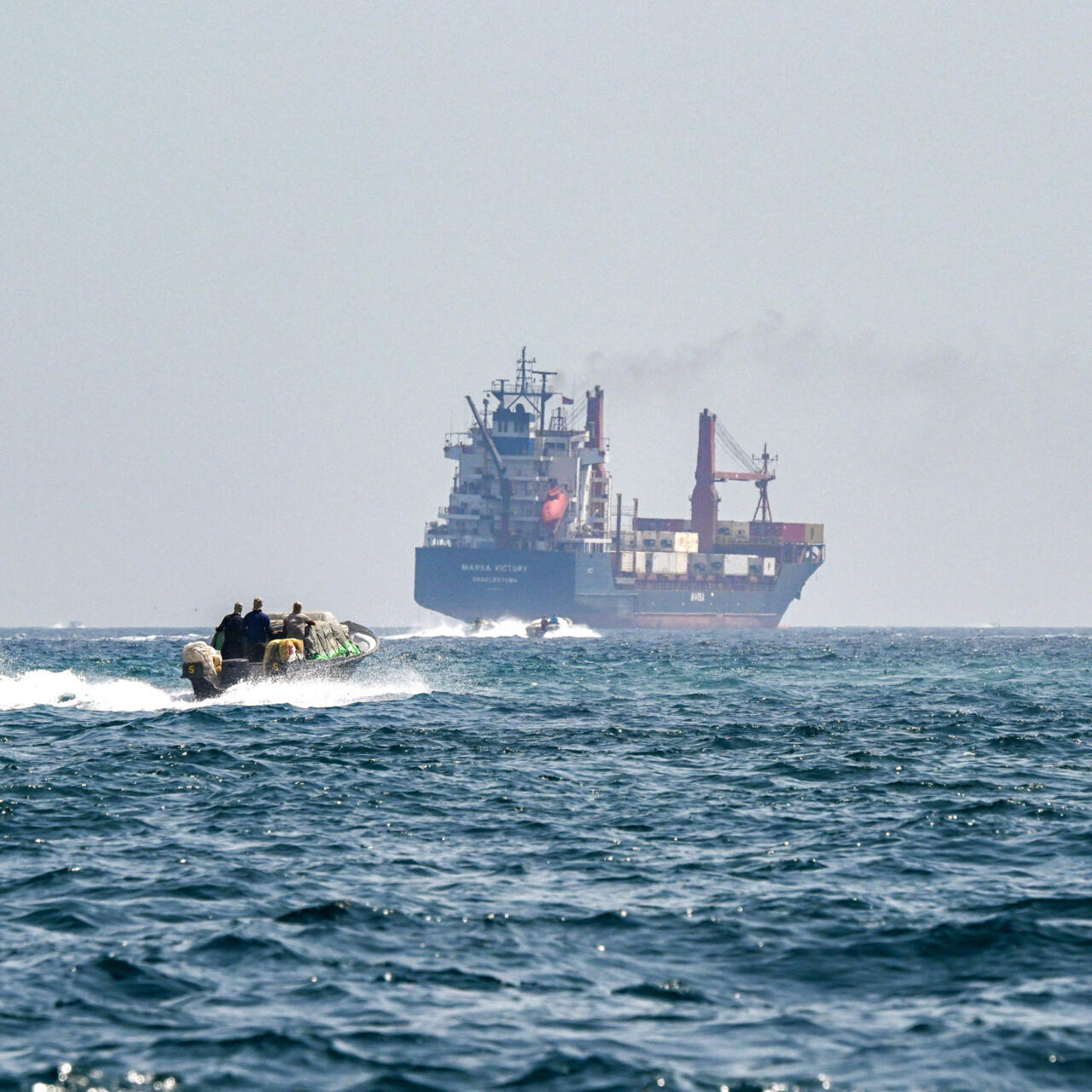
Strait of Hormuz
Background
The war that Iran's foreign minister is now trying to end with a stopwatch began on February 28, 2026, when the United States and Israel launched a coordinated wave of airstrikes on Iran under the code names Operation Epic Fury and Operation Roaring Lion. The strikes, which came in the middle of live US-Iran nuclear negotiations and coincided with the start of Ramadan, killed Iran's Supreme Leader Ali Khamenei along with a swath of the country's senior military and clerical leadership. Israeli Prime Minister Benjamin Netanyahu had spent weeks lobbying President Trump for the joint operation, and Israeli intelligence on Iran's weakened air defenses and command structure was reportedly the deciding factor in Washington's decision to join.
What followed was rapid and total escalation. Iran fired waves of missiles and drones at Israel, at Gulf Arab states hosting American forces, and at US bases across the region. Hezbollah, dormant since its 2024 ceasefire with Israel, rejoined the fight from Lebanon, and by mid-March Israeli ground forces had pushed into the country's south. Days later the Houthis in Yemen joined as well, and the United States began surging naval assets into the Gulf to keep the Strait of Hormuz open after Iran started mining and harassing tankers. Iranian air defenses shot down American fighter jets even as Washington claimed to have neutralized them, and by April the conflict had settled into the grinding, multi-front war that has now run for seven months.
The human and economic toll has been immense and asymmetric. Estimates compiled from military and independent sources put US losses at roughly 20 soldiers and one contractor killed and more than 757 wounded; Israel has lost about 40 soldiers and 31 civilians, with more than 7,800 injured. Iranian deaths, military and civilian combined, are estimated at somewhere between 3,500 and 6,000, with hundreds more dead across Saudi Arabia, the UAE, Kuwait and Bahrain. The war has also produced what analysts describe as the largest global oil-supply disruption on record, all but halting shipping through Hormuz at points and rattling gas, fertilizer and aviation markets worldwide. By June, the Pentagon put the direct US cost of the war at $113.3 billion, and it has since asked Congress for $1.5 trillion for the next fiscal year to sustain the campaign.
The two sides have circled a diplomatic exit before without reaching one. A memorandum of understanding reached on June 17 briefly lowered the temperature, laying out a 60-day interim de-escalation period, but it collapsed when Iran resumed attacks on commercial shipping. Since then, the war has continued to grind on even as both sides periodically signal interest in talks — most recently around this month's United Nations General Assembly in New York, where Iranian officials who spent the war's early months hiding from strikes suddenly found themselves walking the halls of the UN.
Key Developments
The diplomatic temperature rose noticeably this week. On September 22, Iranian Foreign Minister Abbas Araghchi met on the sidelines of the UN General Assembly with US special envoy Steve Witkoff for roughly three hours — the highest-level face-to-face contact between the two governments in months. Witkoff described the talks afterward as "promising, constructive," and Iranian state media confirmed the meeting had taken place at the American side's request. Iranian hardliners at home reacted angrily to the fact that the meeting happened at all, a sign of how contested any deal-making remains inside Iran's own political system.
Three days later, on September 25, Araghchi went further, laying out a specific, dated proposal at a private gathering on the UN sidelines: a seven-day sequence that would end with the reopening of the Strait of Hormuz. As described by Araghchi and outlined in reporting on the plan, the sequence would begin with a ceasefire on every front of the war, including Lebanon, alongside a US decision to lift its naval blockade of Iranian waters, lift sanctions on Iranian oil sales, and release Iran's frozen financial assets. Under that scenario, Araghchi said, "the Strait of Hormuz would be open on the end of the seventh day," with negotiations over Iran's nuclear program to resume only after that reopening, not before. "The moment they accept this plan," he said, "from the next day, this timetable can start."
The proposal was conveyed indirectly, through intermediaries at the UN with Qatar again playing its now-familiar role as go-between, and it explicitly builds on the framework of the collapsed June memorandum of understanding — but compresses what had been a 60-day interim window into just seven days. Iranian President Masoud Pezeshkian, in a interview with CBS News, added that Iran would also allow United Nations nuclear inspectors back into the country as part of any ceasefire arrangement, and said Iran wants an agreement finalized before November's US midterm elections — directly contradicting the Trump administration's public position that Iran will only be prepared to negotiate seriously once the war has run its course and, per officials, once Washington resumes bombing after the midterms.
The timing is not incidental. Trita Parsi of the Quincy Institute, a Washington think tank that has closely tracked the war, noted that Araghchi's proposal is explicitly framed to hand President Trump a political win before voters go to the polls, since reopening Hormuz would help bring down gasoline prices that have become a domestic liability for the administration. That reading is reinforced by Pezeshkian's own comments tying the timeline to the midterms rather than to any purely military or humanitarian calendar.
Reactions
The American response has been cool. Secretary of State Marco Rubio cautioned against describing the New York contacts as any kind of breakthrough, and administration officials told reporters that President Trump remains "skeptical Iran would meet his demands." The core disagreement is structural: the Trump administration wants Iran's nuclear program addressed immediately and in parallel with any ceasefire, while Iran's plan explicitly sequences nuclear talks to begin only after Hormuz reopens on day seven. Officials have suggested the administration expects to resume a bombing campaign after the midterm elections regardless of what happens diplomatically in the meantime, a timeline that would leave Araghchi's stated goal of a pre-election deal unmet.
That skepticism was echoed in commentary from CNN's Middle East desk, which described Iran as having had "a good week" diplomatically at the UN — using the General Assembly to project a return to normal statecraft after months of isolation — while cautioning that the Hormuz offer itself looks like "a non-starter" given the gap over nuclear sequencing. Markets reacted in kind: oil prices, which had climbed on an earlier Trump ultimatum threatening to "annihilate" Iran absent a deal, fell by roughly 2.5% to about $103 a barrel after Araghchi's proposal became public, though traders described prices as remaining highly volatile pending Washington's formal response.
The war's other fronts kept generating friction of their own even as the Hormuz proposal circulated. Saudi Arabia said it intercepted additional Houthi-launched drones and missiles, and Pakistan's prime minister described a Houthi attack aimed at Mecca as a "red line," prompting Turkey, Pakistan and Saudi Arabia to schedule joint chief-of-staff talks to coordinate a response. The US Navy, meanwhile, kept up the escort operations that have defined its Hormuz strategy since the blockade began, moving nearly 40 million barrels of oil through the strait under military escort in a 48-hour span — a volume that officials say now roughly matches pre-war throughput — while continuing to redirect commercial vessels away from risk; more than 122 ships have been rerouted since July.
Domestically, the week also exposed how exposed President Trump has become on the war's economic fallout. On September 24, the Senate narrowly voted down, 49-50, a war powers resolution that would have directed the president to end US involvement in the conflict, with at least one Democrat, John Fetterman, crossing over to vote with the Republican majority to keep the war-powers effort from passing. Trump himself has publicly dismissed the political cost of the war, calling soaring gas prices "a little glitch," even as polling and commentary suggest Democrats see the issue as a potential opening in the run-up to November.
What's Next
The immediate question is whether the Trump administration will formally respond to Araghchi's seven-day plan, and on what terms. Given officials' stated skepticism and the administration's insistence on addressing the nuclear file immediately rather than after a Hormuz reopening, a quick acceptance looks unlikely; more probable, in the near term, is a continuation of indirect, Qatar-mediated contacts alongside continued fighting on the ground and at sea. Iran, for its part, has signaled through Pezeshkian that it would still like a deal struck before the midterms, which sets up a narrowing window over the next roughly six weeks in which any agreement would have to come together to meet Tehran's own stated timeline.
Barring a deal, the working assumption inside the US government, as described by officials to reporters, is that bombing could resume or intensify once the midterm elections have passed, which would extend a war already in its eighth month with no clear end point. Oil markets are likely to stay volatile around every twist in the negotiations, US naval escort operations through Hormuz will continue as the default posture in the absence of a ceasefire, and Congress may see further attempts — probably unsuccessful, given this week's vote — to force a withdrawal timeline on the administration. Gas prices, tied directly to the war's trajectory, look set to remain a live issue in the run-up to November's elections regardless of what happens between Washington and Tehran in the coming days.



