Written By |
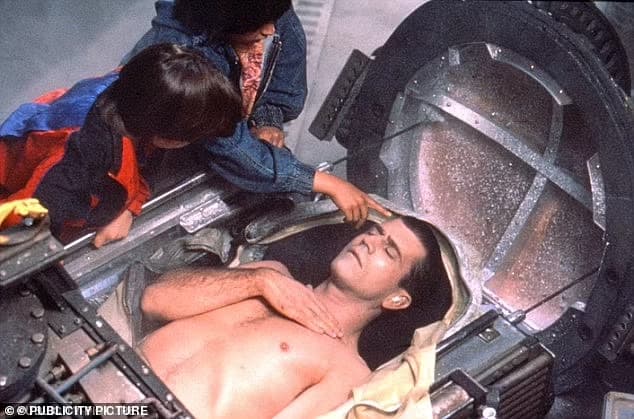
Cryogenic preservation has entered popular culture through films such as the 1992 film Forever Young in which a test pilot is sent 50 years into the future
A German start-up, Tomorrow Bio, is embracing the concept of cryopreservation, offering clients the chance to be frozen upon death and potentially revived in the future when technology permits.
Despite the steep price of £170,000 (or Shs 810,455,322.67= for brain-only preservation), Europe's first cryopreservation lab is gaining popularity. Founded in 2020, the company claims to have already frozen six people and five pets, with 650 more members awaiting their turn.
Fernando Azevedo Pinheiro, co-founder of Tomorrow Bio, said, "I believe that within my lifetime—I'm currently 40 years old—we may witness the safe cryopreservation and reanimation of complex organisms."
Cryopreservation involves freezing recently deceased individuals at -198°C, preserving them until future technology can potentially revive and treat their ailments. Tomorrow Bio emphasizes quick preservation after death using retrofitted ambulances as mobile surgery rooms. Mr. Pinheiro explained, "We are the first, and currently the only, cryonics company to offer field cryoprotection. We begin the cryopreservation process immediately after a patient is declared legally dead."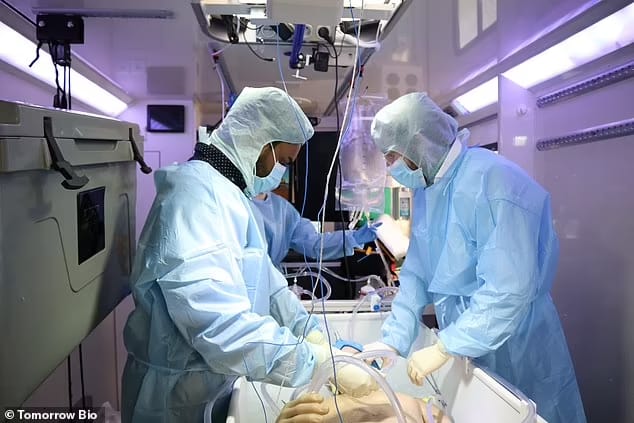
While in the back of the ambulance the body is cooled to -80°C (-112°F) and the bodily fluids are replaced with 'medical-grade antifreeze'. Pictured here: A Tomorrow Bio team training on a medical dummy
Tomorrow Bio employs standby, stabilization, and transport (SST) teams in Berlin, Amsterdam, and Zurich to ensure rapid response. The teams place the body in an ice bath and provide heart massages and oxygen to slow decomposition. En route to the long-term storage facility, they aim to reduce the body's temperature to -80°C (-112°F) using cryoprotectant agents, essentially medical-grade antifreeze. Once preserved, the bodies are transported to a long-term storage facility in Switzerland owned by the European Biostasis Foundation. Here, they are gradually cooled to -196°C (-320°F) over ten days and placed in vacuum-insulated steel containers filled with liquid nitrogen, ensuring indefinite preservation.
Tomorrow Bio also ensures that if the company goes bankrupt, the remains will be cared for by Tomorrow Patient Care Foundation. Additionally, any unused portion of the £100,000 (€120,000) set aside for storage and treatment is refundable upon revival.
So far, around 650 people have signed up for the €50 per month membership to have an SST team on call. The company plans to expand to the continental United States by 2025. Pinheiro notes that the average member is 36 years old, with most not expecting to die soon. Customers are drawn to the service for various reasons, including the allure of future technologies and the fear of dying. Pinheiro himself is motivated by a love of life, stating, "Others, like myself, simply love living and feel that 80 years is not enough time to explore all that life has to offer."
Interestingly, Tomorrow Bio also offers cryopreservation for pets, recognizing the deep emotional connection people have with their animals.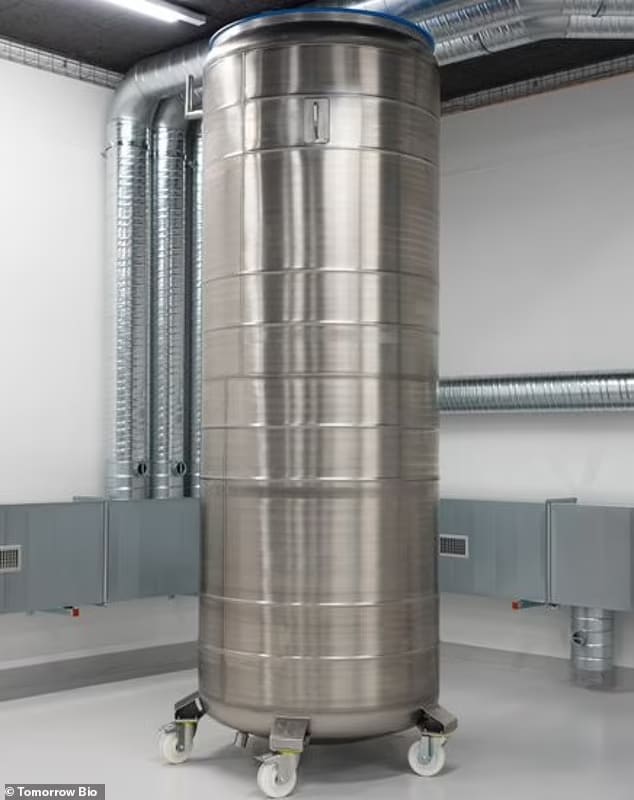
The body is then moved to a vacuum-insulated, 3.20m tall steel container filled with liquid nitrogen known as a dewar
Many experts are skeptical, noting that organs have never been successfully frozen and thawed without damage, making the revival of a whole body even more unlikely.
Cryonics organizations claim it could be decades or centuries, but medical experts argue that once cells are damaged during freezing, they cannot be restored, much like a scrambled egg cannot be turned back into a raw egg.
From Daily Mail



