Written By |
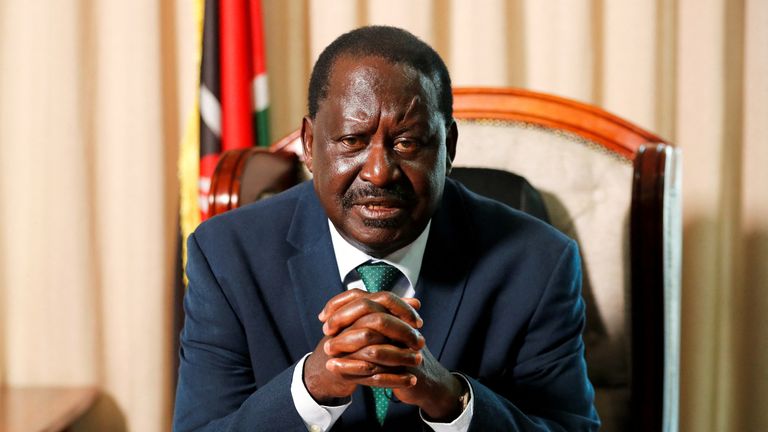
Odinga bowed out at 80
By Evan Sande Ndahura
It was a quiet October morning in Kochi, India. The sun rose gently over the backwaters, painting the sky gold as Raila Amolo Odinga stepped out for what would be his final walk on earth. Those who passed him said he looked peaceful—a man at ease with the world he had spent his life trying to fix.
Within the hour, the voice that had roared and thundered across Kenya’s rallies fell silent. But his story—one of rebellion, resilience, and relentless hope—still echoes in every corner of the nation.
“He was never a President—yet he shaped every presidency.”
Early Life and Roots
Raila Odinga was born on January 7, 1945, into a family deeply woven into Kenya’s political struggle from the outset. The son of Jaramogi Oginga Odinga, Kenya’s first Vice President after independence, Raila grew up during the formative years of the republic and inherited a political consciousness early.
The Odinga family was Luo, and through that identity came deep connections to community life, rural Kenya, the inequities of colonial rule, and the hopes of a post-colonial nation.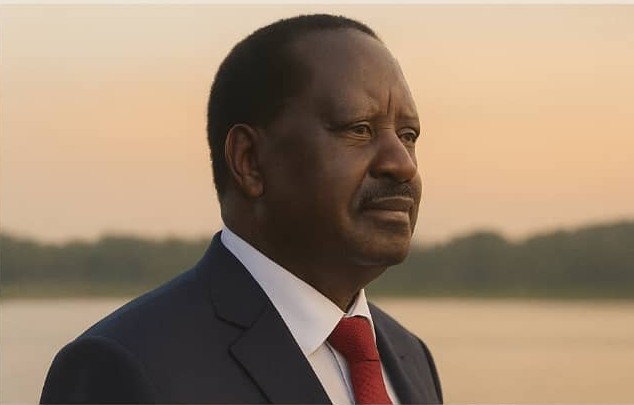
Social Position and Economic Context
Though born into political prominence, his life was far from one of effortless privilege. His early years were shaped by political factions, shifting loyalties, and the social gap between urban and rural Kenya. Over time, he developed a reputation for being close to the people—speaking for the disenfranchised, rising from detention and hardship, and entering opposition politics with conviction. These experiences gave him moral authority.
Economically, he engaged with both the elite and the grassroots. He was seen as both a disruptive challenger to entrenched wealth and power, and a politician who needed alliances to access resources. Thus, he straddled an uneasy divide: a champion of the marginalized, yet also a player in the corridors of power.
Political Struggle and Character
Resistance under Moi and Advocacy for Multiparty Democracy:
Odinga endured repeated arrests, detentions, and political repression, especially under Daniel Arap Moi’s regime. His willingness to face hardship without yielding earned him a reputation for resilience, principle, and, at times, stubbornness.
Opposition Leader:
Over decades, Raila became the defining figure of Kenya’s opposition politics—contesting elections, challenging injustices, and pushing for reforms. He ran for the presidency multiple times, often losing, but he refused to be silenced.
Negotiator and Reformer:
He was central to several key reforms, including the reintroduction of multiparty democracy in the early 1990s and the 2010 Constitution, which restructured Kenya’s political system. He led mass protests after disputed elections, most notably in 2007, often at great personal risk. His leadership style combined populist appeal, fiery rhetoric, persistent mobilization, and pragmatic deal-making when necessary.
Complex Alliances:
Raila often entered into alliances, some controversial with political rivals, balancing principle with pragmatism. Critics accused him of betraying the opposition’s ideals when he cooperated with ruling parties or leaders. Supporters viewed such moves as strategic, recognizing that incremental change sometimes required compromise.
Character Traits:
Tenacity. Courage. Charisma. Resilience. Known affectionately as “Baba” (father) by many supporters, he had a gentler side—his advocacy for the poor and his calls for social justice. Yet, he was also polarizing: his rhetoric and frequent electoral disputes made him a target of fierce criticism. In later years, his health and age increasingly shaped public perceptions of his capacity, though he remained politically active until the end.
Role in the 21st Century
After serving as Prime Minister (a role created as part of the 2008 power-sharing agreement following the post-election crisis), Raila continued to dominate Kenyan politics.
He sought broader continental influence, notably by contesting for the Chairperson of the African Union Commission in 2025—a move that reflected both ambition and a desire to shift from domestic opposition to a continental leadership role.
His later years were marked by intense negotiations, health challenges, and debates over succession within his party. There were tensions among allies and questions about how long his political dominance would last.
Final Chapter: Death in India
On October 15, 2025, reports emerged that Raila Odinga had died in Kochi, Kerala, India, at the age of 80.
He had travelled to India for medical treatment after suffering a minor stroke in Kenya. Initially admitted to a hospital in Mumbai, he was later transferred to Sreedhareeyam Ayurvedic Eye Hospital & Research Centre in Kochi. While receiving treatment there, around 9 a.m., he reportedly suffered a cardiac arrest during a morning walk. Despite medical efforts, he was pronounced dead. His body is to be repatriated to Kenya following standard diplomatic and formal procedures.
Reflections on His Life and Legacy
Raila Odinga’s journey reveals recurring themes—struggle, persistence, adaptation, and conviction. His death in India, far from home, marks the close of a monumental public life.
In a nutshell
Raila Amolo Odinga’s life was one of sacrifice, aspiration, controversy, and immense influence. From the son of one of Kenya’s founding leaders to prisoner, reformer, opposition titan, and statesman, he shaped nearly every major political turning point in Kenya for more than half a century.
His death in India from illness and cardiac arrest closes a remarkable chapter in African political history—one marked by both triumph and turbulence. As Kenya and the continent reflect, the enduring question remains: who will carry forward his vision, his struggle, and his dream for a more just and democratic Kenya?
Torch Media Africa



