Written By |
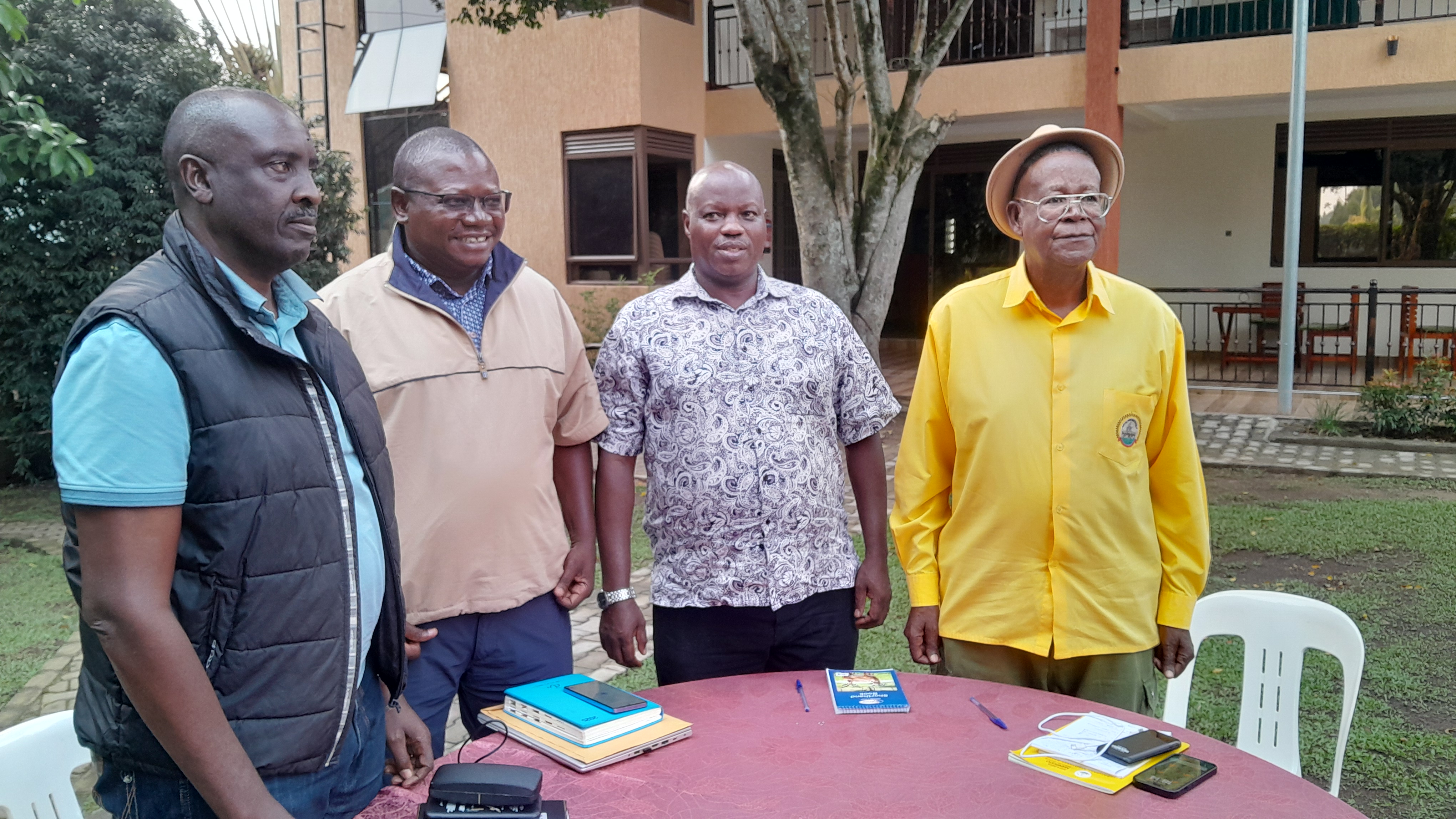
The team addressing the media at hotel Tuzza in Bushenyi town
News Desk
Bushenyi
President Yoweri Kaguta Museveni has launched a major review of Uganda's tea sector, appointing senior presidential advisor Prof. Ephraim Kamuntu to lead a nationwide investigation into whether tea should be classified as a high-value or low-value crop.
The directive was issued during a recent meeting with tea farmers, processors, and nursery bed operators from the Kigezi and Greater Bushenyi sub-regions, held at Bushenyi Main Stadium. "Let me get advice so that I can confidently transfer tea from an extensive type of agricultural crop to an intensive one," Museveni said.
"Somebody said you can get 1,000 kgs from one hectare of tea plantations. Others say if all things are done, you can get Shs 800,000. So which is which now? The debt remains on your side to assure me how we categorize tea. Is it a high-value crop or a low-value crop? I will wait for a document through Prof. Kamuntu."
To execute this assignment, Prof. Kamuntu has appointed Edson Tumusiime Batuuna, Arthur Babu Muguzi, and Robert Egiku to assist in preparing a comprehensive technical report that will guide the government’s decision-making.
Speaking to Torch Media Africa, Prof. Kamuntu emphasized the urgency of transforming Uganda's agriculture.
"As a country, our dream is to get out of subsistence farming and into a money economy," he said. "Uganda must embrace tea farming as a strategic crop in order to generate consistent cash income for households, especially in rural areas."
Shs 312 billion bailout
President Museveni also announced a Shs 312 billion support package aimed at rescuing Uganda's struggling tea sector. The funds will be used to clear outstanding debts, purchase fertilizers, support farmers and processors, and boost the competitiveness of Ugandan tea in global markets.
The President further directed the Ministry of Agriculture, Animal Industry and Fisheries to urgently draft new regulations to govern tea production, quality control, and marketing, with the aim of bringing order to a sector beset by low yields, price instability, and exploitative middlemen. Despite improved auction prices at the Mombasa Tea Auction — where 15 Ugandan brands surpassed the $1 per kilogram mark in Sale 27 (July 2025) — smallholder farmers continue to struggle. The average price remains at $0.96/kg, while returns at the farm-gate level have collapsed.
Earlier this year, brands like Kabale fetched up to $1.41 per kg, while Kyamuhunga and Bwindi sold at $1.29 and $1.25 respectively. However, farmers report receiving only Shs 120–150 per kg of green leaf, down from Shs 250 last year, while the breakeven cost is approximately Shs 480 per kg. "Many farmers are abandoning tea gardens. They can’t even afford to weed or fertilize their plantations," said Edson Tumusiime Batuuna, a tea expert and farmer from Bushenyi. "What’s the use if you are paid Shs 130 per kg and the cost of production is three times higher?"
Lack of policy framework
Uganda currently has over 49,000 hectares of land under tea cultivation, supporting more than 1.2 million people — most of them smallholder farmers. Yet the country still lacks a national tea policy. This vacuum has contributed to inconsistent pricing, quality issues, and poor farmer protections.
In recent months, pressure has mounted on the government to establish a minimum farm-gate price, regulate the sector, and develop a comprehensive national tea policy.
While the announced bailout has been welcomed, experts warn that without structural reforms, the crisis will persist.
"If the funds are not accompanied by reform, transparency, and accountability, we’ll be back to the same crisis within a year," cautioned Sula Nuwe, a tea farmer in Kyamuhunga. "We need clear pricing structures, quality standards, and policies that protect farmers."
Prof. Kamuntu and his team are expected to submit their final report to President Museveni in the coming months — a document that could define the future of tea farming in Uganda for generations.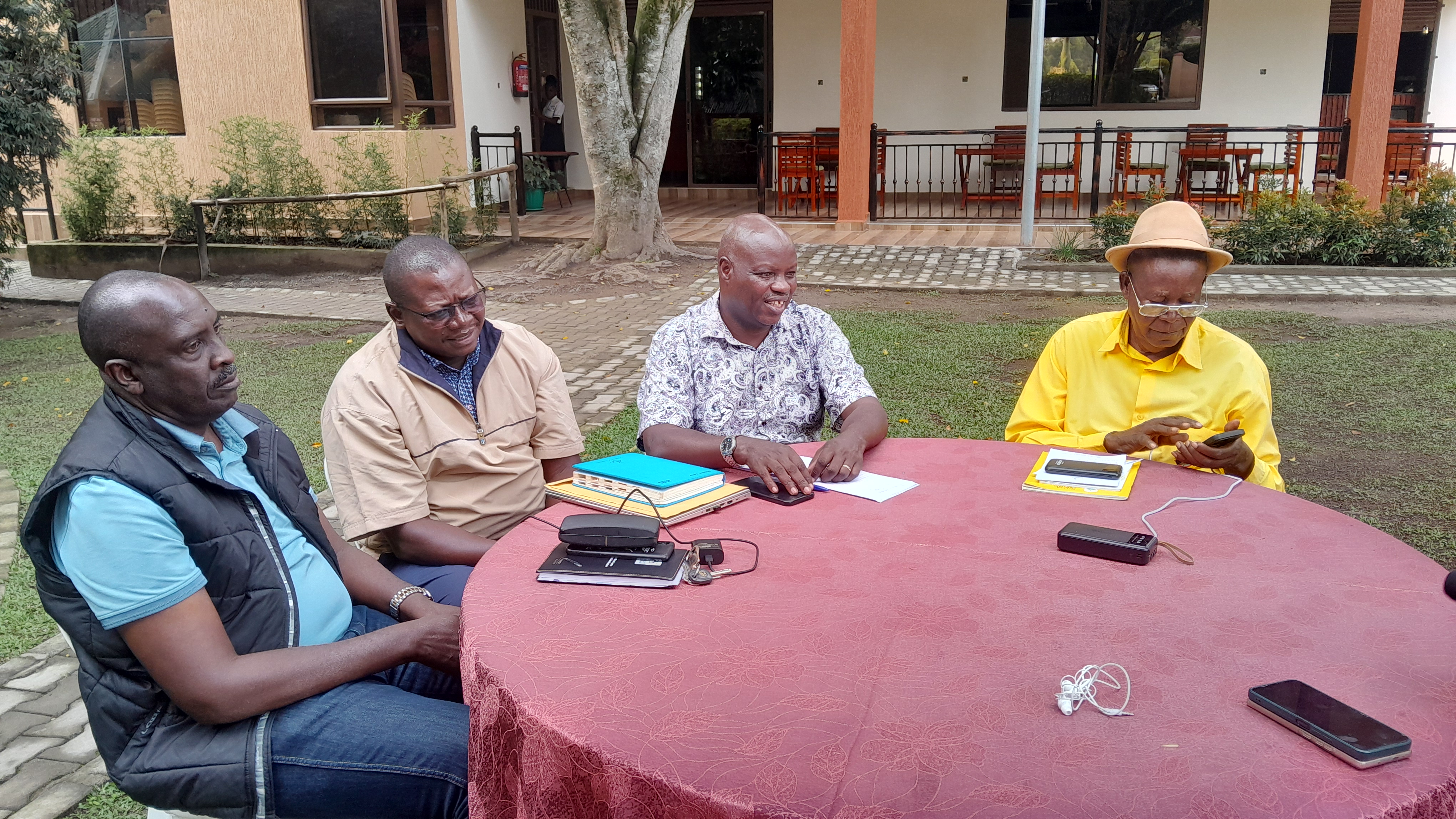
Experts tasked with Uganda’s tea sector review
Robert Egiku
With 25 years of extensive experience in the tea sector, Egiku previously served as General Manager of Igara Tea Factory in Bushenyi District, where he oversaw major improvements in operations and productivity. He is currently the Chief Executive Officer (CEO) of the Uganda Tea Development Agency, leading national efforts to modernize and grow the tea industry.
Arthur Babu Muguzi
A qualified accountant and tea farmer from Buhweju District, Muguzi works with the National Council for Higher Education (NCHE) as head of finance.
Edson Tumusiime Batuuna
A seasoned tea farmer based in Bushenyi District, Batuuna is actively involved in grassroots tea development. He is recognized for his in-depth knowledge of cultivation practices and his advocacy for farmer welfare and sector reforms.
Torch Media Africa



