Written By | Fashion and Design Desk
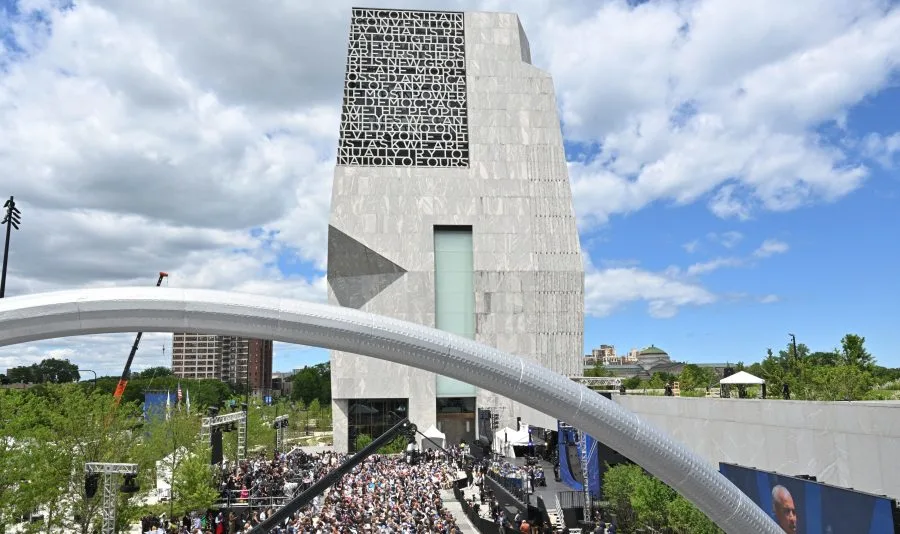
The Obama Presidential Center, which opened to the public Friday on Juneteenth after a star-studded dedication ceremony, was designed to do almost the opposite
CHICAGO
Most presidential libraries are built to be visited once, admired respectfully, and left. The Obama Presidential Center, which opened to the public Friday on Juneteenth after a star-studded dedication ceremony, was designed to do almost the opposite: to be walked through on a Tuesday afternoon for no reason at all, the way you'd walk through a neighborhood park.
That, by every account from the architects who built it, is the entire point.
A Civic Campus, Not a Monument
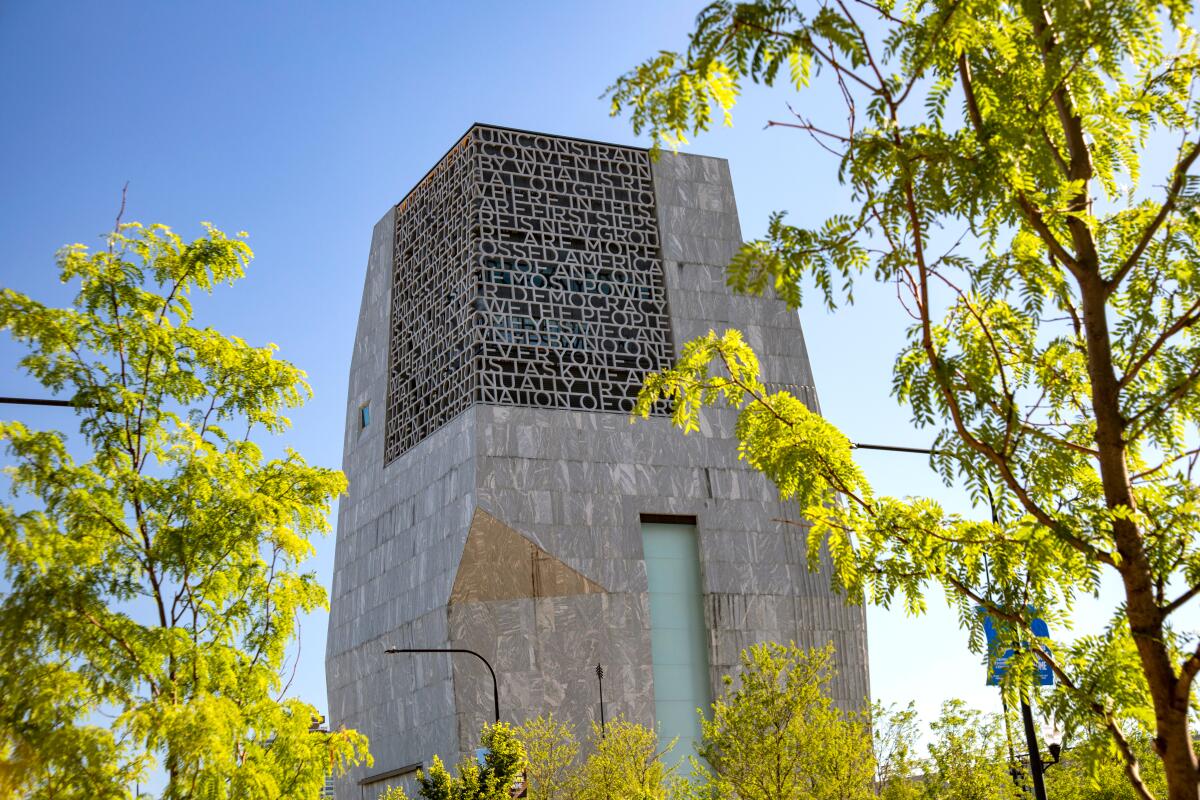
Designed by Tod Williams Billie Tsien Architects in collaboration with Michael Van Valkenburgh Associates, the Center sits on roughly 19.3 acres in Jackson Park on Chicago's historically Black South Side. A roughly 225-foot granite-clad tower gives the campus a recognizable silhouette without tipping into self-importance.
What distinguishes the Center isn't the tower. It's everything wrapped around it. The 19-acre public campus includes a full-size basketball court, a rooftop playground, a sledding hill, a vegetable garden, and — in a decision that says more about the project's ambitions than almost anything else — a full branch of the Chicago Public Library, built directly into the complex and free for anyone to use, museum ticket or not.
It is a museum, certainly — there's exhibition space dedicated to the Obama presidency and the civil rights movement — but it is also, by design, a park, a library branch, a basketball court, and a playground.
A Decade in the Making
The Center's opening closes out a project nearly ten years in the making, dating back to site selection and years of community engagement, legal challenges, and design iteration. Locating the campus in Jackson Park was a deliberate choice to root the project in the South Side — a decision the Obama Foundation has consistently framed as core to its purpose.
Thursday's dedication ceremony on the John Lewis Plaza brought together former presidents George W. Bush and Bill Clinton, Joe Biden, and international dignitaries. Michelle Obama's remarks struck an unusually personal note: "Eight years in the crucible," she said, "and not once did you melt in the heat."
The timing — a Juneteenth opening on a campus in a historically Black Chicago neighborhood — gave the ceremony a weight that extended well past ribbon-cutting formality.
The Architecture of an Idea
Tod Williams Billie Tsien have spent their careers designing institutions that resist grandiosity. Their prior work includes the Barnes Foundation in Philadelphia and Skirball Cultural Center in Los Angeles. The granite cladding on the Obama Center's tower nods toward permanence. Everything at ground level — the playground, the garden, the library entrance — speaks a different, more deliberately informal language.
Landscape architect Michael Van Valkenburgh's contribution matters just as much. Much of the design conversation has centered on integrating new public green space without erasing Jackson Park's existing identity, originally shaped by Frederick Law Olmsted for the 1893 World's Fair.
What This Means for the Neighborhood — and for Presidential Libraries Generally
The most consequential outcome may not be architectural at all. By embedding a public library branch, a playground, and recreational facilities into a presidential museum campus, the project is making a pointed argument about who institutions like this are supposed to serve. Most presidential libraries are destinations for tourists passing through; this one is explicitly designed to also function as daily civic infrastructure for the South Side community.
Community celebrations on the campus continue through the weekend, running June 20 and 21, giving Chicagoans their first real opportunity to use the space the way its architects intended: not as a single respectful visit, but as a part of the neighborhood's everyday rhythm.
For a building type that has historically prioritized legacy management over public utility, the Obama Presidential Center is proposing a new model — one where the test isn't how many visitors it draws on opening weekend, but how many people are still cutting through it on their way to the library, the basketball court, or the sledding hill a decade from now.
Sources: Obama Foundation; Tod Williams Billie Tsien Architects; Michael Van Valkenburgh Associates; Chicago Tribune; CNN; Dezeen



