MEDORA, NORTH DAKOTA
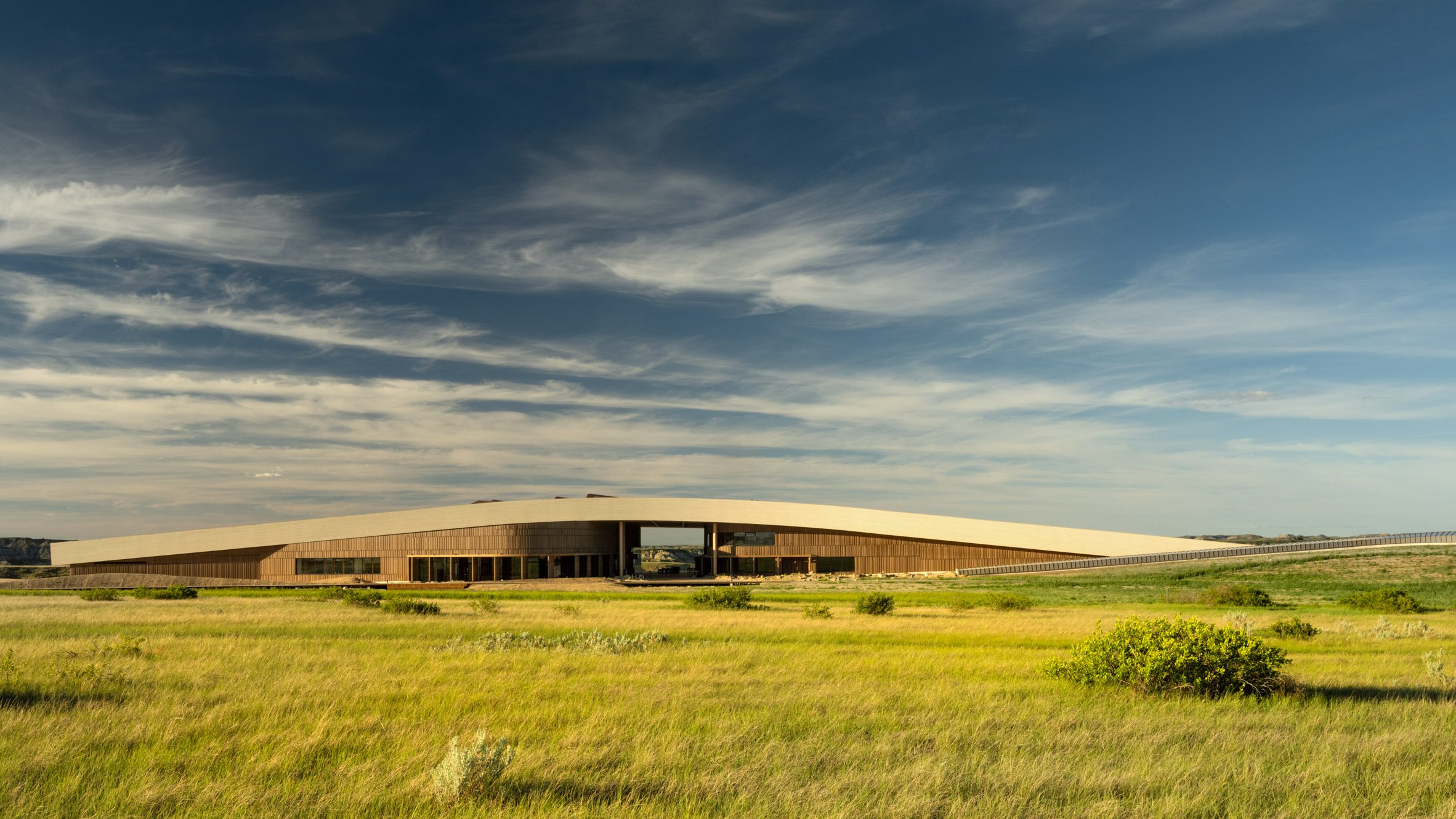
Three weeks ago, on the Fourth of July, drones lit up the North Dakota Badlands in formation — 1,776 of them, timed to the country's 250th birthday — hovering over a building that its own architects insist isn't really a building at all. "The Library is the Landscape" is the guiding principle behind the new Theodore Roosevelt Presidential Library, and after years of construction and controversy, it has finally opened its doors, offering the clearest evidence yet of where ambitious cultural architecture is headed: not up, but down into the ground it stands on.
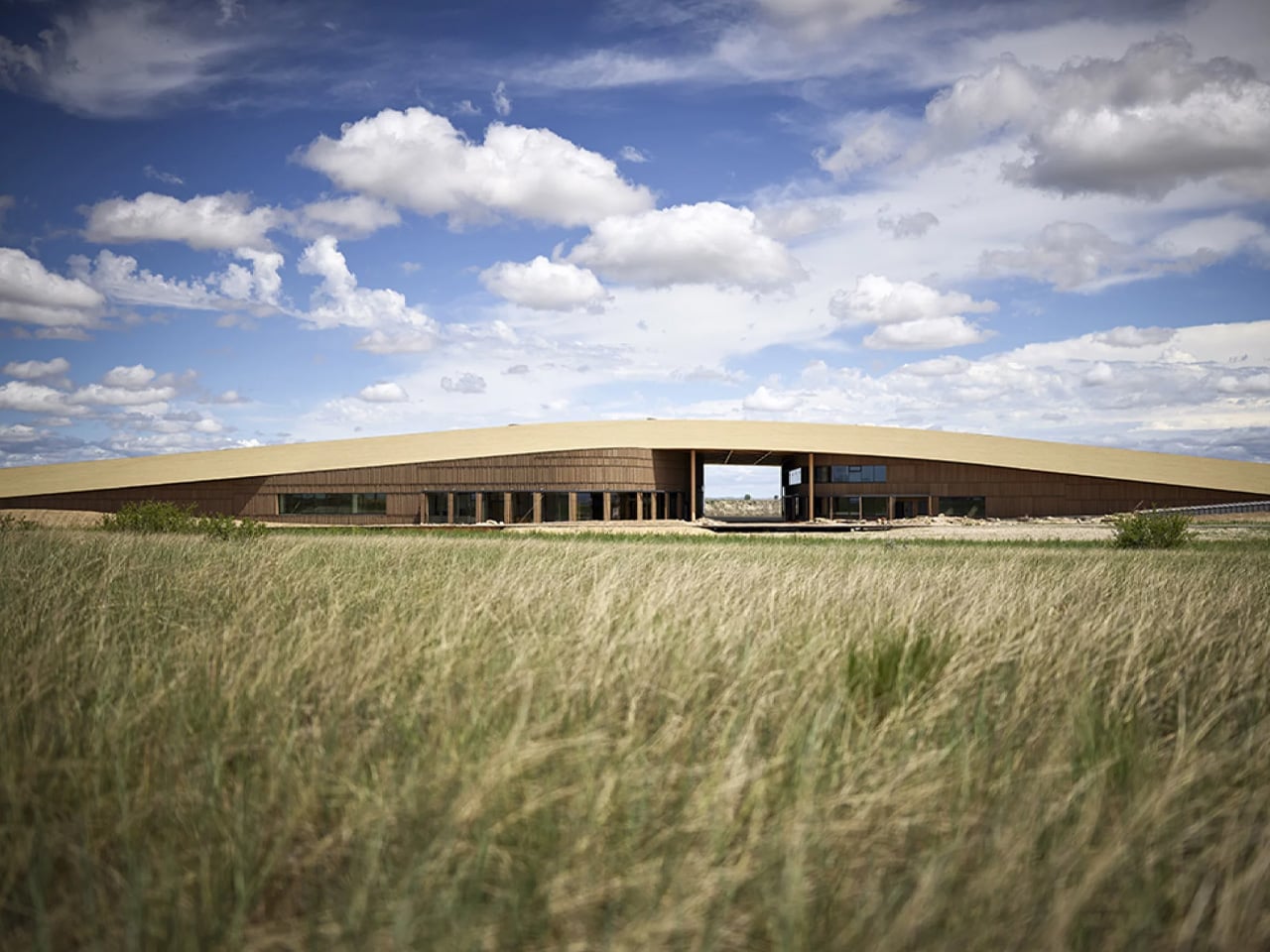
Designed by the Norwegian-American firm Snøhetta, the 95,000-square-foot library sits on a 93-acre site adjacent to Theodore Roosevelt National Park, rising out of a butte in a way that makes the building nearly indistinguishable from the surrounding terrain at certain angles. Its roof — 121,000 square feet of living, accessible prairie — isn't a decorative flourish. It's the architectural thesis of the entire project: that a monument to America's most famously conservation-minded president should disappear into, rather than dominate, the land he fought to protect.
A boardwalk, not a lobby
Visitors don't so much enter the Theodore Roosevelt Presidential Library as wander into it. A nearly mile-long elevated boardwalk threads through the restored prairie landscape, rising and falling across shifting elevations — alternating between sweeping overlooks of the Badlands and ground-level immersion in native grasses. Along the way are outdoor classrooms, quiet reflective spaces, and a suspended, netted overlook that hangs above the terrain, letting visitors stand — or lie — directly above the land itself.
It's a radical departure from the traditional presidential library format: a stately building, a rotunda, glass cases of artifacts, gift shop at the exit. TRPL is, by design, the first presidential library in the United States accessible by hiking trail, mountain bike, or horseback, in addition to a standard parking lot. That accessibility mandate extends to its anticipated audience too — organizers expect more than 200,000 visitors annually, a significant number for a site located in a town of roughly 100 year-round residents.
Chasing the hardest certification in architecture
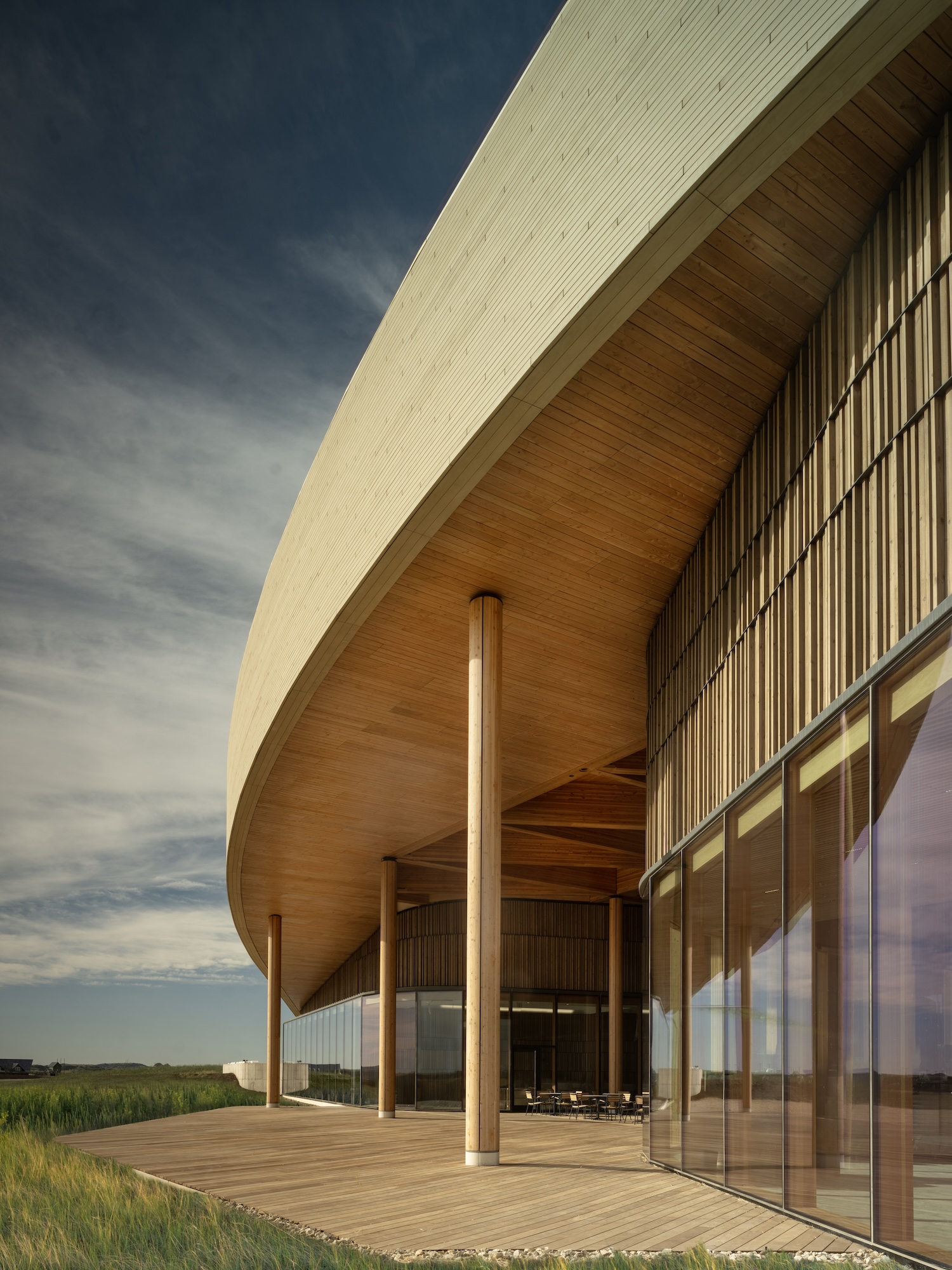
The building's environmental ambitions are, if anything, even bolder than its physical design. TRPL is pursuing full Living Building Challenge certification — widely regarded as the most demanding sustainability standard in the world, tougher than LEED Platinum and achieved by fewer than 40 buildings on the planet to date. The certification requires structures to generate their own energy, treat and reuse their own water, and rely on non-toxic, regionally sourced materials, among dozens of other requirements that must be verified through a full year of actual operational performance before certification is granted — meaning the "regenerative" label won't be officially confirmed until the library has been open and running for twelve months.
Architecture trade press has been effusive. Metropolis Magazine described the project as a rare example of a "regenerative" cultural building in the Americas, one designed to give back more to its ecosystem than it takes. Trade coverage from Engineering News-Record and Architectural Record has focused heavily on the technical audacity of building an earthen roof capable of supporting prairie grasses at scale while still functioning as a working museum roof — a detail that required years of specialized engineering to get right.
The price tag, and the pushback
None of this came cheap, or without friction. The project carries a reported $450 million price tag, funded through a combination of private philanthropy and public support that required the state of North Dakota to add a line of credit to its parks budget bill to backstop initial construction costs. That figure, combined with the site's remote location deep in the Badlands, has fueled a running local controversy over the years-long construction period — questions about whether a town the size of Medora needed, or could sustainably absorb, a project of this scale, and whether public dollars were the right vehicle to help build it.
Supporters counter that the long-term economic case is straightforward: a projected 200,000 annual visitors to a rural North Dakota community represents a transformative tourism engine, one that could reshape the regional economy around Theodore Roosevelt National Park for decades. The library's own leadership has leaned into that framing, positioning TRPL not just as a monument to the 26th president but as sustained economic infrastructure for the Badlands region.

Why Roosevelt, why now
The symbolism wasn't lost on organizers. Theodore Roosevelt is the president most closely associated with the birth of the American conservation movement — he established five national parks, 18 national monuments, and roughly 230 million acres of public land during his time in office, much of that legacy rooted in the very Badlands landscape where the library now sits. Building a library about him that is engineered to disappear into a restored prairie, rather than assert itself against it, reads less like a stylistic choice and more like an argument: that the most fitting monument to a conservationist president is one that behaves like conservation itself.
That argument was reinforced by the opening-day programming, which paired the drone show and a performance from the 188th Army Band with a broader civic framing — a Roosevelt library opening on the exact date the nation turned 250, positioned deliberately as a piece of the country's semiquincentennial celebrations rather than a standalone architectural debut.
What this means for the future of cultural architecture
TRPL arrives at a moment when major museum and library projects worldwide are increasingly judged not just on form, but on environmental performance — a shift architecture critics have been tracking across a wave of 2026 openings. If Snøhetta's building succeeds in earning full Living Building Challenge certification after its first year of operation, it will become one of the most technically ambitious cultural buildings ever constructed in North America, and a template other institutions — struggling with their own questions about legacy, land use, and climate accountability — will likely study closely.
For now, though, the more immediate significance may be simpler: in a remote corner of North Dakota, a nearly mile-long boardwalk is inviting visitors to walk across a roof made of living prairie, and to reconsider, quite literally underfoot, what a monument to conservation should look like.
Published By | Features Editor