Written By | Fashion and Design Desk
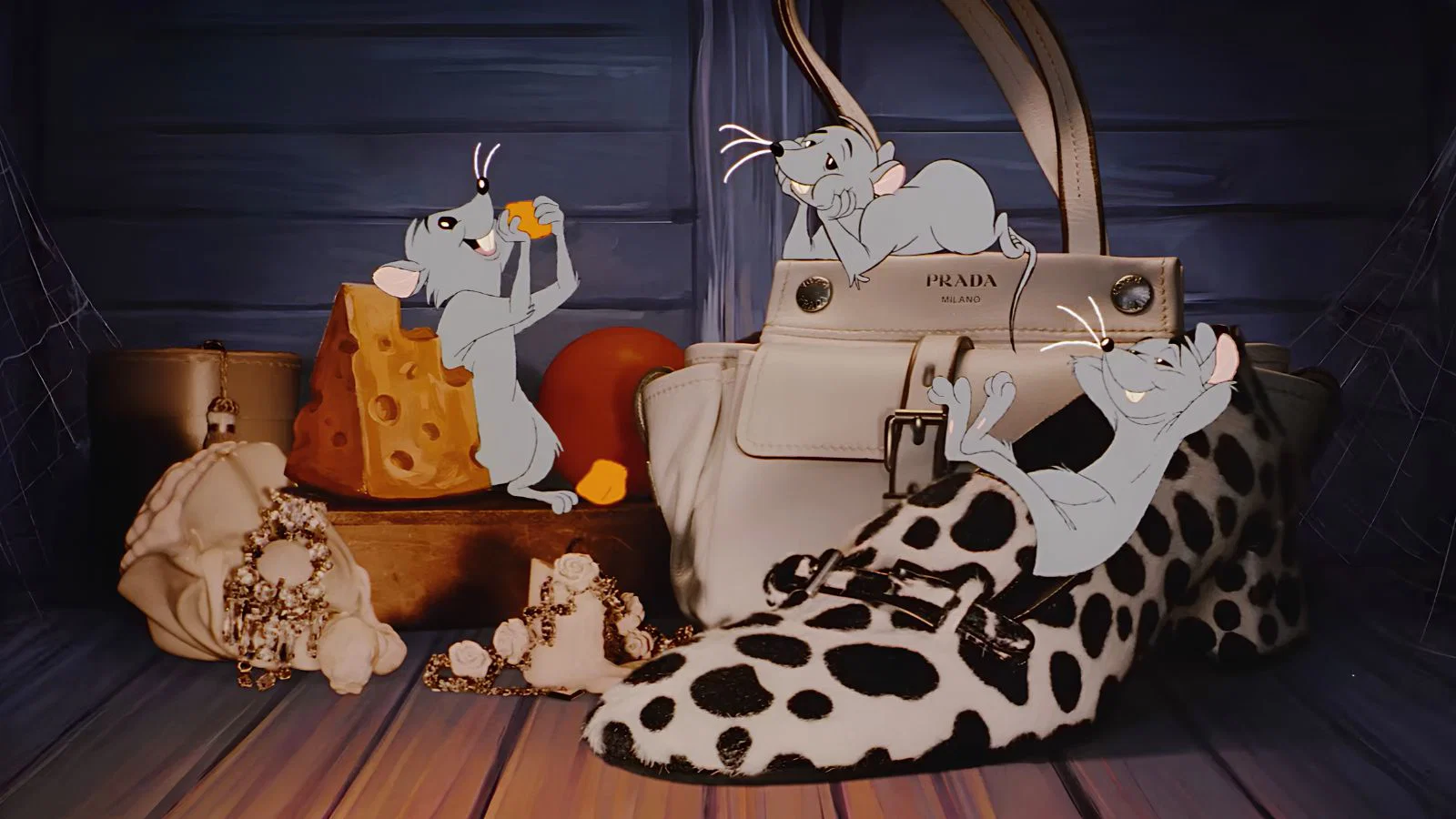
"Drawing Prada" puts Sadie Sink, Maya Hawke and Kelvin Harrison Jr. into illustrated winter worlds, animated frame by frame by a veteran of traditional cartooning.
MILAN
Luxury holiday campaigns usually arrive wrapped in glitter, gold and star power. This year Prada has taken a different route: pencils. The house's 2026 holiday campaign, titled "Drawing Prada: Animated by hand," blends live-action fashion imagery with traditional hand-drawn animation, placing its cast inside storybook winter landscapes populated by playful animal characters. It was reported by Hypebae on October 27 and by Nylon in its October 29 fashion roundup, and Hypebae notes one detail in particular: the campaign does not use AI.
The cast and the crew
The campaign is fronted by Sadie Sink, Maya Hawke, Chen Haoyu and Kelvin Harrison Jr., who are ambassadors of the house, along with actor Luther Ford. In the hero film, the cast moves between real settings and illustrated worlds. Photographer Glen Luchford shot the stills and, according to Hypebae, aligned the lighting and perspective of his photographs with the illustrated environments so that the two layers sit together convincingly.
The headline name behind the pencils is John Pomeroy, a veteran animator whose career dates to the pencil-and-paper era. Nylon notes that he and his team created the woodland creatures who appear alongside Hawke and Sink. In a behind-the-scenes film shared by Prada and reported by Marketing-Interactive, Pomeroy said, "I learned my craft with pencil and paper." Lead animator Tom Bancroft said Pomeroy "called the band back together," a reference to reuniting hand-drawn animators who had worked at different studios over the years.
Why it feels different
The creative intent, as reported, is a deliberately nostalgic look that keeps the imperfections of handmade work. Scenes are drawn rather than assembled mainly with digital tools. That decision is the story. In a season when most brands are tempted to showcase technology, Prada has chosen to foreground the human hand and to explain the process in a behind-the-scenes film.
Small details have already attracted attention. Nylon singled out Sink's cow-print shoes as a standout from the campaign. Fashion campaigns are often judged on a single image; here, the pairing of garments with animated surroundings means the clothes have to hold their own against drawn scenery, and the cow print is evidently doing that.
It is also a campaign that rewards a second look. Hand-drawn animation has a particular quality: lines wobble slightly, shading shifts from frame to frame, and the result feels warm in a way that polished digital work often does not. By pairing that warmth with Luchford's photographs, the house creates a world where a coat or a handbag can plausibly belong to both a real person and a cartoon fox. That is the commentary of this writer, not a statement from Prada, but the campaign's own materials point in the same direction by emphasizing process.
The involvement of a veteran animator also changes the story the brand can tell about itself. Instead of a celebrity face and a single hero image, Prada can point to a team of craftspeople and a method with a history. For a house that has long cultivated an intellectual, slightly offbeat image, that fits.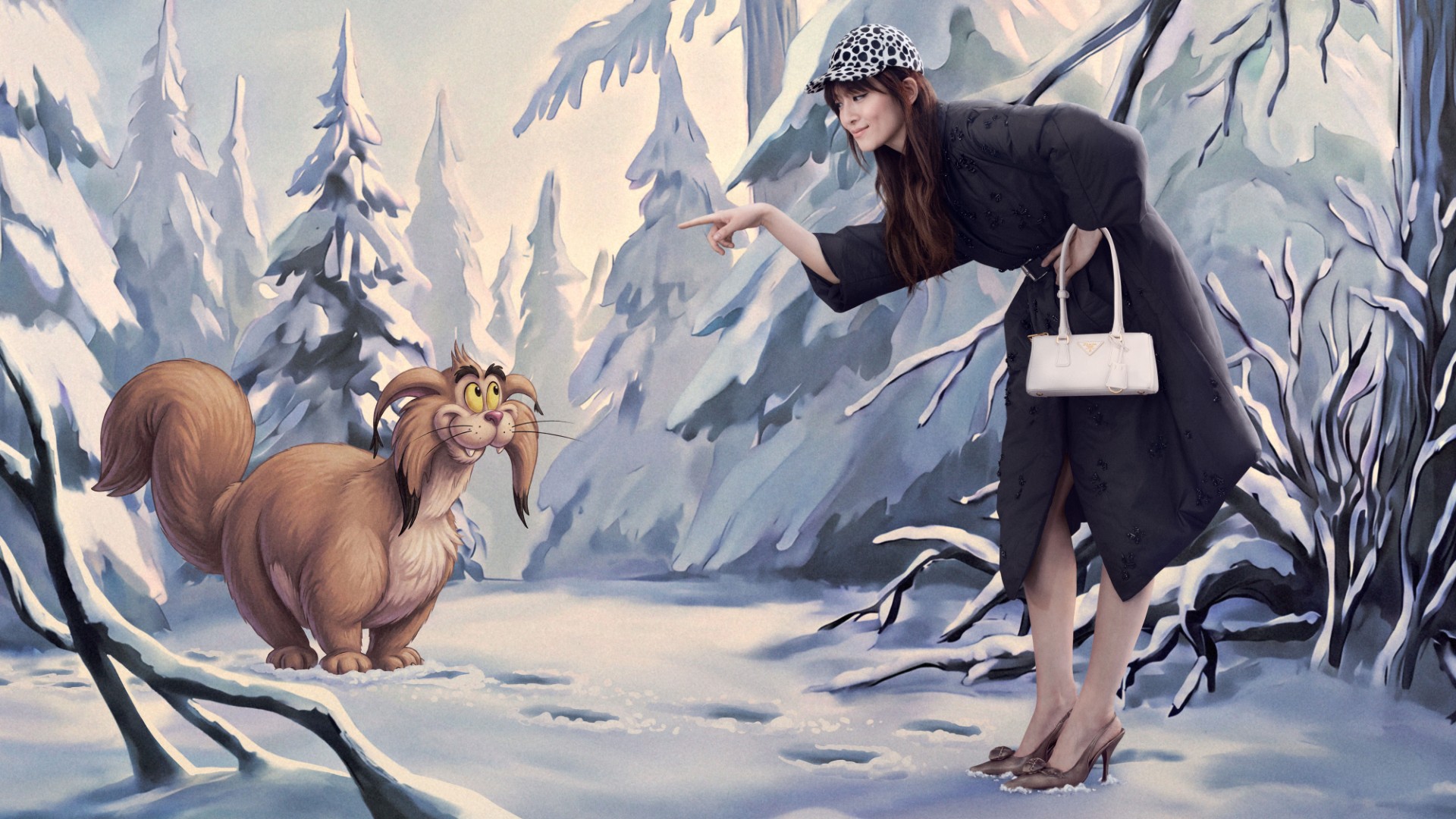
A crowded holiday field
Prada is not alone in treating the season as a stage for storytelling. Nylon's roundup the same day noted Miu Miu's holiday campaign, shot in a Tudor-style home and starring Gigi Hadid and Louisa Jacobson, the latter making her Miu Miu campaign debut, with headbands and sparkly outerwear. Kylie Jenner's KHY has also launched an "After Dark" outerwear line for the cold months. Marketing-Interactive observed that brands are looking for more distinctive ways to run festive campaigns, citing a Singapore train activation as another example.
Against that backdrop, Prada's decision reads as a choice about identity. Miu Miu leans on a fairy-tale interior; Prada leans on the craft of its own image-making. Both are built on the idea that holiday marketing works best when it feels like a story rather than a catalogue.
Compare the two approaches directly and you find a useful snapshot of luxury marketing in 2026. One house builds a physical set and casts a fashion-world favorite; another builds a drawn world and casts actors known for screen and stage. The shared ground is a refusal to be generic, which may be the real holiday trend this year.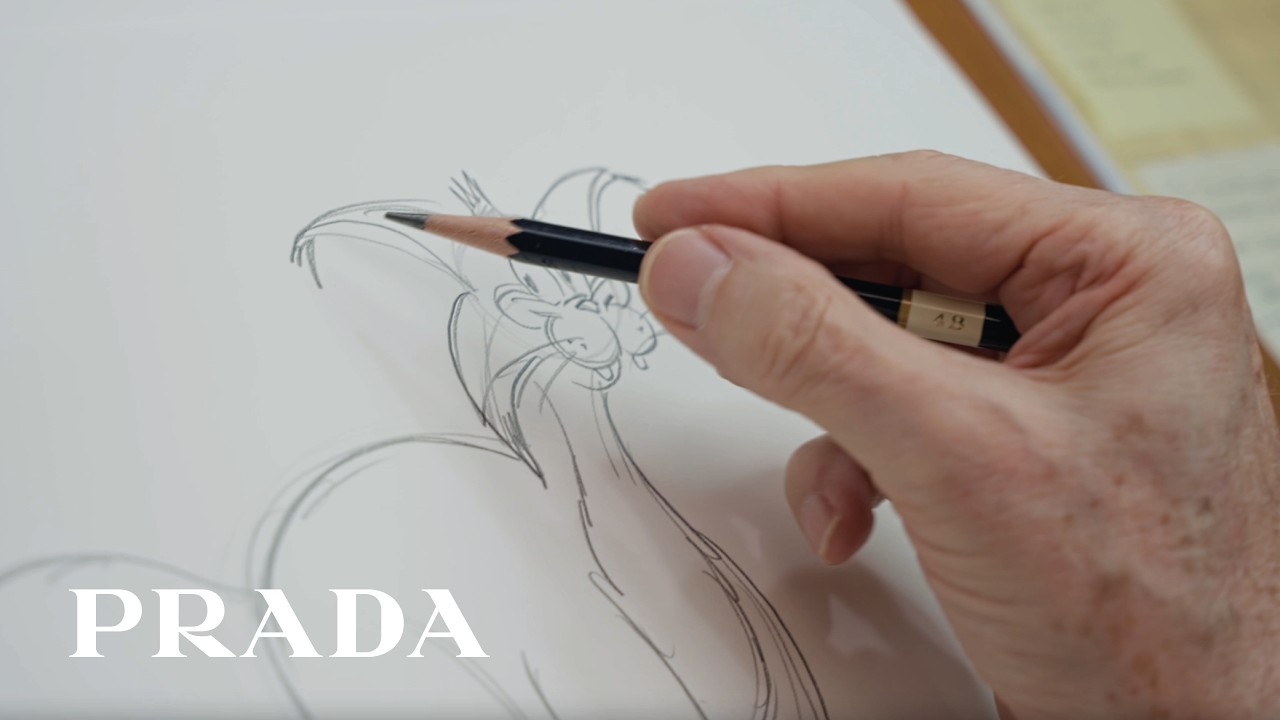
What we don't know
Several things remain unreported. The sources reviewed do not give film lengths, a budget, a media plan, or Prada's own statement on the creative thinking, and Marketing-Interactive said it had asked Prada for more information. The release schedule for individual films and stills is not stated. This article therefore limits itself to what has been published and treats any wider conclusions as commentary.
What this means for you
If you are shopping for the season, the campaign is a reminder that the most memorable gifts often carry a story. Look for pieces that have a visible point of view, whether that is craftsmanship, a handmade element or an unexpected pattern like Sink's cow print. If you make things yourself, the message is encouraging: a major luxury house has bet its holiday message on the idea that drawn, imperfect work still captivates. And if you simply enjoy watching, the behind-the-scenes film is worth seeking out for the animators' own account of how the world was made.
There is also a practical angle for readers on a budget. You do not have to buy anything to enjoy the campaign, and its message about craft applies equally to vintage finds, tailoring and repairs. A well-made coat that lasts a decade is the opposite of a disposable trend, and a campaign that celebrates slow work can nudge shoppers toward that mindset.
The bottom line
Fashion's holiday season is usually a contest of sparkle. Prada has changed the question, asking instead what a campaign looks like when it is made slowly, by hand, by people who learned their craft long before the digital age. Whether the approach spreads across the industry is unknowable for now, but for one winter, at least, a pencil has become the most luxurious tool in fashion.



