Written By | Fashion and Design Desk
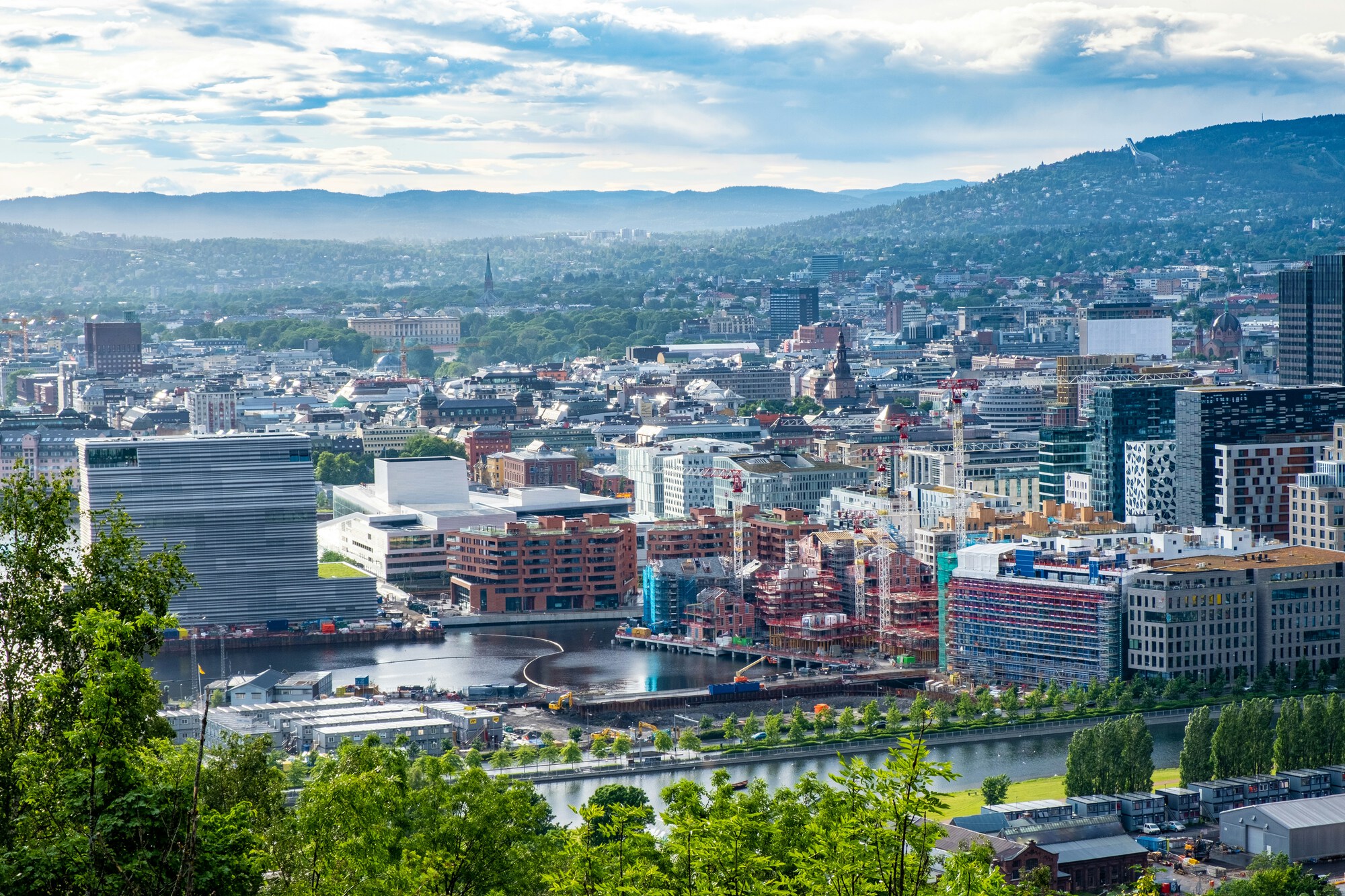
The 9th Oslo Architecture Triennale opens September 17 inside an 1877 church, under a title that reads like a provocation
OSLO
Almost every architecture practice on earth now has a sustainability page. Almost none of them start there. Nature enters the design process late, as a constraint to be satisfied, a certification to be achieved, or a set of numbers to be brought within tolerance after the fundamental decisions — what gets built, how big, out of what, on whose land — have already been taken.
The 9th Oslo Architecture Triennale, which opens on September 17 and runs to October 1, proposes inverting the sequence. Its title is a question rather than a claim: "What if Nature Comes First?" Curated by Line Ramstad under the continuing direction of Christian Pagh, it gathers more than thirty international projects around a deceptively simple thought experiment — that if the non-human world were the starting point of architectural decision-making rather than a downstream consideration, a great deal of what currently gets built would not be.
A church, inside and out
The main exhibition occupies Sofienberg Church, an 1877 building in central Oslo, and takes over both its interior and its grounds. The choice is not incidental. A nineteenth-century church is a structure built with an assumption of permanence that contemporary construction has largely abandoned — designed to last centuries, made from materials that can be maintained rather than replaced, and set in a churchyard that is one of the few pieces of unpaved ground in its district.
Putting an exhibition about the lifespan of buildings inside a building that has already outlived nearly everything around it is the kind of curatorial argument that does not need to be spelled out in a wall text.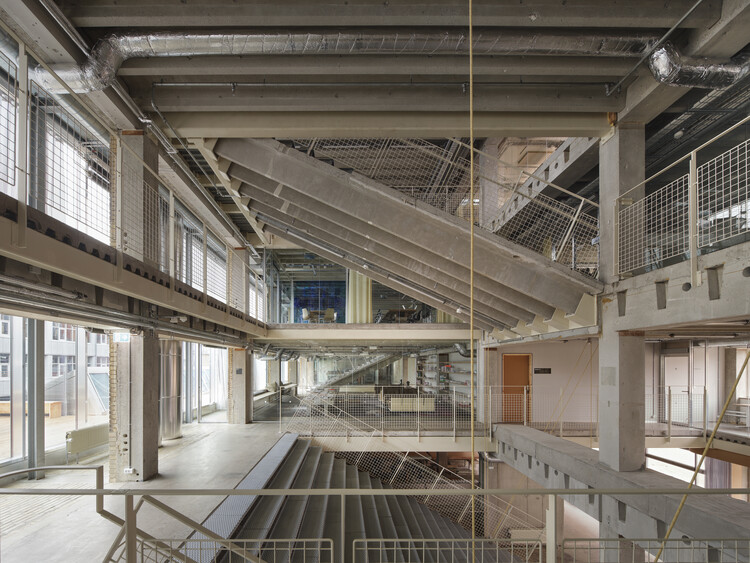
Four scales, from a brick to a planning code
The curatorial framework is organised across four scales — Materials, Structures, Territories and Systems — and the structure is what stops the theme from dissolving into good intentions.
Materials asks the question at its smallest and most tractable: how construction materials are selected, where they come from, and what happens when reuse is treated as the default rather than the exception. Structures moves up to the building itself, and to the increasingly urgent question of lifespan — whether a structure designed for a thirty-year commercial cycle can be justified at all when its embodied carbon is spent in the first eighteen months of its existence.
Territories addresses the relationship between architecture and land: what a building does to the ground beneath it, the water moving through it and the species already living on it. And Systems — the hardest of the four, and the one most projects avoid — takes on the economic and regulatory machinery that determines what actually gets financed and permitted, regardless of what any individual architect would prefer to design.
That last category is the honest one. An architect who wants to reuse a structure rather than demolish it is frequently prevented not by physics or expense but by insurance, mortgage terms, procurement rules and depreciation schedules. Any exhibition that treats the problem as purely a design problem is telling half the story.
Two weeks, not three months
The ninth edition also changes format. Where architecture biennales and triennales have tended toward long, sparsely attended exhibition runs, Oslo has compressed this one into a two-week festival: an exhibition wrapped in conferences, seminars, workshops, film screenings and guided walks, with a concentrated opening sequence of three days for press and international guests beginning on September 17. That opening includes a morning sauna and a swim in the Oslo fjord alongside the conference and opening party, which is either a very Norwegian scheduling decision or a curatorial one, depending on how literally you take the theme.
The compression matters more than it sounds. A festival format concentrates the audience, which means the arguments happen in rooms with people in them rather than in catalogue essays read six months later. It also acknowledges something the biennale circuit has been slow to admit: that the marginal value of month eleven of a three-month exhibition is close to zero, and that the carbon cost of keeping it open is not.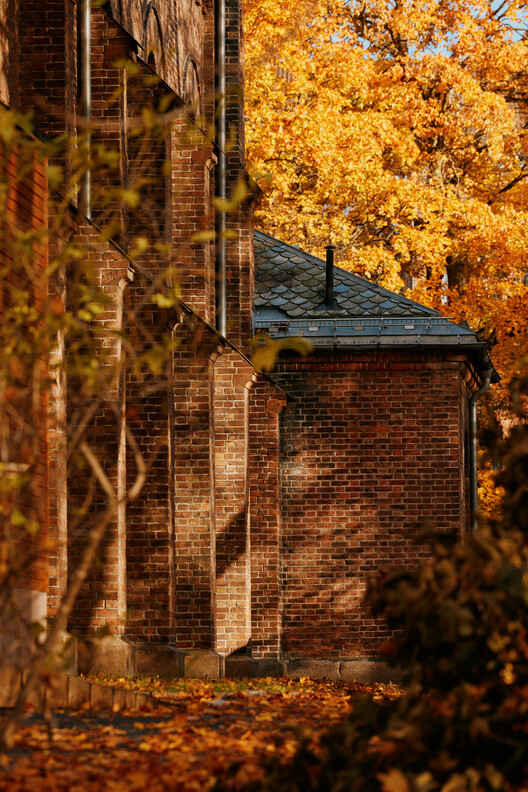
Why the question is not rhetorical
The built environment is routinely credited with something close to a third of global energy-related emissions and a comparable share of raw material extraction and waste. Those figures have been in circulation long enough to have lost their power to alarm, which is precisely the problem an exhibition like this is trying to solve — not by restating the statistics, but by asking what a practice looks like when they are the premise rather than the postscript.
Norway is an interesting place to ask it. The country is simultaneously one of the world's most aggressive decarbonisers domestically and one of its significant hydrocarbon exporters, a contradiction that Norwegian cultural institutions have become notably willing to name out loud. An Oslo triennale asking whether nature should come first is not operating from a position of moral simplicity, and the programme appears to know it.
What this means for you
If you are going: two weeks is short, the exhibition is in one primary venue rather than scattered across a city, and the talks programme is where the substance will be. Book around the conference days rather than the exhibition, which can be seen in an afternoon.
If you are not going — and most people reading this will not be — the useful takeaway is a question you can apply to any building project you encounter, including your own. Not "how sustainable is this?" but "what was decided before sustainability was considered?" The answer, almost always, is: everything that matters. Site, size, structural system, whether to build at all. By the time the certification consultant arrives, the emissions are largely determined.
That is the whole argument of this triennale, compressed. It is not a call for better materials or cleverer engineering. It is a proposal to move one question from the end of the process to the beginning — which is a much smaller intervention than it sounds, and a much harder one.



