Written By | Peter Luzinda
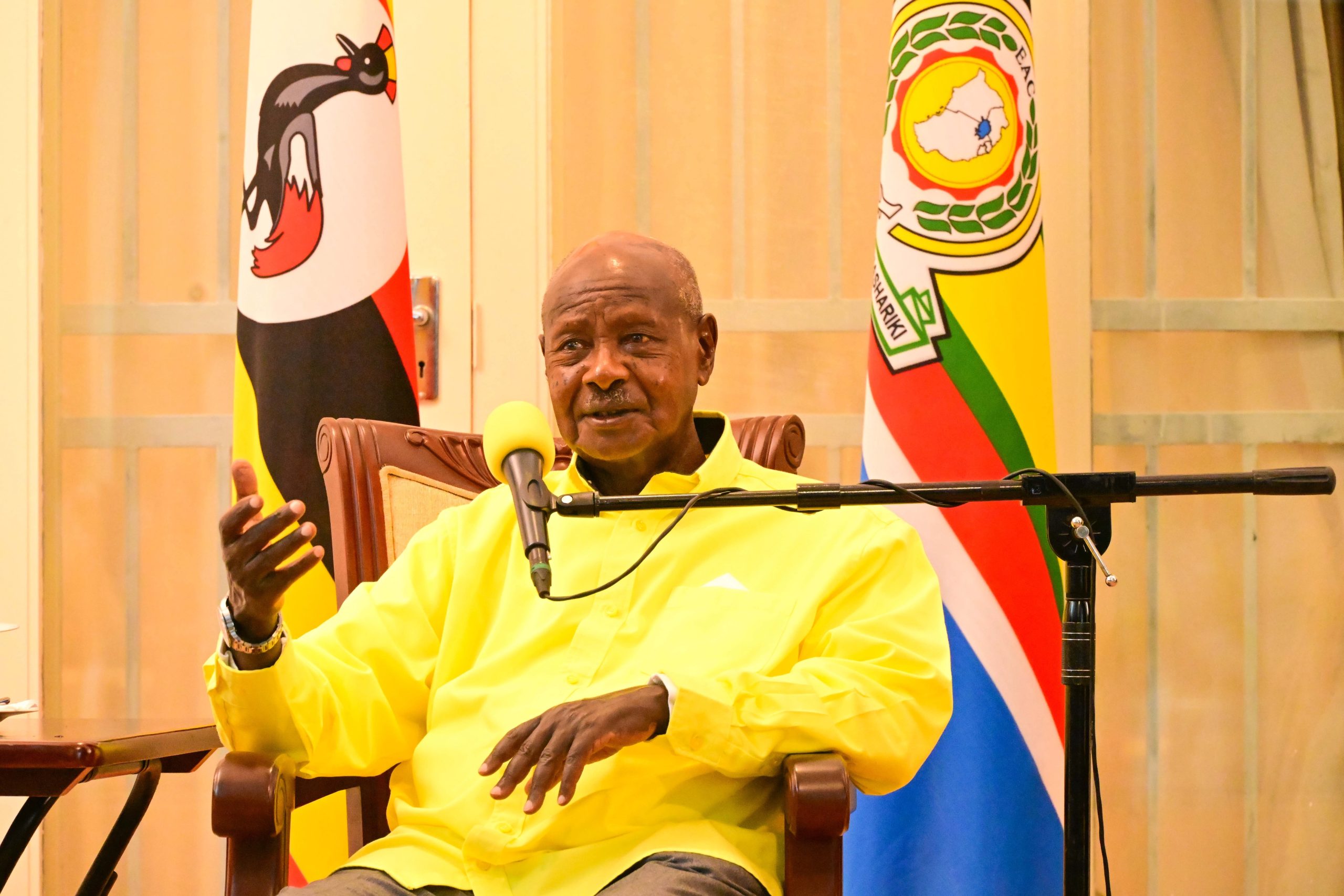
Museveni has also frequently cited the strict disciplinary code enforced during the National Resistance Army (NRA) bush war
Kampala
President Yoweri Museveni has reignited national debate on crime and punishment after endorsing the principles behind a controversial youth-driven proposal rooted in the biblical “eye-for-an-eye” doctrine.
The proposed Proportional Justice Bill, 2026, initiated by 16-year-old youth advocate and entrepreneur Nyanzi Martin Luther, seeks to align punishments strictly with the severity of offences. The proposal gained momentum following last week’s gruesome machete attack that left four toddlers dead at a nursery school in Ggaba, Kampala.
Speaking to legal professionals recently, Museveni signalled firm support for harsher penalties, particularly for capital offences.
“People should know that if you take a life, your life will also be taken,” he said. “You cannot kill people and continue moving freely. That is not correct. A killer is a killer.”
The President’s remarks are consistent with his long-standing position on retributive justice. In previous statements reported by Daily Monitor in 2016, 2018 and 2021, Museveni maintained that the ruling National Resistance Movement (NRM) subscribes to the “eye-for-an-eye” principle.
“The NRM believes in an eye for an eye. If somebody kills your person, that one should also be killed,” he previously stated.
Museveni has also frequently cited the strict disciplinary code enforced during the National Resistance Army (NRA) bush war, where perpetrators of serious crimes were executed to maintain order. He argues that similar firmness is necessary to deter rising violent crime.
Key proposals in the bill
The draft legislation outlines several measures aimed at strengthening deterrence and aligning punishment with offences:
Supporters argue that Uganda’s justice system is often too lenient, slow, and disconnected from public expectations, leaving victims’ families frustrated and failing to curb repeat offences.
However, the proposal has drawn sharp criticism from human rights organisations, legal scholars, and sections of the judiciary. Critics warn that strict retributive justice could undermine due process, increase the risk of wrongful convictions, and conflict with constitutional guarantees and international human rights obligations.
They instead advocate for a balanced approach that combines punishment with rehabilitation, improved investigations, and efforts to address the socio-economic drivers of crime.
With Museveni’s backing, the Proportional Justice Bill is expected to trigger intense debate in Parliament and across the country in the coming weeks.
As Uganda grapples with rising concerns over public safety, the proposal has once again brought into focus the enduring tension between retributive justice and modern human rights principles.
Torch Media Africa



