Written By |
A laboratory nurse, takes a sample from a child declared a suspected case of Mpox at the treatment centre in Munigi, Democratic Republic of the Congo. (Courtesy Photo)
Health officials have alerted doctors around the world to watch for cases of mpox, as a deadly new strain of the virus has crossed the African continent. The World Health Organization (WHO) has declared a global health emergency—their highest alert—following an outbreak in Africa. The first case outside Africa was detected in Sweden, prompting the European Centre for Disease Prevention and Control to raise the risk level. Experts have warned that this new strain is "more severe" with "higher mortality" than the one that caused concern in 2022. 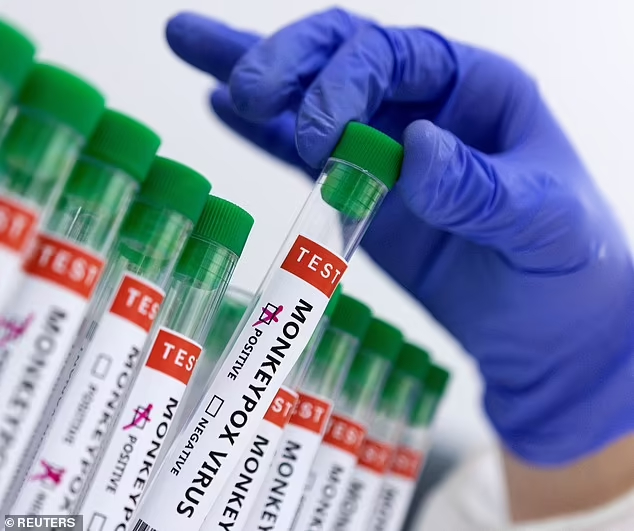
Test tubes labelled 'Monkeypox virus positive and negative' (Courtesy Photo)
Rapid testing is being made available, and GPs and hospitals have been instructed to isolate patients with symptoms. The deadly variant appeared this month and is spreading across borders, with a reported mortality rate of 10% in children, posing a significant threat to populations in affected areas. Researchers have noted that the new "Clade 1b" variant has already crossed the Democratic Republic of Congo's (DRC) porous borders, leading to dozens of deaths in recent weeks in Burundi, South Africa, and DR Congo, with thousands more displaced due to conflicts in the region.
Mpox, typically found in central and east Africa, has afflicted populations since the early 1970s. Although a vaccine is now available, uptake has been slow in countries lacking the resources and infrastructure for widespread immunization. Nearly 100,000 people were infected during the 2022 global outbreak, caused primarily by the Clade IIb virus, which was less deadly than the emerging Clade 1b variant but still resulted in 183 deaths, according to the CDC.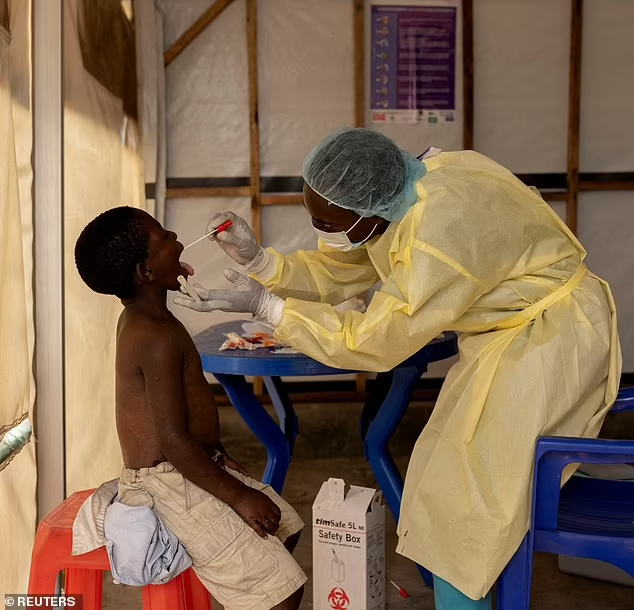
Christian Musema, a lab nurse, takes a sample from a child declared a suspected case Mpox (Courtesy Photo)
The United States reported 32,063 cases and 58 deaths during the 2022 outbreak, with significant numbers of cases reported across North, Central, and South America, Europe, Africa, Asia, and Australasia. The Africa CDC has noted that mpox has been detected in 13 countries this year, with over 96% of cases and deaths occurring in the DRC. Cases have increased by 160%, and deaths by 19% compared to the same period last year, with more than 14,000 cases and 524 deaths recorded so far.
Experts warn that the new variant is more deadly and has a higher propensity to spread across borders, with a 5% mortality rate in adults and 10% in children. While the 2022 strain was largely transmitted through male-to-male sexual contact, the Clade 1b variant appears to be transmissible through close non-sexual contact and is exacerbated by heterosexual sexual contact, particularly among sex workers, who account for about 30% of recorded cases.
Authorities in the DRC approved mpox vaccines in June to try to contain the outbreak, but many worry that the affected nations lack the resources to effectively stop the spread. Dr. Zeil Rosenberg, Executive Vice President of Tonix Pharmaceuticals, which is developing an mpox vaccine, warned that the disease is now spreading to regions where it has not historically been endemic. He noted that the DRC remains the epicenter of an "unchecked explosion of cases," with 11,000 cases reported this year alone.
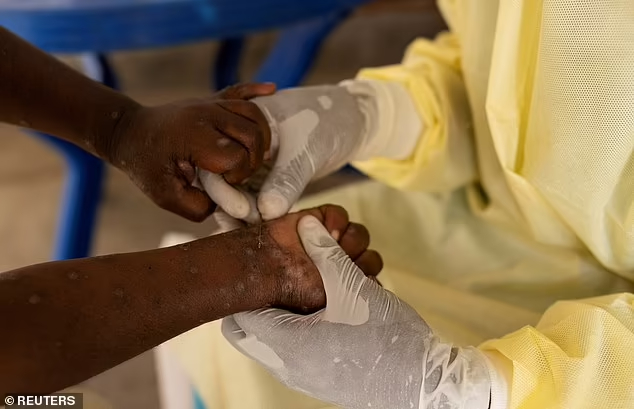
A child with skin lesions receives treatment at the treatment centre in Munigi, DRC last month (Courtesy Photo)
Brian Labus, Assistant Professor at the University of Nevada Las Vegas' Department of Epidemiology and Biostatistics, explained that the virus has mutated and now spreads more easily between people. He emphasized the challenges in controlling the outbreak, particularly in camps for displaced persons where high population density increases the risk of disease spread.
Michael Marks, a professor of medicine at the London School of Hygiene and Tropical Medicine, said that declaring the mpox outbreaks in Africa an emergency is justified if it leads to more support to contain them. He criticized the global community for allowing the situation to deteriorate to this point before releasing the necessary resources.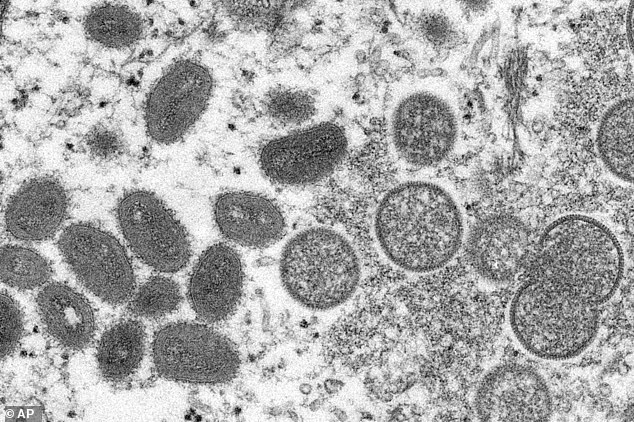
Mpox virions shown under a microscope. Experts warn the new 1b Clade is harder to detect. (Courtesy Photo)
Officials at the Africa CDC have reported that nearly 70% of cases in the DRC are in children under 15, who also account for 85% of deaths. Jacques Alonda, an epidemiologist working in the DRC, expressed concern about the spread of mpox in refugee camps in the conflict-ridden eastern part of the country. He recounted the case of a six-week-old baby who contracted mpox at just two weeks old due to overcrowding in hospitals, where the baby and his mother were forced to share a room with an undiagnosed patient.
From Agencies / Daily Mail



