NEW YORK CITY
For three weeks this July, the most dangerous thing on Manhattan's Upper East Side wasn't the traffic on Fifth Avenue or the crowds outside the Guggenheim Museum. It was the air itself.
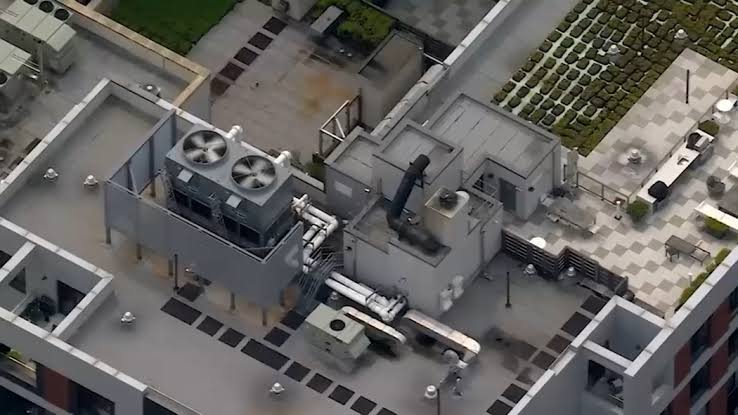
Somewhere among the gleaming pre-war co-ops, the boutique gyms and the rooftop water systems that keep the neighborhood's air conditioners humming through the summer heat, a colony of Legionella bacteria had multiplied to lethal concentrations. Every time a cooling tower cycled its water and released a fine mist into the sky, it sent invisible, waterborne killers drifting down onto sidewalks, into open windows, and into the lungs of unsuspecting New Yorkers and tourists walking through Yorkville and Carnegie Hill.
By the time health officials finally declared they believed they had snuffed out the source in late July, 82 people had been diagnosed with Legionnaires' disease, a severe and sometimes fatal form of pneumonia. Five of them were dead. Dozens more had spent days or weeks in hospital beds, gasping for breath, their families terrified they'd caught something as ordinary as a summer cold that had somehow turned into a fight for their lives.
The Outbreak That Crept Up on the City
The first signs came quietly. On July 2, the city's Department of Health and Mental Hygiene identified a cluster of Legionnaires' cases concentrated in the Upper East Side ZIP codes of 10028, 10075 and 10128 — an area that stretches from the East 60s up through Yorkville and includes some of the most expensive real estate in the country.
By July 5, there were 14 confirmed cases. It didn't stay there. Within two days the cluster had swelled to 54 infections, including 18 hospitalizations. By July 14, the count had climbed again to 63 cases. A week later, on July 21, the tally stood at 76, with seven people still fighting the illness in city hospitals. Days after that, the outbreak crossed the grim threshold of 80-plus cases, ultimately landing at 82 confirmed infections with five confirmed deaths — a death toll that crept up one victim at a time, first reported on July 17 when officials confirmed the outbreak had "turned deadly," then again as a second, third, fourth and finally fifth fatality were announced in the days that followed.
It is, by multiple accounts, the most significant Legionnaires' cluster to hit New York City since the notorious 2015 South Bronx outbreak — the largest in city history — which was ultimately traced to a single contaminated cooling tower atop a hotel and sickened more than 130 people, killing 16.

The Hunt for the Source
Unlike a foodborne illness outbreak, where investigators can trace a single contaminated batch of lettuce or ground beef back to one farm or processing plant, tracking down a Legionella source in a dense urban landscape is a nightmare of logistics. The bacteria breed in warm, stagnant water — between roughly 77 and 113 degrees Fahrenheit is their sweet spot — and once a cooling tower is infected, every time the system runs, it can aerosolize the bacteria into a fine mist that drifts on the wind, sometimes for a mile or more, before anyone breathes it in.
New York City requires building owners to register their cooling towers with the Health Department specifically because of past outbreaks like the 2015 disaster, which gives investigators a head start when a new cluster appears. This time, city inspectors fanned out and tested 183 cooling towers across 160 buildings in and around the affected ZIP codes. Initial rapid PCR screening — which detects genetic material from both live and dead bacteria — flagged 77 towers across 75 buildings as potentially contaminated. Confirmatory culture testing, the gold-standard method that can only detect living, infectious bacteria, ultimately confirmed live Legionella in 34 towers across 33 buildings.
The list of implicated addresses read like a real estate agent's dream map of the neighborhood. Among the buildings whose cooling towers tested positive: the Solomon R. Guggenheim Museum at 1071 Fifth Avenue, one of the most visited cultural institutions in the world; the Asphalt Green sports and fitness complex on York Avenue; and a Whole Foods Market on Third Avenue where thousands of New Yorkers do their weekly grocery shopping. City officials were careful to clarify that a positive test for a building's cooling tower doesn't necessarily mean that specific tower was the one that sickened people — with so many towers in such close proximity, pinpointing the exact source (or sources) of the outbreak has proven agonizingly difficult.
"We're still avidly conducting a thorough investigation to confirm which exact location is harboring the live Legionella bacteria which is causing people to get sick," city Health Commissioner Dr. Alister Martin said as the case count climbed through the teens and into the 60s. As the remediation effort accelerated, Martin struck a more decisive tone: "What we are doing is going to the source of the outbreak and taking that off the map."
Every building with a tower that tested positive — whether through the quick PCR screen or the slower confirmatory culture — was legally ordered to drain, clean, disinfect and re-test its system, under the threat of fines and enforcement action. By the final week of July, city officials said all confirmed-positive towers had been remediated, and no new cases had been reported for more than a week — the clearest sign yet that the outbreak was finally, mercifully, burning itself out.
What Legionnaires' Disease Actually Does to You
Legionnaires' disease isn't like catching a cold from a coworker. You cannot get it from another person — it spreads exclusively through inhaling contaminated water droplets, whether from a cooling tower mist, a hot tub, a decorative fountain or, in rarer cases, an ungoverned shower head or faucet. Once inhaled, the bacteria settle into the lungs and cause a severe pneumonia, with symptoms that typically show up two to fourteen days after exposure — a lag long enough that many victims never connect their illness back to that walk through Yorkville or that afternoon at the museum.
Early symptoms mimic the flu: fever, chills, headache, muscle aches and fatigue. Within a day or two, a cough develops — sometimes producing mucus, sometimes dry — along with shortness of breath and chest pain. Some patients also experience gastrointestinal symptoms like nausea, vomiting and diarrhea, or confusion severe enough to be mistaken for a totally unrelated neurological problem.
The disease is treatable with antibiotics, and most healthy people recover with prompt medical care. But it is far from harmless. The people most likely to die from it are those over 50, smokers, heavy drinkers, and anyone with a chronic lung condition, diabetes, kidney or liver disease, or a weakened immune system — exactly the population most likely to be out and about in a dense, older residential neighborhood like the Upper East Side. Untreated or diagnosed too late, Legionnaires' disease can trigger respiratory failure, septic shock and death.
A Neighborhood on Edge
For three weeks, the outbreak turned an ordinary New York summer into something closer to a low-grade siege. Local news outlets ran daily case-count updates. Residents swapped rumors about which gyms and grocery stores to avoid. Politicians sparred over whether the city had moved quickly enough — some elected officials argued the Health Department was too slow to publicly name specific buildings, while city officials countered that testing protocols require time to confirm results accurately before publishing information that could unfairly stigmatize a property or, worse, give residents false reassurance about buildings that hadn't yet been tested.
Health officials repeatedly urged anyone who had spent time in the 10028, 10075 or 10128 ZIP codes since early July to seek medical attention immediately if they developed flu-like symptoms — reminding the public that early antibiotic treatment dramatically improves outcomes, while delayed diagnosis is what turns a treatable pneumonia into a fatal one.
What This Means for You
You don't have to live on the Upper East Side to take a lesson from this outbreak. Legionella outbreaks are a recurring feature of American summers precisely because cooling towers — the large rooftop units that provide air conditioning to big buildings, hospitals, hotels and office towers — are everywhere, and warm weather is exactly when they're running hardest and most likely to breed bacteria if not properly maintained.
If you live in a city with a lot of large or older buildings, it's worth knowing the warning signs: a summer "flu" that seems unusually severe, especially if it comes with a bad cough and shortness of breath, deserves a doctor's visit and a mention of possible Legionella exposure, particularly if you're over 50 or have underlying health conditions. Most doctors don't automatically test for Legionella in a routine pneumonia workup, so patients sometimes need to specifically ask about it, especially if they've recently traveled to or spent time in an area with a known outbreak.
For building owners and managers, the outbreak is a costly reminder that cooling tower maintenance isn't optional. Regular disinfection, water treatment, and testing are cheap compared to the legal, financial and reputational fallout of being named in a public health investigation — to say nothing of the human cost.
The Bottom Line
Five families are grieving. Dozens more spent weeks recovering from an illness they never saw coming, sickened by nothing more than breathing the summer air on their own block. And an entire slice of Manhattan — one of the wealthiest, most heavily surveilled, most resource-rich square miles in America — got a brutal reminder that a public health threat doesn't care about your ZIP code's median home price. It just needs warm, stagnant water and a mechanical system to turn it into mist.
As of late July, city health officials believe the source has been eliminated and the outbreak is winding down. But with 183 towers tested and dozens found contaminated, New Yorkers across the city are asking an uncomfortable question: how many other buildings, in how many other neighborhoods, are quietly harboring the same risk right now?
This is a developing public health story; if you experienced flu-like symptoms after spending time in the Upper East Side in July 2026, health officials urge you to contact your doctor and mention possible Legionella exposure.
Published By | Features Editor