PARIS, FRANCE
Trade fairs do not usually rename themselves. They are, by nature, conservative institutions: a fixed date, a fixed hall, a fixed set of expectations that thousands of buyers plan their year around. Changing the name is the sort of thing you do when you want to change what the event is for.
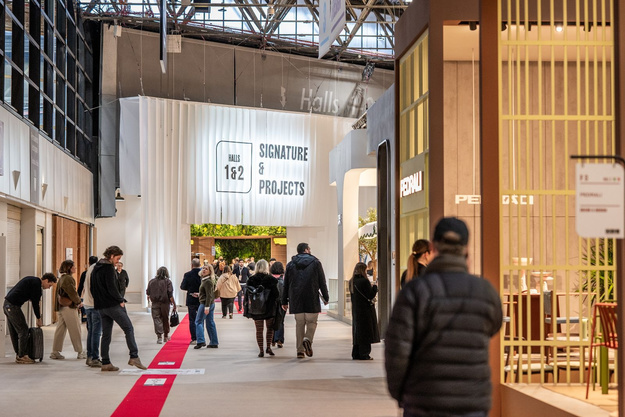
From tomorrow, Maison&Objet — the twice-yearly Paris fair that has functioned for three decades as the interiors industry's central nervous system — splits into two distinct identities. The September edition becomes Maison&Objet Pulse. The January edition becomes Maison&Objet Premier. The first Pulse runs September 10 to 14 at the Paris Nord Villepinte exhibition centre, with more than 1,700 brands across four halls and seven sectors, under the theme 'Pulse in Motion'.
Two fairs, two jobs
The logic of the split is worth unpacking, because it says something about where the design business actually is. January's Premier is positioned as the establishment edition: the reliable, commercially serious moment when buyers place orders. September's Pulse is being framed as the experimental one — described by the organisers as bold, sensitive and sustainable, a more exploratory chapter.
This is a fair openly admitting that its two dates were never doing the same job and had been pretending otherwise. It is also a hedge. Trade fairs across every industry have spent a decade losing ground to showroom visits, digital sourcing and the simple mathematics of travel costs. Splitting the identity lets one edition compete on business efficiency and the other on cultural relevance, rather than asking both to do both badly.
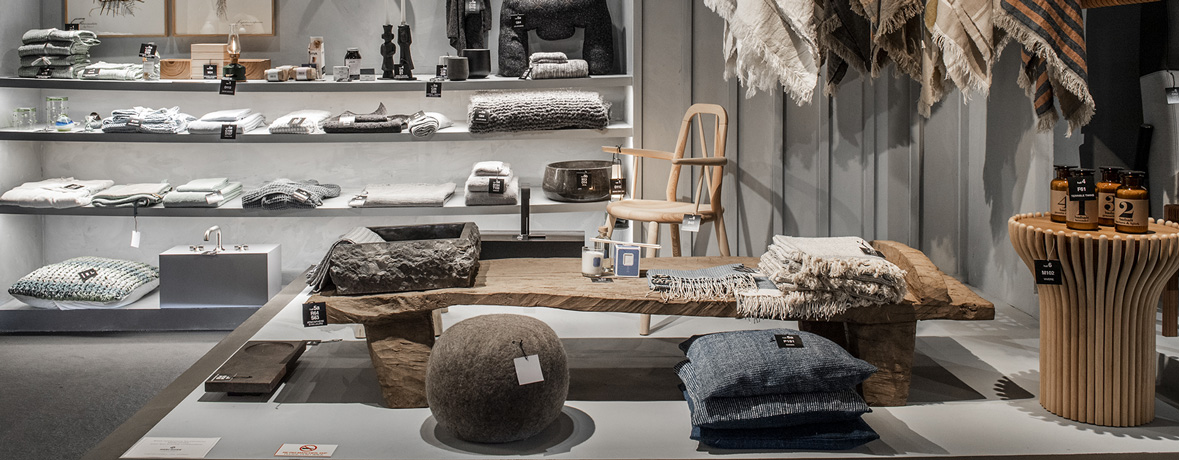
The seven sectors organising the September edition give some indication of where the money is expected to be: Cook & Share, Decor & Design, Fine Craft, Wellness & Beauty, Fragrance & Ambiance, Fashion & Accessories, and Gift & Play. The presence of wellness, fragrance and fashion alongside furniture is not decorative. It reflects a market in which the interiors category has expanded to mean, more or less, everything that constitutes a domestic atmosphere.
The ambassadors: Masquespacio
The creative direction of the new identity has been handed to Masquespacio, the Valencia studio founded by Ana Milena Hernández and Christophe Penasse, who have been named ambassadors of both Maison&Objet Pulse and Paris Design Week for the season. The theme itself was developed with the trend forecasting agency NellyRodi.
Masquespacio is a pointed choice. The studio built its reputation on saturated colour, unapologetic materiality and interiors — restaurants, student housing, retail — that photograph as loudly as they inhabit. They are, in other words, the aesthetic opposite of the beige-and-oak consensus that has dominated the interiors mainstream for most of a decade.
Their installation, 'Feel the Shift', appears both at Villepinte and in central Paris. The stated intention is to place people back at the centre of space, combining colour, material, light and furniture into an environment meant to be experienced rather than photographed. It is a slightly funny brief to hand a studio whose work is famously photogenic — and the tension is probably deliberate. The fair is asking its ambassador to argue that design is a bodily experience, at an event where most attendees will encounter it through a phone screen.

The city version
Paris Design Week, the fair's public-facing counterpart, runs September 10 to 19 across more than 360 venues, with over 540 designers from 23 countries taking part. Its structure matters as much as its scale. Paris Design Week Factory gathers more than 150 emerging designers across four galleries from September 10 to 14 — an entry point for people who cannot afford a Villepinte stand. Design Sur Cour, meanwhile, places contemporary work inside buildings that have already outlived several centuries of taste: the Grand Palais, the Musée Bourdelle, the Hôtel de la Marine.
That last programme is the most quietly interesting thing on the schedule. Putting a new chair in the Hôtel de la Marine is a test with a high failure rate. Most contemporary design looks provisional next to eighteenth-century architecture, and the pieces that survive the comparison tend to be the ones with a real argument behind them rather than a finish.
Where this sits in a crowded month
September has become an unmanageable month for anyone whose job involves design. The London Design Festival is running its 2026 edition across eleven districts. Lake Como's festival opened this week. Helsinki has been and gone. Toronto stages Park(ing) Day from the 18th to the 20th. The calendar is now dense enough that no single event can claim to define the season — which is precisely the problem a rebrand is meant to solve.
Maison&Objet's advantage is commercial gravity. London does culture better; Milan does spectacle better. Paris in September is where a very large number of people who actually buy things are in one building at the same time. Pulse is a bet that this gravity can be converted into cultural authority rather than merely order volume.

What this means for your house
The practical translation, for anyone who is not a buyer, arrives on a delay of roughly twelve to eighteen months. What sells at Villepinte this week determines what appears in mid-market retail in late 2027. The signals worth watching are the ones embedded in the theme: an emphasis on tactility over surface, on colour returning after a long period of muted neutrals, and on sustainability treated as a material constraint rather than a marketing line.
If Masquespacio's involvement is any indication of the direction, the beige interregnum may finally be ending. A fair does not choose the loudest studio in Europe as its creative ambassador if it expects another season of oatmeal linen.
The test
Renaming a thirty-year-old institution is a genuine risk. Buyers navigate by habit, and habits do not survive rebranding gracefully. If Pulse works, Maison&Objet will have done something rare: converted a trade show into a cultural date without losing the trade.
If it does not, it will have spent a good deal of goodwill on new signage. Five days from now, the answer will start to be visible in the only metric that has ever mattered at Villepinte — whether the buyers came, and whether they wrote orders.
Published By | Features Editor