Written By | Sports Desk
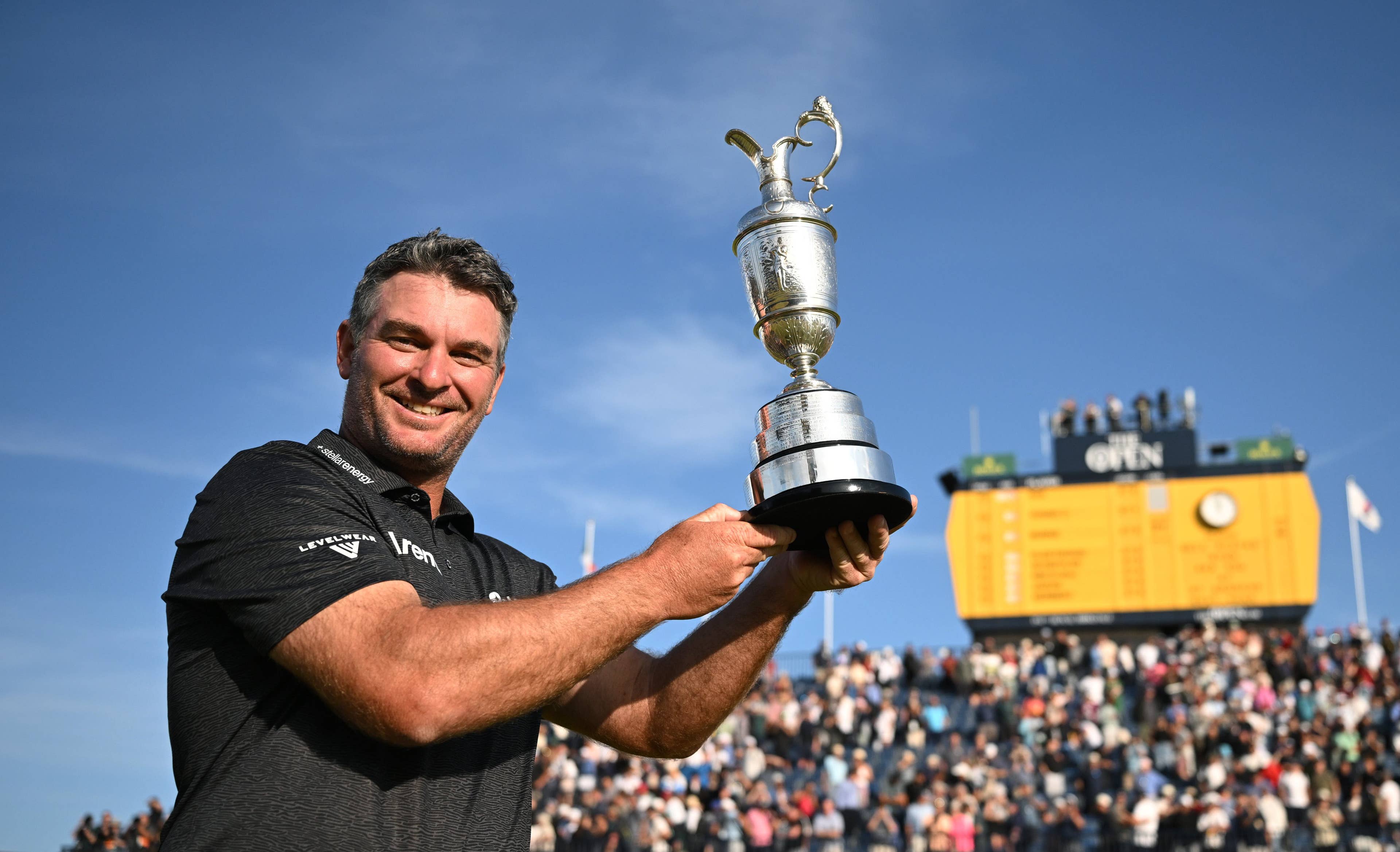
A New Zealander who once watched the Claret Jug get lifted from his couch in the middle of the night just won it himself — and he did it with the two best swings of his life
ROYAL BIRKDALE, ENGLAND
There is a particular kind of quiet that falls over a golf course in the final hour of a major championship, when the leaderboard has narrowed to a handful of names and every shot carries the weight of a career. On Sunday evening at Royal Birkdale, that quiet belonged to Ryan Fox, a 39-year-old New Zealander who had played 28 major championships without ever finishing inside the top 10, and who chose the 72nd hole of the 154th Open Championship to change his story for good.
Fox stood on the 18th tee tied with Cameron Young, the American who had already posted a blistering closing 64 to reach nine under par and was now watching from the clubhouse, his fate no longer in his own hands. Fox needed something close to perfection. He got it. A drive split down the middle of the fairway, an approach that found the heart of the green, and a birdie putt that dropped to complete a 10-under 270 and hand him a one-shot victory — and his first major championship, at an age when most players are already being asked about legacy rather than breakthroughs.
"Surreal, to be honest," Fox said afterward, still catching his breath. "I used to get up in the middle of the night to watch this tournament back home. To be Open champion, Champion Golfer of the Year — it's unbelievable, surreal, crazy."
A Gamble That Paid Off
What made the finish remarkable wasn't just the result — it was the decision that preceded it. Standing on the tee with a share of the lead and a tournament on the line, Fox and his caddie, Dean Robertson, chose aggression over caution.
"I said to my caddie, Dean, we're going to take it on, we're going to try to win, and I'll deal with whatever consequences happen," Fox recalled. "If you hit a bad drive and whatever and make bogey, I probably can live with that than trying to lay up, get in a playoff and make bogey that way."
It is the kind of calculus that separates champions from contenders: the willingness to risk the loss in pursuit of the win, rather than play for the safety of a playoff. Fox called the drive and the approach that followed "probably the two best shots of my life," and few who watched them land would argue. The birdie that resulted wasn't just enough to win — it was enough to make Young's brilliant final round, played hours earlier, feel like a formality rather than a coronation.
Fox's third round had already hinted that something special was building. He carded a third-round 62 studded with nine birdies, one of the most electric rounds of the week, and by Sunday the Royal Birkdale galleries — usually reserved for their own — had adopted him as something like a hometown favorite. "It felt like the English crowd got behind me for whatever reason," Fox said. "I was trying not to get too caught up in it coming down the stretch, just kind of focus on what I could control."
Third New Zealander, Third-Oldest in a Decade
Fox's win places him in select company. He becomes just the third New Zealander in history to capture a men's major golf championship, following in the footsteps of a small lineage of Kiwi golfers who have punched well above their country's weight on the world stage. He also becomes the third-oldest major champion of the last ten years, trailing only two of the sport's most mythologized late-career triumphs: Phil Mickelson's win at the 2021 PGA Championship at age 50, and Tiger Woods' Masters victory in 2019 at 43.
That Fox's name now sits, even loosely, in that company says something about the shifting expectations of professional golf, where fitness, sports science, and equipment technology have extended competitive primes well past the point once considered the twilight of a career. Fittingly, part of Fox's own story played into that theme — reports emerged that he closed out the tournament playing a set of unreleased Srixon clubs, a small but telling detail suggesting that even a 39-year-old journeyman is still tinkering, still adapting, still chasing marginal gains.
Cameron Young, for his part, produced a performance worthy of a major title in almost any other year. His final-round 64 was the kind of round that usually closes the show, not opens the door for someone else. Instead, he was left to watch from the clubhouse as Fox authored the finish, a reminder of just how unforgiving the margins are at the top of the sport.
What This Means for Golf Fans
For casual sports fans who tune into golf only a few times a year, Fox's win is a useful reminder of what makes the majors different from the rest of the tour calendar: they reward not just talent, but nerve. Fox had the talent for years — a respected, well-liked pro with a reputation for solid, unspectacular consistency. What he lacked, until Sunday, was a moment where everything converged: the form, the course, the crowd, and the willingness to gamble when caution would have been the safer, more predictable choice.
It's also a reminder that professional sports' most compelling stories often belong not to prodigies but to late bloomers — the players who spend a decade and a half absorbing near-misses before finally breaking through. Fox's name will now sit on the Claret Jug alongside legends of the game, a trophy he grew up watching be awarded to other people, at hours when he should have been asleep.
The Takeaway
Ryan Fox's Open Championship victory is more than a golf headline; it's a case study in patience, risk-taking, and the long, unglamorous road that so often precedes a breakthrough. At 39, with 28 majors of near-misses behind him, Fox didn't play it safe when the moment demanded courage — and Royal Birkdale, and the record books, will remember him for it.




