Written By | Health News Agencies

A community famous for doormen and Museum Mile is now famous for something else: cooling towers spraying a bacteria that eats lungs from the inside out
NEW YORK CITY
The air on Manhattan's Upper East Side smells the same as it always has — hot asphalt, bakery sugar, the occasional whiff of Central Park green. That's the terrifying part. You cannot smell Legionella. You cannot see it drifting out of a rooftop cooling tower on a summer breeze, riding a fine mist down onto sidewalks packed with tourists snapping photos on Museum Mile. You only find out it was there after it's already inside someone's lungs.
By Sunday, July 20, the city's Department of Health and Mental Hygiene confirmed the number nobody wanted to see climb any higher: 74 cases of Legionnaires' disease tied to a single community cluster centered on the tony Yorkville and Carnegie Hill neighborhoods. Three people are dead. Eight remain hospitalized. Fifty-one have been discharged, walking wounded from a bacterial outbreak that crept up on one of the wealthiest, most surveilled square miles in America — and nearly got away with it.
"We are heartbroken to learn that another New Yorker has lost their life to Legionnaires' disease on the Upper East Side," City Health Commissioner Dr. Alister F. Martin said after the third death was announced. "While we mourn this loss, the data are also encouraging. Our aggressive strategy of testing, enforcement, and remediation appears to have stopped the source of exposure."
Stopped — but not before it spent nearly three weeks quietly circulating through one of the most densely populated stretches of Manhattan.
HOW A COOLING TOWER BECOMES A WEAPON
Legionnaires' disease isn't contagious in the way the flu or COVID is. You cannot catch it from a sick coworker's cough, a subway pole, or a doorknob. It comes from water — specifically, warm, stagnant water where Legionella pneumophila bacteria multiply, then get aerosolized into a fine mist that people breathe in. Building cooling towers, the boxy rooftop units that provide central air conditioning to office towers and luxury apartment buildings, are notorious breeding grounds if they aren't properly maintained with biocides and regular cleaning.
That's exactly what investigators believe happened here. The city's health department, working with the state, began testing cooling towers across the outbreak zip codes — 10021, 10028, 10075, and 10128 — in early July after a cluster of pneumonia-like illnesses started showing up in emergency rooms faster than doctors could explain them as ordinary summer colds.
What they found was alarming: out of 183 cooling towers tested across the neighborhood, 76 buildings came back positive for Legionella bacteria. Not one tower. Not two. Seventy-six. That means, at the outbreak's peak, more than 40 percent of the tested cooling infrastructure in a three-zip-code radius was harboring the exact bacteria capable of causing severe, sometimes fatal pneumonia.
On July 14, the city ordered all 76 buildings to immediately drain, clean, and disinfect their systems. Remarkably, building owners complied fast — official statements say each flagged building completed remediation within 48 hours, a compliance sprint that health officials credit with breaking the outbreak's momentum. New confirmed cases have since slowed to fewer than one per day, and officials now describe the original source of exposure as "likely eliminated."
Still, investigators have not been able to point to one single smoking-gun tower. With 76 buildings testing positive, isolating the precise cooling tower — or towers — that seeded the human cases has proven to be a forensic nightmare, complicated by wind patterns, overlapping mist plumes, and the sheer density of rooftop units crowded onto a few square miles of prime Manhattan real estate.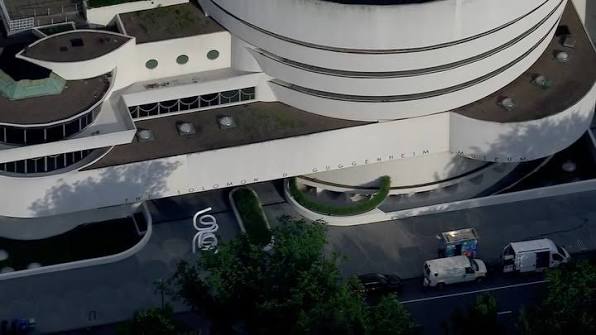
A CITY THAT'S BEEN HERE BEFORE
New Yorkers old enough to remember the South Bronx outbreak of 2015 — 138 cases, 16 deaths, the incident that led the city to pass one of the strictest cooling tower registration laws in the country — know this isn't the five boroughs' first rodeo with Legionella. Central Harlem saw its own cluster in 2025. The law now requires all cooling towers in New York City to be registered, inspected quarterly, and tested regularly for bacteria. And yet here we are again: 74 cases, three deaths, and a mystery about exactly which rooftop failed the system.
"Visiting Museum Mile during the Upper East Side's Legionnaires' outbreak?" was an actual headline circulated by local health reporters in mid-July, underscoring just how much this outbreak collided with tourist season. The Metropolitan Museum of Art, the Guggenheim, the Frick — all sit inside or on the edge of the affected zone, drawing hundreds of thousands of out-of-town visitors during the exact weeks the outbreak was peaking.
City Council Speaker Julie Menin, who represents part of the affected area, has been vocal on behalf of her constituents — many of whom, she's pointed out, are older residents especially vulnerable to the disease given the neighborhood's demographic skew toward retirees and longtime co-op owners.
WHO GETS HIT HARDEST
Legionnaires' disease is a severe form of pneumonia, and while anyone can catch it after inhaling contaminated mist, it disproportionately devastates certain groups. People 50 and older face substantially higher risk. So do smokers and vapers, anyone with chronic lung disease, and people with weakened immune systems from cancer treatment, organ transplants, or chronic illness. The fatality rate for diagnosed cases nationally runs somewhere between 10 and 25 percent even with treatment — a sobering statistic for a disease most Americans have never heard of until it shows up in their own neighborhood.
Symptoms typically surface two days to two weeks after exposure and mimic a nasty flu at first: cough, fever, headache, muscle aches, and shortness of breath. That overlap with common summer respiratory bugs is part of why outbreaks like this one can smolder for days or weeks before anyone connects the dots. The city's health department has urged anyone who lives, works, or has simply visited the affected zip codes since late June to seek medical attention immediately if flu-like symptoms appear, and to specifically mention the Upper East Side exposure to their doctor so a Legionella test gets ordered rather than a generic pneumonia workup.
Crucially, officials have stressed what this outbreak is not. It is not a plumbing problem — residents can still safely drink tap water, shower, cook, and run their home air conditioning units. It's also not person-to-person contagious; you cannot catch it by sitting near someone who's sick, hugging them, or sharing a meal. The only route of transmission is inhaling the aerosolized mist directly from a contaminated source, which is why the city's entire remediation strategy focused exclusively on cooling towers rather than any broader public health lockdown.
THE EXPERT VIEW
Infectious disease specialists say the Upper East Side outbreak is a case study in both the promise and the limits of modern outbreak response. On one hand, the city's ability to test 183 cooling towers, identify 76 positive sites, and force compliance within 48 hours represents genuinely fast, coordinated public health work — a sharp contrast to outbreaks in cities with looser cooling tower regulations or slower bureaucracies. On the other hand, the fact that it took weeks of rising case counts and three deaths before the source was meaningfully contained illustrates how much lag time exists between an outbreak's silent start and its official recognition.
Public health researchers point out that Legionella outbreaks are almost entirely preventable with consistent maintenance — regular biocide treatment, routine flushing, and testing of cooling towers according to the very regulations New York adopted after 2015. The recurrence of clusters in Central Harlem in 2025 and now the Upper East Side in 2026 suggests that registration laws alone aren't sufficient without aggressive, ongoing enforcement — a policy debate now likely to intensify at City Hall.
WHAT THIS MEANS FOR YOU
If you don't live in New York, the instinct might be to file this away as somebody else's problem. Don't. Cooling towers sit on top of office buildings, hospitals, hotels, and apartment complexes in virtually every American city, and Legionella doesn't respect zip codes or property values. The same conditions that bred this outbreak — warm summer temperatures, stagnant water, inconsistent maintenance — exist anywhere central air conditioning relies on rooftop cooling infrastructure, which is to say, almost everywhere.
The practical takeaway for residents of any city: if you develop a cough, fever, or shortness of breath during or after a stretch of hot weather, don't assume it's just a summer cold, especially if you're over 50, smoke, or have a chronic illness. Ask your doctor directly whether a Legionella test is warranted. Because there's no vaccine and no way to individually protect yourself from a source you can't see, early diagnosis and prompt antibiotic treatment are the only real defenses — and they only work if you and your doctor think to look for the disease in the first place.
For Upper East Siders themselves, the message from City Hall is cautiously reassuring: the source appears contained, new cases have slowed to a trickle, and normal daily life — the coffee runs, the museum visits, the evening strolls past Gracie Mansion — can largely resume. But the psychological residue of learning that dozens of buildings around you were, for weeks, silently pumping out bacteria-laced mist is not something that clears up as fast as a cooling tower gets disinfected.
THE BOTTOM LINE
Three New Yorkers are dead. Seventy-four are sick. And the exact rooftop that started it all may never be definitively identified. What is clear is that this outbreak, like the ones before it in the Bronx and in Harlem, exposes a persistent blind spot in American urban infrastructure: the invisible systems keeping us cool in the summer heat can, without constant vigilance, turn into exactly the kind of silent threat nobody thinks to worry about — until the case count starts climbing and the ambulances start showing up in some of the most desirable real estate in the country.



