Written By |

The White House declared the US military had dispatched a state-of-the-art Terminal High-Altitude Area Defence (THAAD) anti-missile system to Israel
Experts are raising concerns over Israel's dwindling stockpile of interceptor missiles, which are critical to defending the country from missile threats posed by Iran, Hezbollah, and Hamas. Israel's multi-layered air defense system has proven effective in countering a wide range of threats, from long-range ballistic missiles to short-range rockets. However, the system is under increasing strain due to the ongoing conflict with Hamas and regular attacks from Hezbollah and Iran.
Israel’s defense network comprises several missile platforms, including the "Arrow 2 and 3" systems for long-range threats, "David's Sling" for medium-range cruise missiles, and the "Iron Dome," which intercepts short-range rockets and drones. The Iron Dome, in particular, has been heavily relied upon since the October 7 attacks by Hamas, with the system successfully downing numerous projectiles from Gaza and Lebanon.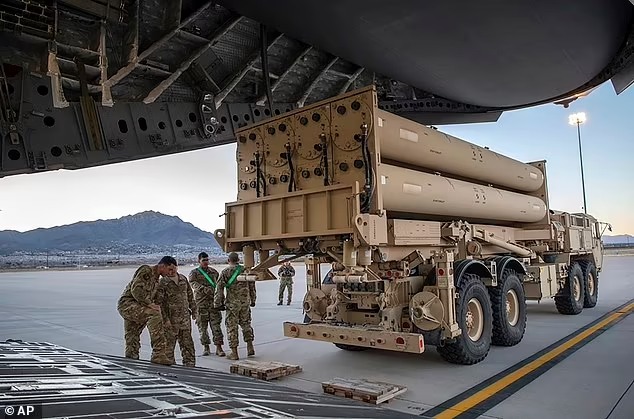
This image provided by the US Air Force shows the US Army Terminal High Altitude Area Defense (THAAD) launching station
Despite its proven effectiveness, Israeli defense officials have warned that the Iron Dome's supply of interceptor missiles is running low. The United States, while committed to replenishing Israel’s munitions, faces a balancing act as it continues to supply Ukraine in its war against Russia. This has raised concerns about the sustainability of Israel's missile defense capabilities if it faces simultaneous attacks from Iran and Hezbollah.
To bolster Israel’s defenses, the U.S. has deployed a Terminal High-Altitude Area Defense (THAAD) system along with 100 troops. This move demonstrates Washington’s commitment to protecting Israel while also sending a clear message to Iran about the potential consequences of further attacks. Avi Melamed, a former Israeli intelligence officer, emphasized that this deployment signals U.S.-Israel coordination to prevent escalation into a wider regional conflict.
A complete Iron Dome battery costs an estimated £80million to produce. It costs between £40,000 - £60,000 to launch a single missile
While Israel's defense systems have proven highly effective, there are concerns about their ability to handle simultaneous attacks. Hezbollah recently bypassed the Iron Dome, successfully launching a drone strike on an Israeli military base, resulting in multiple casualties. Furthermore, a recent Iranian ballistic missile barrage tested the limits of Israel's defenses, with some projectiles hitting key targets.
Dana Stroul, a former U.S. defense official, warned that Israel faces a "serious munitions issue" after a year of continuous anti-air operations. She also noted the U.S. cannot indefinitely supply Israel with air defense munitions due to its commitments elsewhere, particularly in Ukraine. Israel Aerospace Industries (IAI), which manufactures the Arrow 2 missiles, is operating 24/7 to produce more munitions, but the costs are high. Maintaining the Iron Dome is expensive, with each battery costing around £80 million, and a single missile launch between £40,000 and £60,000.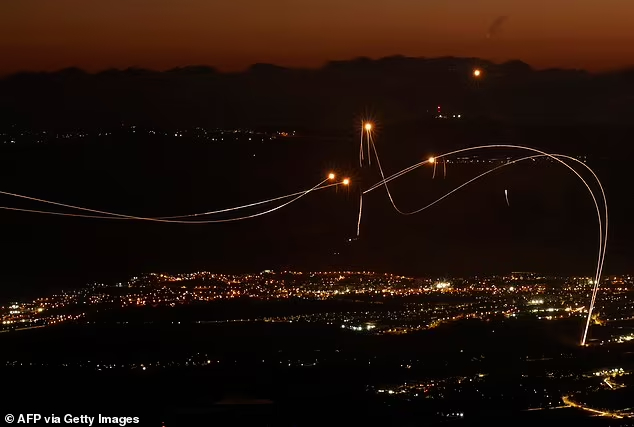
Rockets fired from southern Lebanon are intercepted by Israel's Iron Dome air defence system over the Upper Galilee region in northern Israel on August 23, 2024
Despite these challenges, Israel’s sophisticated air defense system remains a crucial deterrent. Experts argue that while some Iranian and Hezbollah missiles have hit targets, this does not necessarily indicate a failure of the system, as Israel often lets non-threatening projectiles fall in unpopulated areas to conserve resources.
The U.S. military’s increased presence in the region, including aircraft carriers and additional fighter squadrons, further underscores Western commitment to supporting Israel amid rising tensions. U.S. Defense Secretary Lloyd Austin reaffirmed Washington's support for Israel’s right to defend itself, warning that any attacks on U.S. personnel or interests in the region would be met with decisive action.
As the conflict continues, the strain on Israel's missile defenses is growing, and whether the U.S. and Israel can sustain their defense capabilities in the face of mounting threats remains to be seen.
Source: Daily Mail



