HEALTH
THE LEDE
For more than two decades, the word "hormone therapy" has carried a warning label seared into the minds of American women and their doctors alike. Ever since a bombshell 2002-2004 federal trial suggested the pills could scramble a woman's brain and raise her risk of dementia, millions quietly stopped taking them, and millions more never started. Now, a sweeping new Stanford Medicine study — one of the largest of its kind ever conducted — is rewriting that story, at least for one specific version of the treatment. Women who took estrogen-only hormone therapy after menopause had 39 percent lower odds of ever being diagnosed with dementia in their lifetime, and their donated brains, examined after death, showed 35 percent less of the sticky amyloid plaque that defines Alzheimer's disease. It is, researchers say, some of the clearest evidence yet that not all hormone therapy is created equal — and that for a specific group of women, it might actually be protective.
THE STUDY THAT'S TURNING HEADS
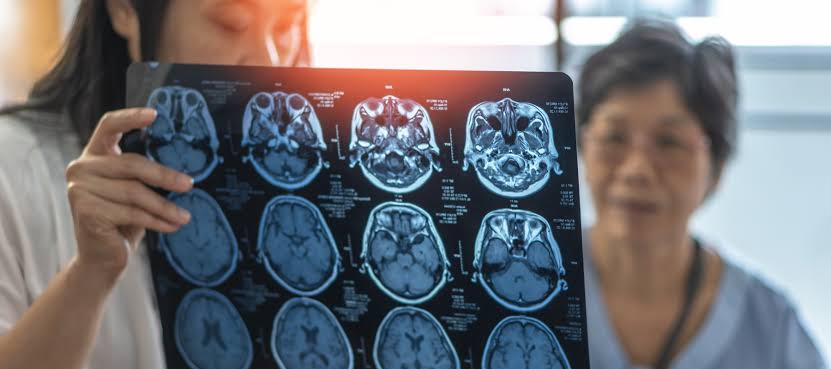
The research, published August 12, 2026, in Neurology, the flagship journal of the American Academy of Neurology, pulled together data on 21,462 women, cross-referencing decades of medical records with detailed cognitive testing and, in a subset of cases, direct examination of brain tissue donated after death. That autopsy component is what sets this study apart from the dozens of hormone-therapy papers that came before it. Instead of relying purely on diagnostic codes or family reports of memory trouble, researchers were able to look directly at the physical hallmarks of Alzheimer's disease sitting inside real human brain tissue — amyloid plaques and tau tangles — and compare them between women who had used estrogen-only therapy and those who never did.

The results were striking on every measure the team examined. Women who had used estrogen-only menopausal hormone therapy were 39 percent less likely to receive a clinical dementia diagnosis at any point in their lives. At autopsy, their brains showed 35 percent lower odds of meeting the pathological criteria for Alzheimer's disease. And while they were alive, these women scored better on memory tests and standardized assessments of their ability to live independently — dressing themselves, managing money, remembering appointments — than women who had never used the therapy.
"While these findings help us better understand the relationship between hormone therapy use and various markers of dementia, more research needs to be done before we can make recommendations to women about their use of these therapies in relation to their brain health," said Jennifer Bruno, PhD, an instructor in psychiatry and behavioral sciences at Stanford Medicine and co-lead author of the study, alongside former Stanford postdoctoral scholar Jacob Shaw, PhD.
That note of caution matters enormously, because this is an observational study — researchers tracked women who had already made their own choices about hormone therapy, rather than randomly assigning some to take it and others to take a placebo. That design can reveal powerful associations, but it cannot, on its own, prove that estrogen caused the improvement in brain health.
WHY "ESTROGEN-ONLY" IS THE KEY PHRASE
If you've heard the words "hormone therapy" and "dementia" in the same sentence before, you've probably heard them as a warning, not a promise — and there's a reason for that. It traces back to the Women's Health Initiative Memory Study, or WHIMS, a huge federally funded clinical trial that reported its results between 2002 and 2004. WHIMS found that women aged 65 and older who took a combination of estrogen plus progestin — the standard hormone therapy formulation for women who still have a uterus — saw their risk of dementia roughly double compared to women on a placebo. In raw numbers, 61 women in the trial were diagnosed with probable dementia: 40 of them, or about two-thirds, were in the estrogen-plus-progestin group, versus 21 in the placebo group. The hazard ratio was 2.05, meaning roughly double the risk.
That single trial reshaped American medicine almost overnight. Hormone therapy prescribing, which had been used by roughly 27 percent of menopausal women, collapsed to below 5 percent within a few years, as both patients and physicians grew terrified of the associated risks, which also included concerns about breast cancer and cardiovascular events flagged in a companion WHI trial.
But there was a crucial asterisk buried in the data that took years for the public conversation to catch up to: the increased dementia risk applied specifically to estrogen combined with progestin. The estrogen-alone arm of the original WHI trial — reserved for women who'd had a hysterectomy and therefore didn't need progestin to protect the uterine lining — did not reach statistical significance in either direction. It wasn't proof of benefit, but it also wasn't proof of the harm that made headlines. For twenty years, that distinction got flattened in public memory into a blanket fear of "hormones equal dementia risk," even as a slow trickle of more targeted research suggested the estrogen-only story might be meaningfully different.
The new Stanford study is the most powerful confirmation yet that the distinction is real and matters. It didn't just fail to find harm from estrogen-only therapy — it found a strong, consistent signal of benefit across multiple independent measures: clinical diagnosis rates, cognitive test scores, functional independence, and, most convincingly, actual brain tissue examined after death.
THE "HEALTHY USER" PROBLEM
Every scientist who has worked in this field for more than five minutes will raise the same red flag, and Stanford's team is no exception: women who choose to take hormone therapy, and who keep taking it for years, tend to look different from women who don't — even before the first pill goes down. Researchers describe this as "healthy user bias." Women with access to hormone therapy often have better health insurance, higher incomes, more years of education, more consistent access to primary care, and generally healthier lifestyles across the board — all factors independently linked to lower dementia risk, regardless of what pills they're taking.
The Stanford researchers say they adjusted statistically for many of these confounding factors, which is part of why the study carries more weight than older, cruder analyses. But adjusting for confounders in an observational study is never a perfect substitute for the gold-standard method: a randomized controlled trial, where a coin flip — not a woman's income or education level — decides who gets the drug and who gets a placebo. No such trial focused specifically on estrogen-only therapy and long-term dementia outcomes currently exists at this scale, largely because of how expensive and lengthy such studies are to run, and because of the lingering shadow cast by the original WHIMS scare, which made both funders and participants wary of hormone-therapy trials for years afterward.
WHAT DOCTORS ARE SAYING
Neurologists and menopause specialists reacting to the study have largely struck a "cautiously encouraged" tone rather than declaring victory. The finding adds to a broader — and still evolving — reassessment of menopausal hormone therapy that has been underway in medicine over the past decade, as researchers increasingly emphasize that the timing of when a woman starts hormone therapy relative to menopause, the type of hormone used, the dose, and the delivery method (pill versus patch versus other forms) may all meaningfully change the risk-benefit calculation — a concept researchers sometimes call the "timing hypothesis."
Menopause medicine as a field has, in the past few years, already been moving toward more individualized recommendations, driven partly by North American Menopause Society (now The Menopause Society) guidance emphasizing that hormone therapy remains the most effective treatment for hot flashes, night sweats, and other disruptive menopause symptoms for many women under 60 or within ten years of menopause onset, when the benefit-risk ratio tends to look most favorable. This new dementia data adds a potential additional consideration to that conversation for women who've had a hysterectomy and are candidates for estrogen-only formulations — but experts stress it should not be read as a reason for women with a uterus to seek out unopposed estrogen, which carries a well-established risk of endometrial cancer without the addition of a progestogen.
WHAT THIS MEANS FOR YOU
If you're a woman weighing hormone therapy for menopause symptoms, here's the practical takeaway: this study is a data point, not a prescription. It should not be read as license to start estrogen therapy purely to protect your brain, and it emphatically does not apply to combined estrogen-progestin therapy, which remains the formulation linked to increased dementia risk in the original WHI trial. If you've had a hysterectomy and are already a candidate for estrogen-only therapy for symptom relief, this research may be a reassuring data point to discuss with your doctor — particularly if a family history of Alzheimer's or dementia has been weighing on your mind. If you still have a uterus, the calculus doesn't change: estrogen-only therapy isn't a safe option for you regardless of what this study found, because of the endometrial cancer risk.
Doctors interviewed in the wake of the study's publication have generally recommended the same thing: talk to your physician about your personal risk factors, family history, the severity of your menopause symptoms, and how many years have passed since your last period, rather than making a decision based on a single headline. Hormone therapy decisions remain highly individual, shaped by cardiovascular risk, breast cancer history, blood clot risk, and personal priorities around quality of life.
It's also worth remembering what dementia and Alzheimer's disease actually cost American families. Roughly 7 million Americans are currently living with Alzheimer's disease, according to Alzheimer's Association estimates, a number projected to nearly double by 2050 as the population ages. Women bear a disproportionate share of that burden: they make up almost two-thirds of Americans living with Alzheimer's, a gap researchers have long tried to explain through some combination of longevity, biology, and — increasingly — hormonal factors tied to menopause. That's part of why this study, despite its limitations, has generated so much attention: it offers a tantalizing thread connecting a well-known biological transition — menopause — to one of the most feared diagnoses in modern medicine.
THE ROAD AHEAD
Stanford researchers say the next step is pushing toward more definitive trial designs and larger autopsy-confirmed cohorts that can better disentangle biology from the "healthy user" effect. Until then, the estrogen-Alzheimer's connection remains one of the most closely watched storylines in women's health — a puzzle that has confounded and intrigued scientists since the WHIMS trial first sounded the alarm more than twenty years ago. What's changed is the sophistication of the tools now being used to examine it and the willingness of researchers to look past a decades-old blanket warning to ask a more precise question: not "does hormone therapy affect the brain," but "which hormone therapy, for whom, and when."
For now, the message from the people who ran the study is refreshingly free of hype: this is one more piece of a very large, very old puzzle, not the final word. But for the millions of women navigating menopause and its aftermath — and for a medical establishment still recalibrating two decades after WHIMS reshaped the conversation — it's a piece worth paying attention to.
CONCLUSION
Twenty years after one trial scared a generation of women away from hormone therapy altogether, a new generation of data is asking medicine to look closer, not further away. The Stanford study won't settle the estrogen-and-Alzheimer's debate on its own — nothing this complex ever settles with a single paper — but it adds real weight to the idea that estrogen-only therapy and combined estrogen-progestin therapy are, biologically speaking, two very different animals wearing the same name. As millions of Baby Boomer and Gen X women move through and past menopause in the coming decade, expect this conversation, and the science behind it, to keep evolving fast.
Published By | Features Editor