Written By | Health News Agencies
Four Utahns are dead after swallowing gas-station tablets sold as harmless "cat's claw."
Health
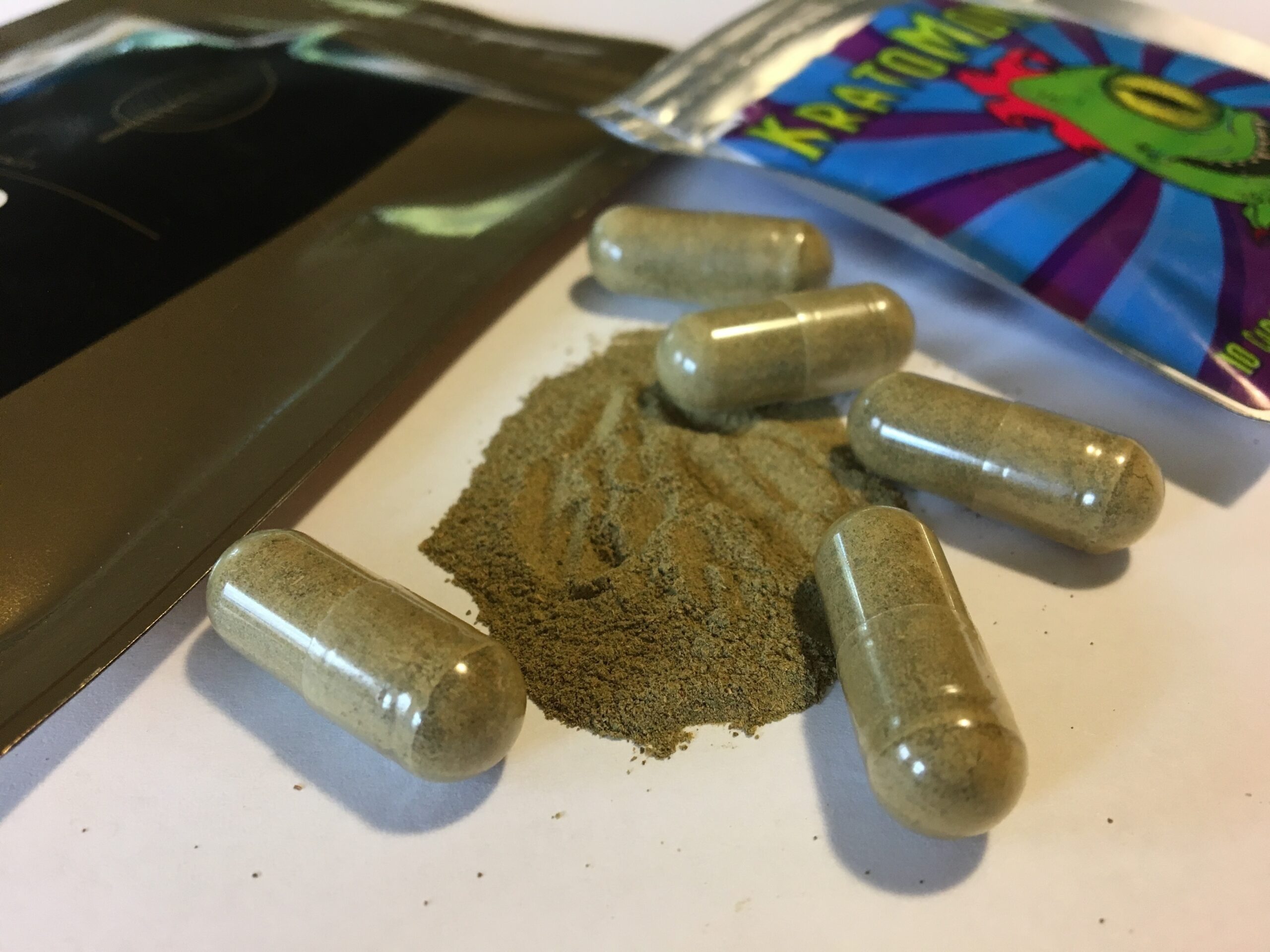
The packets look harmless. They promise an herbal supplement and say they are "kratom-free." Some are sold beside the energy drinks and lottery tickets at the local gas station.
But Utah health officials say what's inside some of them is anything but harmless. Four people across the state are dead, and investigators have traced the deaths to tablets that lab tests show contain lab-made opioid chemicals derived from kratom, compounds the state's own forensic epidemiologist calls "much more potent than even morphine."
On Monday, October 5, the Utah Department of Health and Human Services (DHHS) issued an urgent public warning. Do not buy or use any product labeled "cat's claw." Do not buy anything marked "adults only/21+." And do not buy any non-prescription product that is marketed as legal while promising psychoactive "highs."
It is a stark message from a state that thought it had already slammed the door on this kind of product. Instead, officials now admit that the companies behind the pills have used dummy addresses and unusual distribution routes, and nobody has yet been able to name who made them.
FOUR DEATHS, FOUR MONTHS, NO PATTERN
According to Megan Broekemeier, a forensic epidemiologist with Utah DHHS, the four deaths happened over a span of four months and "are not concentrated to a specific area of the state."
That detail is what makes the warning so unsettling. There is no single bad batch in one town, and no single cluster that authorities can wall off. The danger, officials say, could be sitting on a shelf in any smoke shop, gas station or online store that sells to Utahns.
State officials have not released the names, ages or hometowns of the people who died. But the warning confirms what poison control experts had feared since the summer, when the first death surfaced.
HOW THE ALARM FIRST SOUNDED
The story began quietly on July 30, 2026. That day, the Utah Department of Agriculture and Food (UDAF) and the Utah Poison Control Center warned the public about Buzzers-brand Cat's Claw tablets after one person died in Utah County and several others suffered severe health incidents.
"This particular one was not labeled as kratom at all. It was labeled as a totally different product," UDAF spokesman Leon Page told the Deseret News at the time. "It was only discovered because of the incident and poison control submitted the samples to us."
State testing of those tablets found two chemicals: mitragynine pseudoindoxyl, known as MGPI, and dihydro-7-hydroxymitragynine, known as MGM-15. Officials said the compounds turned up in multiple flavors and had been identified in overdose cases in the weeks before the warning.
Two months later, the death count has quadrupled. The October warning names Buzzers as one of the brands involved, but says the problem is broader: these products are "often misleadingly labeled as containing 'cat's claw.'"
WHAT'S REALLY IN THE PILLS
To understand why officials are so alarmed, you need to know what kratom is and what these new chemicals are not.
Kratom comes from the leaves of Mitragyna speciosa, a tropical tree native to Southeast Asia. For years it has been sold across America as teas, powders, capsules, gummies and drinks. People use it for energy, relaxation or pain, though the U.S. Food and Drug Administration has never approved it for any medical use.
The leaf contains two main active ingredients. The first is mitragynine. The second, present in only tiny amounts in the natural leaf, is 7-hydroxymitragynine, or 7-OH, which is far stronger. In recent years, manufacturers began concentrating 7-OH into tablets and shots, a trend that earned those products the nickname "gas station heroin."
MGPI and MGM-15 go a step further. According to the U.S. Drug Enforcement Administration, MGPI is a chemical rearrangement product of 7-OH, and MGM-15 is a derivative of it. They are not things you would find in a plant growing in the wild. They are made in a lab.
Utah health officials said in their statement that MGPI, MGM-15 and related chemicals "act as powerful opioids that are stronger than morphine and have severe risks of addiction, dangerous withdrawal symptoms, overdose and death."
And then there is the twist that makes these products a trap. Real cat's claw is a woody vine sold as a botanical supplement. Officials say it is not harmful and does not produce opioid-like effects. Someone picking up a packet labeled "cat's claw" could reasonably believe they were buying a gentle herbal remedy. The labels even boast that the product is legal and free of kratom, while warning that it is for "adults only" or produces strong psychoactive effects.
A LAB REPORT THAT DOESN'T MATCH
There's another mystery at the heart of the investigation. According to KUTV, a "certified" lab test posted alongside the product page for Buzzers said no detectable MGM-15 was contained in the product.
The state's own testing found the opposite.
That discrepancy is now among the questions investigators are trying to answer. UDAF says it is working with law enforcement and the FDA to identify the manufacturers, but tracing the supply chain has been difficult because the companies have used dummy addresses and unconventional distribution methods.
Broekemeier pointed out that these products are not FDA-cleared and so are not routinely tested before they reach shelves, although the FDA "does do random testing to do everything they can to keep consumers safe." In Utah's case, it was random testing by the Department of Agriculture that found the synthetic alkaloids.
UTAH THOUGHT IT HAD BANNED THIS
The deaths come months after Utah lawmakers tried to stop exactly this kind of product. During the 2026 legislative session, the state passed a law, which took effect on May 6, barring the retail sale of any kratom product that is not pure leaf. Extracts and concentrated kratom products may no longer be sold in Utah, and MGPI and MGM-15 are Schedule I controlled substances under state law.
Yet DHHS concedes that Utahns "can still find them in some retail stores, including smoke shops and gas stations, or online."
The federal government has moved too. On August 26, 2026, the DEA issued a temporary order placing MGPI, MGM-15 and a related compound called MGM-16 into Schedule I of the Controlled Substances Act, the same category as heroin. The order covers any amount of the substances and runs until August 26, 2028, with a possible one-year extension.
The Justice Department said the move was "directed at deliberately manufactured and concentrated opioid products, not traditional botanical kratom." The DEA said preclinical evidence shows the chemicals are potent activators of the brain's mu-opioid receptors, the same receptors targeted by morphine and fentanyl, bringing risks of dependence and dangerously slowed breathing.
A separate federal proposal to schedule concentrated 7-OH itself, announced on July 1, remains pending, according to a September analysis by the law firm Vicente LLP.
NOT JUST A UTAH PROBLEM
Utah is far from alone. In Oklahoma, the state medical examiner's office tracked more than 50 kratom-related deaths between January 2025 and June 2026, including 14 in Tulsa County, News On 6 reported in July.
The office's toxicologist, Dr. Kacey Cliburn, said the most common compound her office was then seeing was MGM-15, the same chemical found in the Utah tablets. "This is kind of raising a lot of alarm in our office," she said.
Cliburn also flagged a hidden dosing danger. Many of these tablets are scored into sections, so one pill can hold several doses. "Most people don't recognize that this is 16 doses of a substance, and they're just going to maybe pop one tablet," she said of one product type.
Officials in Los Angeles County and Hawaii have also linked deaths to concentrated kratom compounds in the past year, according to local reports.
EXPERT PERSPECTIVE: "MUCH MORE POTENT THAN EVEN MORPHINE"
For Utah's investigators, the core message is simple: these are not supplements, they are opioids in disguise.
"They're very potent, much more potent than regular mitragynine," Broekemeier told KUTV. "Much more potent than even morphine."
Utah Poison Control recommends treating suspected overdoses involving these products the same way as any opioid overdose, including giving naloxone, the overdose-reversal medicine often sold as Narcan. People who become dependent and go into withdrawal can be treated in the usual way by providers experienced in addiction care, the center has said.
Oklahoma narcotics officials have offered retailers blunt advice that applies just as well in Utah. "If you don't know whether you're selling the legal or illegal version, go ahead and pull it," Mark Woodward of the Oklahoma Bureau of Narcotics told News On 6.
WHAT THIS MEANS FOR YOU
If you or someone you love uses kratom or "herbal" products from gas stations or smoke shops, here is what Utah officials and poison control experts want you to know:
Utahns who spot kratom extracts or semi-synthetic kratom products for sale are being asked to report them to the Utah Department of Agriculture and Food, and retailers have been told to pull the products from their shelves.
THE BOTTOM LINE
Four families in Utah are grieving. The state's ban was meant to keep these chemicals off the shelves, and a federal ban followed in August. Yet the pills kept moving, hidden behind a harmless-sounding herbal name, a reassuring "kratom-free" label and a manufacturer nobody can find.
Until investigators track down who is making them, the message from Utah's health officials could not be clearer. If a gas-station "supplement" promises to make you feel like an opioid would, it may well be one. And it may be far stronger than you think.



