Economic & Social Transformation
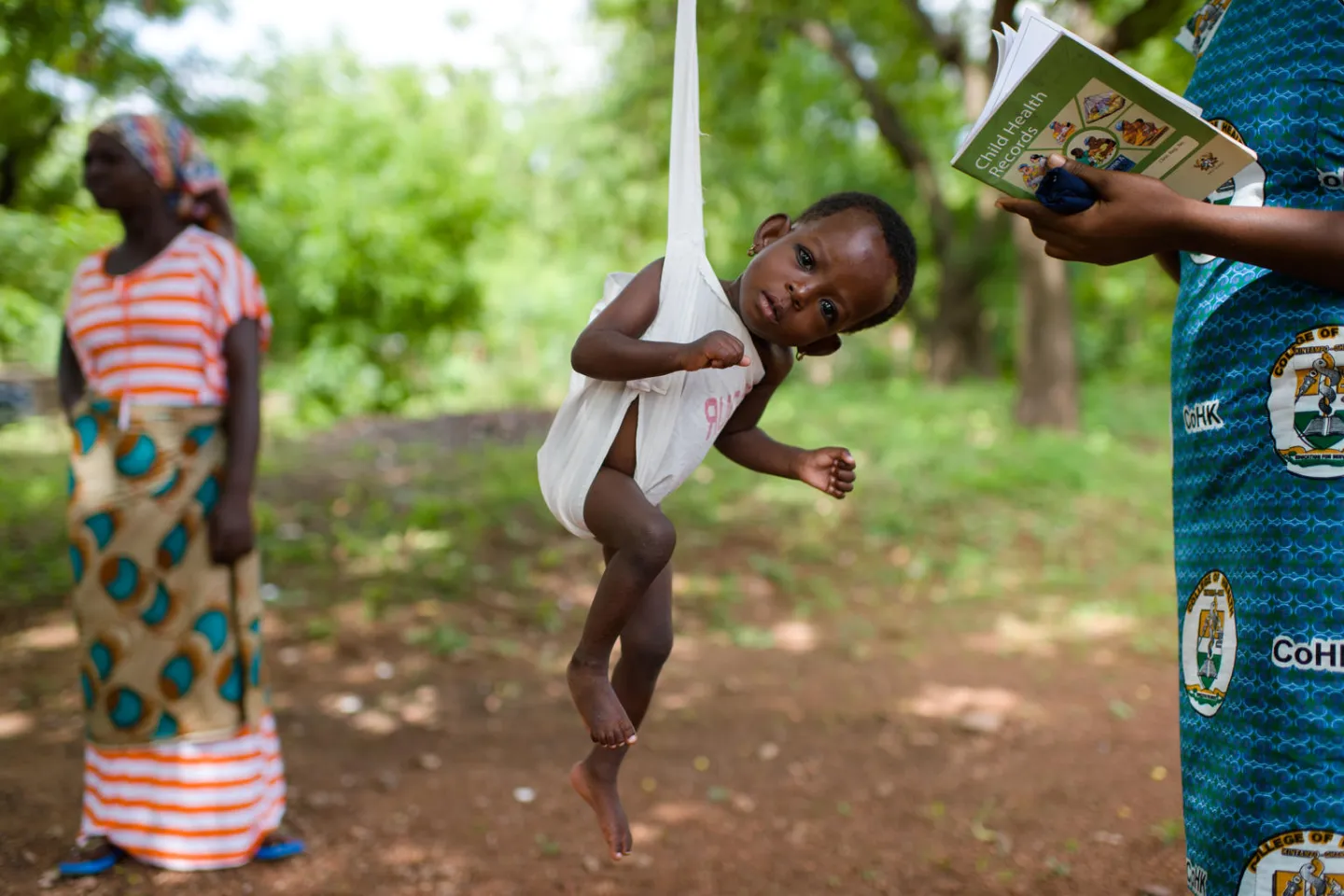
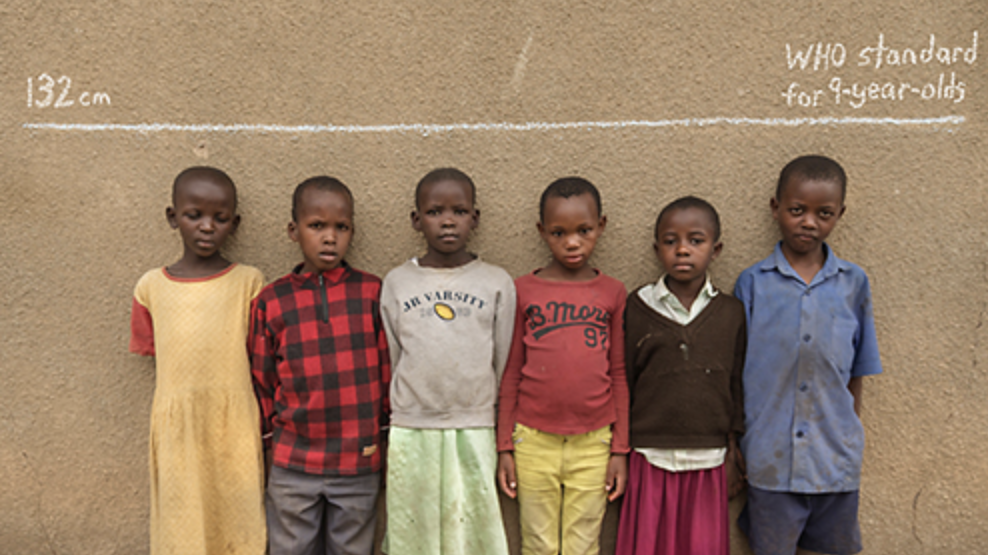
Africa's growth debates usually revolve around commodity prices, debt restructurings, exchange rates and infrastructure pipelines. Far less attention goes to a variable that quietly sets the ceiling on all of them: how many of the continent's children reach their full physical and cognitive potential. Stunting, defined as low height for age caused by chronic undernutrition and repeated infection in the first 1,000 days of life, is largely irreversible after a child's second birthday. It shapes school performance, adult earnings and, ultimately, national productivity. In 2026 the data on stunting tell a story of slow, uneven progress colliding with shrinking aid budgets, and of a handful of governments beginning to treat nutrition as an economic investment rather than a humanitarian line item.
Where Africa stands in 2026
The latest numbers are sobering. The Africa Regional Overview of Food Security and Nutrition, published on 30 April 2026 by FAO, the UN Economic Commission for Africa (ECA), the World Food Programme and the African Union Commission, reports that stunting among children under five in Africa was over 30 percent in 2024, while wasting (acute malnutrition) stood at 5.4 percent. The same report finds that an estimated 306 million Africans were undernourished in 2024, more than 45 percent of the global total, and that hunger has risen on the continent for eight consecutive years.
The global State of Food Security and Nutrition in the World 2026 (SOFI 2026), released on 21 July 2026 by FAO, IFAD, UNICEF, WFP and WHO, adds two important nuances. First, Africa is now home to approximately 309 million hungry people, more than Asia's 292 million, even though the share of Africans facing hunger edged down from 20.3 percent in 2024 to 20.0 percent in 2025. Second, the report notes that child stunting prevalence "is declining in Africa" but too slowly to meet the 2030 targets. Globally, 150 million children under five are still stunted.
The 2026 Global Hunger Index reinforces the regional picture. Africa South of the Sahara has a score of 27.5, classified as "serious", against a world score of 18.1, and it is one of the few regions where hunger is worse than in 2018. Hunger is rated "alarming" in eight countries, seven of them African: Burundi, Chad, the Democratic Republic of Congo, Madagascar, Somalia, Sudan and South Sudan (alongside Yemen), with Chad scoring 38.0.
Why stunting is an economic variable
The economic logic is well established. A 2018 World Bank working paper by Emanuela Galasso and Adam Wagstaff estimated that, on average, childhood stunting imposes a per-capita income penalty of around 7 percent across developing countries; related development-accounting work places the loss at 5 to 7 percent of GDP per capita, rising to about 9 percent in areas with heavier burdens of growth faltering. For economies where stunting affects three or four in ten children, that is a structural drag comparable to a permanent negative productivity shock.
The African Union's own Cost of Hunger in Africa (COHA) continental study reached a similar conclusion through a different route, by adding up the health, education and labour-productivity costs of child undernutrition. It estimated that meeting the Malabo stunting target would yield average annual savings of around US$8.1 billion across the 21 member states analysed. The arithmetic matters because the costs are deferred: today's stunted toddler becomes the low-productivity worker of the 2040s, precisely when Africa's demographic dividend is supposed to pay off.
Affordability is the immediate bottleneck. SOFI 2026 found that 66.6 percent of Africa's population could not afford a healthy diet in 2025, more than double the shares in Asia or Latin America. The regional overview puts the average cost of a healthy diet in Africa at 4.41 PPP dollars per person per day, roughly double the old extreme-poverty line. Animal-source foods, the richest sources of the micronutrients children need, are the largest single contributor to that cost in Africa. SOFI also points out that post-farmgate activities (processing, logistics, wholesale) account for 70 to 75 percent of what consumers pay, so stunting is as much a story about cold chains and market infrastructure as about household behaviour.
Rwanda: proof that targeted policy moves the needle
Rwanda offers the clearest recent evidence that sustained policy can bend the curve. According to the Rwanda Demographic and Health Survey 2025, released in December 2025, stunting among children under five fell from 33 percent in 2020 to 27 percent in 2025. The number of districts with stunting above 30 percent fell from 20 to 11, and wasting declined from 8 to 6 percent. Over the same period under-five mortality fell from 45 to 36 deaths per 1,000 live births and maternal mortality from 203 to 149 per 100,000 live births, according to the National Child Development Agency (NCDA).
Yet even Rwanda's officials frame the result as insufficient. Health Minister Sabin Nsanzimana said at the launch that the government's ambition is to cut stunting by three percentage points a year, roughly three times the pace actually achieved. The geographic spread is instructive: Kigali's Nyarugenge district recorded 8.7 percent, while outside the capital only Rwamagana fell below 20 percent. Even in a state with strong administrative reach, community health workers and a dedicated child-development agency, rural stunting remains stubborn. The minister also linked stunting to rising teenage pregnancy, which increased from 5 to 8 percent, a reminder that nutrition outcomes depend on education and reproductive-health policy as much as on food.
Nigeria: the scale problem
If Rwanda shows what is possible, Nigeria shows the size of the task. Coverage of the 2023-24 Nigeria Demographic and Health Survey reports that around 40 percent of Nigerian children under five are stunted, with enormous sub-national variation: from 12 percent in Rivers State to 65 percent in Katsina. Civil-society group CS-SUNN described the figure as a deterioration from earlier estimates, although a separate peer-reviewed analysis of the 2024 data puts prevalence at 36.7 percent, so the precise level depends on the dataset and weighting used. Either way, Nigeria's sheer population means it accounts for a very large share of Africa's stunted children, and its northern states rank among the most affected places on earth.
Nigeria is also a test case for domestic co-financing. Under UNICEF's Child Nutrition Fund (CNF) "Match Window", which doubles government spending on nutrition commodities, Jigawa State released ₦250 million that UNICEF matched to procure 12,400 cartons of ready-to-use therapeutic food (RUTF). The model is small relative to need, but it shifts the political economy: state governments become owners and budget-holders rather than passive recipients of donor supplies.
Burkina Faso: prevention in a crisis zone
The Sahel illustrates how conflict compounds malnutrition. In Burkina Faso, where insecurity has displaced large numbers of people and cut off many communities from services, around one in five children under five is stunted, according to the Child Nutrition Fund. In an August 2026 update, the CNF reported that its match financing helped unlock US$3.9 million of government financing (partly using World Bank resources) for small-quantity lipid-based nutrient supplements (SQ-LNS), a preventive product. The doubled financing procured more than 53,000 cartons, enough to reach more than 85,000 children, and pushed the national prevention programme into the Centre-Est, Est and Sahel regions. CNF-enabled procurement also supplied enough RUTF to treat 14,000 children with severe wasting in priority districts in 2025.
The Burkinabè example matters because it prioritises prevention, which is far cheaper per child than treating severe wasting after it occurs, and because it demonstrates that even fiscally stretched, conflict-affected states will commit domestic resources when a credible co-financing mechanism exists. Across all participating countries, the Match Window had unlocked about US$101 million in co-financed resources for 18 countries, including Nigeria, Kenya, Angola, Ethiopia and Uganda.

The financing squeeze
These domestic efforts are emerging just as external money is contracting. SOFI 2026 explicitly warns that reductions in official development assistance and humanitarian funding, together with the 2026 Middle East conflict's effect on energy and fertiliser prices and possible El Niño impacts in 2026-27, threaten recent gains. Action Against Hunger has warned that more than 13 million children across West and Central Africa are projected to suffer from malnutrition in 2026 as aid cuts bite. The regional overview finds that less than 27 percent of official development assistance to African agriculture and food systems is allocated to food security and nutrition, that bank credit to agriculture accounts for less than 4 percent of total credit, and that foreign direct investment into the sector is often below US$2 billion a year.
The pledging landscape is mixed. The Nutrition for Growth summit in Paris in March 2025 mobilised about US$27.55 billion in commitments, including €750 million from France and US$750 million from the Gates Foundation, but critics noted that pledges are far from sufficient given falling aid budgets. Some bilateral support continues, for example a June 2026 US partnership of more than US$218 million with UNICEF aimed at screening 4.4 million children and treating nearly 950,000 with severe wasting, but such funding is increasingly episodic.
What a growth-oriented nutrition policy looks like
Several lessons emerge for finance ministries, not just health ministries. First, nutrition belongs in medium-term fiscal frameworks with protected budget lines; Rwanda's progress rests on a dedicated agency with a measurable mandate. Second, co-financing instruments such as the CNF Match Window work because they reward domestic commitment, and could be scaled through development banks or tied to IMF-supported programmes' social-spending floors. Third, the cost of a healthy diet is a market-structure problem: investment in cold chains, livestock and fish value chains, and the trade facilitation promised by the AfCFTA can lower the price of nutrient-dense foods. Fourth, data must be protected; the Global Hunger Index warns that funding shortfalls are already weakening nutrition information systems, especially in conflict-affected settings.
The bottom line is that stunting is not a soft social indicator. It is a measure of future human capital that is set in the next few years and paid for over the next half-century. African governments that treat the first 1,000 days as core economic infrastructure, alongside roads, power and ports, will be the ones that actually collect the demographic dividend.
Published By | Features Editor