Bissau, Guinea-Bissau
Ten months after soldiers overthrew Guinea-Bissau's elected government, the country's military-led transition has cleared its most consequential political hurdle yet: voters have approved a new constitution that dramatically expands presidential power and shrinks parliament, a result the ruling junta says will stabilize the West African nation ahead of a December election but that opposition parties call a blueprint for permanent military-backed rule dressed up as a return to democracy.
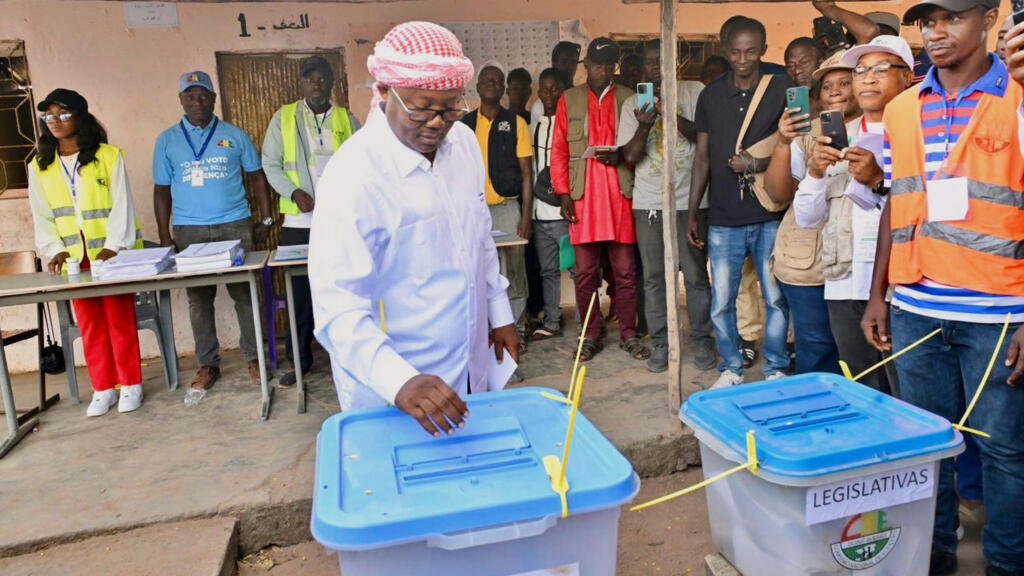
The Aug. 30 referendum, with counting completed and results confirmed in early September, passed with 70.42 percent of voters — 383,116 people — backing the constitutional changes, against 29.58 percent, or 160,954 votes, opposed. Official turnout was recorded at 62.63 percent of the country's 914,428 registered voters, with 95 percent of ballots cast deemed valid. But the figures themselves became a point of contention: international observers reported that polling stations were largely empty on voting day, a discrepancy opposition figures say undercuts the credibility of the official turnout numbers even as the transitional government has defended the count as legitimate.
From Coup to Constitution
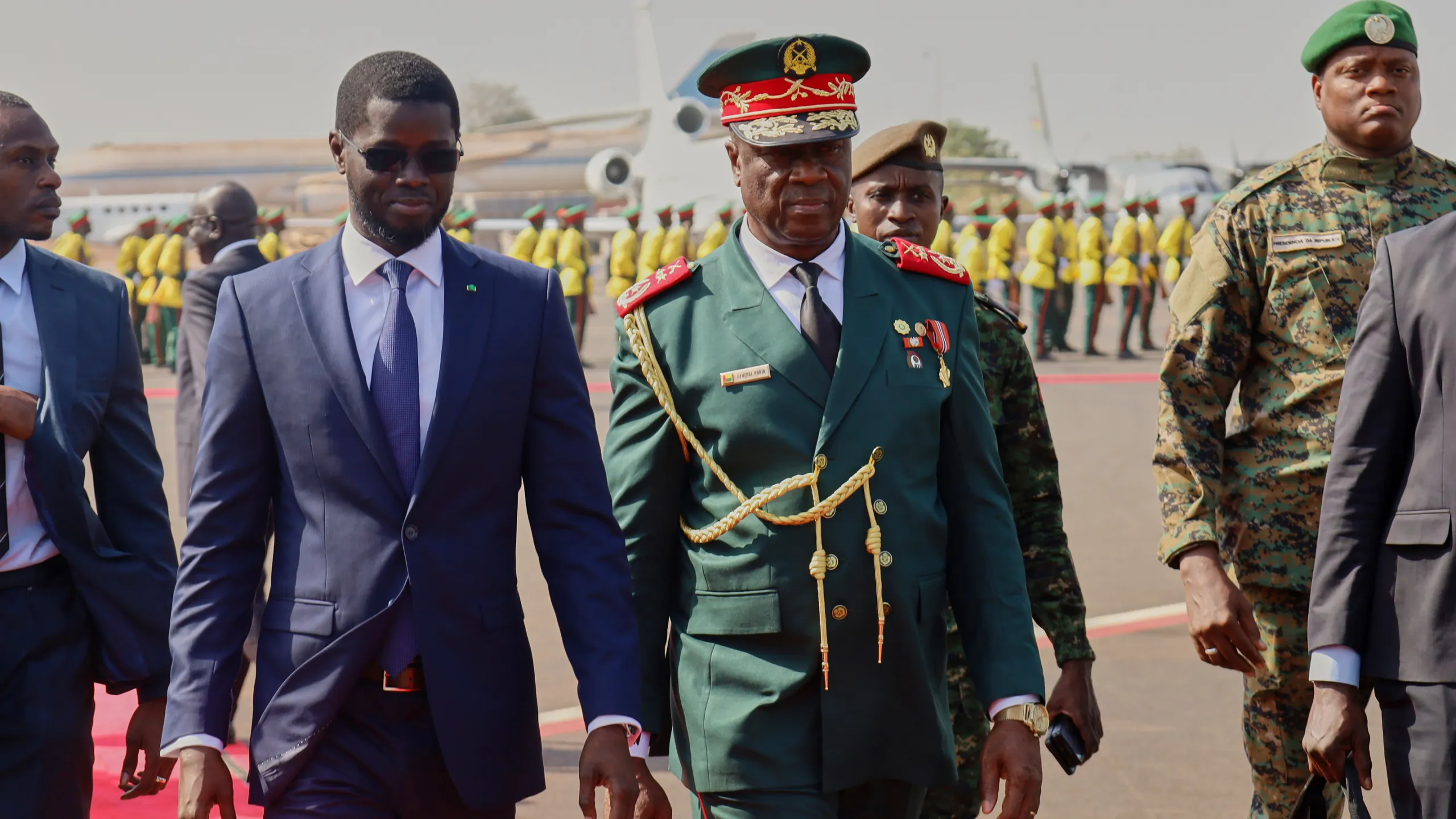
The referendum is the latest chapter in a crisis that began on Nov. 26, 2025, when the country's military high command seized power in a lightning coup, toppling President Umaro Sissoco Embaló just a day before results were due to be announced from a general election held days earlier. Soldiers seized ballots and destroyed servers holding the vote tally, according to accounts of the takeover, preventing Guinea-Bissau's electoral commission from ever completing that count. Major-General Horta Inta-A Na Man was installed as the country's interim president in the coup's immediate aftermath, and the junta held a press conference in mid-December to lay out its initial plans for a transition back to civilian rule.
The Economic Community of West African States, the regional bloc that has grown accustomed to responding to coups in recent years, condemned the takeover and demanded a swift restoration of constitutional order, but it has not moved to impose the kind of sweeping sanctions it has used against juntas elsewhere in the region. Guinea-Bissau's transitional authorities moved relatively quickly to establish a roadmap: the National Transitional Council approved the outline of constitutional amendments on Jan. 14, and a presidential decree signed eight days later, on Jan. 22, set Dec. 6, 2026, as the date for new presidential and legislative elections — an 11-month transition period from the coup. Horta Inta-A Na Man announced on July 6 that the constitutional changes underpinning that new political order would first be put to a public referendum, which was then held on Aug. 30.
What the New Constitution Does
The changes voters endorsed represent one of the most significant restructurings of Guinea-Bissau's political system since the country's independence from Portugal in 1974. Under the new charter, the president gains the power to unilaterally appoint and dismiss the prime minister and cabinet ministers, and to create or abolish government ministries — authority that previously required greater involvement from parliament. The president also gains an expanded ability to dissolve parliament under specified conditions. Parliament itself will shrink substantially, from 102 seats to 65, while the number of electoral constituencies nationwide is being cut from 29 to 12. The new constitution also imposes stricter requirements on anyone seeking the presidency, including a five-year residency requirement and a candidacy deposit of $90,000, and requires political parties to demonstrate a minimum of 5,000 members with representation across multiple regions in order to remain legally registered. The changes additionally create a new Constitutional Court, a body that did not previously exist in Guinea-Bissau's judicial architecture.
Supporters of the transitional government argue these changes are necessary to end a cycle of institutional paralysis that has defined Guinea-Bissau's politics for decades — the country has experienced repeated coups and attempted coups since independence, and its presidents have frequently found themselves locked in standoffs with fractious, multiparty parliaments. Military officials have framed the referendum as a step toward stabilizing state institutions before power is handed back to elected civilians in December.

Opposition Warns of a Democratic Rollback
That argument has found little purchase with Guinea-Bissau's most established opposition party, the African Party for the Independence of Guinea and Cape Verde, known by its Portuguese acronym PAIGC, which called for a boycott of the referendum and has continued to denounce the outcome. Party officials argue the new constitution will "weaken the prime minister, the government, political parties and the legislature" by concentrating power in the presidency — the same office currently held, on a transitional basis, by the leader of the military that seized power less than a year ago. Bubacar Turé, a prominent Guinea-Bissau human rights leader, has criticized the process on procedural grounds as well as substantive ones, saying the transitional authorities failed to meaningfully consult civil society or opposition stakeholders before finalizing the text, and that campaigning against the changes — the "no" side of the referendum — was actively restricted in the weeks before the vote.
Those criticisms echo a broader regional pattern that has alarmed democracy advocates across West and Central Africa, where nine military coups have taken place since 2020, from Mali and Burkina Faso to Niger and, most recently, Guinea-Bissau and Madagascar. In several of those countries, juntas that initially promised swift transitions back to civilian rule have instead used referendums or constitutional rewrites to entrench military-aligned figures in power for years, a template that critics of Guinea-Bissau's transitional government fear may be repeating itself here, notwithstanding the concrete Dec. 6 election date now on the calendar.
The Road to December
With the constitutional framework now settled, attention turns to the mechanics of the December vote itself, which will be the first test of whether Guinea-Bissau's military rulers are prepared to hand power to a genuinely competitive, civilian-led government. The new rules — particularly the steep $90,000 candidacy deposit and the tightened residency requirement — could narrow the field of eligible presidential candidates considerably compared with the disrupted November 2025 election, raising questions about how open the contest will actually be. PAIGC and other opposition parties will also need to decide whether to participate fully in an election held under a constitutional order they boycotted and continue to reject, or whether further boycotts risk ceding the field entirely to candidates aligned with the transitional authorities.
Regional diplomats and international observers are expected to focus in the coming weeks on voter registration processes, candidate eligibility rulings under the new residency and financial requirements, and whether the transitional government follows through on commitments to allow international election monitoring — all factors that will shape whether December's vote is seen as a credible return to constitutional order or, as critics fear, a formalization of the power the military has held since last November. For a country whose modern political history has been defined by cycles of coups followed by uneasy returns to civilian rule, the coming ten weeks are likely to determine which pattern this transition ultimately follows.
A Junta Seeking International Legitimacy
Notably, the transitional government has not confined its efforts to domestic politics. Guinea-Bissau's leadership has separately signaled an interest in raising the country's international profile during the transition period, including reported ambitions around a bid for a rotating seat on the United Nations Security Council — an unusual move for a government that seized power unconstitutionally less than a year earlier, but one that officials frame as evidence of their commitment to reintegrating Guinea-Bissau into the community of nations rather than following the more isolationist path taken by juntas in Mali, Burkina Faso and Niger, all three of which have severed ties with regional and Western institutions since their own coups. Whether that diplomatic outreach succeeds may depend heavily on how credible December's election is judged to be by regional and international observers.
Analysts who study West Africa's recent wave of military takeovers caution that referendums held under transitional military authority — even those that meet formal turnout and approval thresholds — often struggle to establish lasting legitimacy if the opposition and civil society view the underlying process as coerced or unrepresentative. The gap between Guinea-Bissau's official turnout figures and observers' accounts of empty polling stations is precisely the kind of discrepancy that, in other recent African transitions, has later become a rallying point for opposition parties challenging the fairness of subsequent elections. With PAIGC and other opposition voices already on record rejecting the legitimacy of the constitutional changes, the transitional government's ability to persuade skeptics that December's vote will be free and competitive — rather than merely a ratification of decisions the junta has already made — will be the central test of whether Guinea-Bissau's transition ultimately strengthens or further erodes its democratic institutions.
Published By | News Editor