Written By | News Agencies
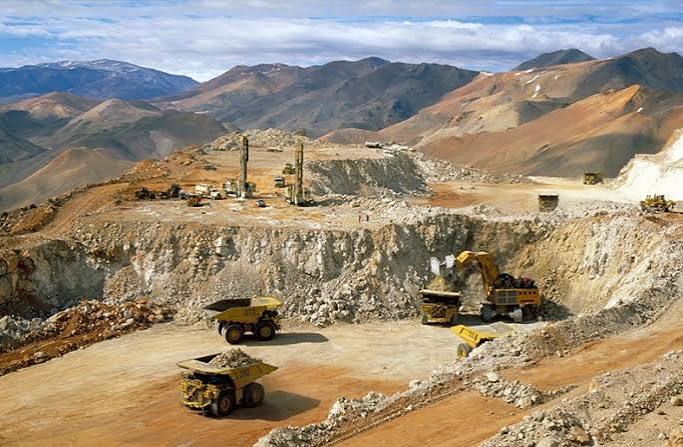
Gold has become the single biggest force in Tanzania's external accounts
East Africa Economic & Social Transformation
Tanzania's economy is entering a delicate second act. After a decade in which the country was best known for stability rather than spectacle, 2025 and 2026 have turned it into one of East Africa's more closely watched growth stories — powered overwhelmingly by a gold boom that is now, ironically, forcing a national debate about how not to become a one-commodity economy. Real GDP grew 6.0% in 2025, up from 5.5% in 2024, according to the African Development Bank's (AfDB) June 2026 Tanzania Economic Outlook, with agriculture, mining and construction driving output on the supply side and investment and consumption pulling demand. Yet the same report flags a moderation to 5.4% in 2026 — a reminder that the current windfall, tied heavily to gold prices and geopolitical shocks far from Dodoma, is not guaranteed to last.
A Boom Built on Bullion
Gold has become the single biggest force in Tanzania's external accounts. Gold exports reached roughly $4.75 billion in 2025, up 39% year-on-year, and by the year ending April 2026 gold had generated $5.269 billion in export earnings, up from $3.821 billion in the equivalent prior-year period, according to Bank of Tanzania data compiled by TanzaniaInvest. For the year ending May 2026, gold earnings hit roughly $5.5 billion. Minerals as a whole accounted for 52% of total export earnings in the period, a milestone that saw mining overtake tourism as the country's leading source of foreign exchange for the first time. On the fiscal side, mining-sector revenue reached TZS 1.394 trillion (about $558 million) in the 2025/26 financial year, beating the government's own annual target by 16.13%, African Business reported in early August 2026.
The scale of the windfall has revived a familiar debate. Officials at the Ministry of Minerals and independent economists alike are now pushing for greater local beneficiation, tighter state participation in future mining contracts, and faster progress on critical minerals such as nickel and graphite, so that Tanzania does not simply repeat the commodity-dependence patterns seen elsewhere on the continent. The AfDB's own financing priorities for Tanzania explicitly list "enhancing resource mobilization, particularly in the minerals sector" as a core plank of the country's development-financing strategy going into the second half of the decade.
Rails to Rwanda: The SGR as Regional Bet
Nowhere is Tanzania's infrastructure ambition more visible than in its Standard Gauge Railway (SGR) program. On July 20, 2026, President Samia Suluhu Hassan laid the foundation stone for the 506-kilometre Tabora–Kigoma section, a $2.74 billion investment intended to link the Port of Dar es Salaam to Lake Tanganyika and, from there, to markets in Burundi and the Democratic Republic of Congo. It forms part of a wider 2,800-kilometre SGR network — an estimated $7 billion undertaking — designed to connect Dar es Salaam with Mwanza on Lake Victoria and onward into Rwanda, Uganda and Burundi, positioning Tanzania as the logistics backbone for a landlocked cluster of neighboring economies.
The AfDB highlights the SGR as an example of blended finance in action, noting that Tanzania has used syndicated, de-risked structures to bring private capital into the project alongside public and multilateral funding — a model the Bank says needs to be scaled further if Tanzania is to close its financing gap without over-relying on sovereign borrowing. Domestic revenue collection, at 16.1% of GDP, remains below regional peers, a constraint the AfDB attributes to a narrow tax base, high informality and limited capital-market depth. The railway is also being woven into the tourism pitch: operators around Mikumi National Park, for instance, are planning a new SGR access gate at Kilosa that would cut travel distance to the park to just 19 kilometres, part of a broader plan to use the faster Dar es Salaam–Dodoma rail link — now roughly three hours versus up to ten by road — to open new domestic and cross-border tourism circuits.
Poverty Is Falling, but Unevenly
The social ledger shows genuine, if incomplete, progress. The AfDB's 2026 outlook puts extreme poverty at 35% in 2025, down from 41% in 2020 — a meaningful five-year decline, though still one of the higher rates among Tanzania's East African peers. Inequality remains stubborn, with a Gini coefficient of 0.44, which the Bank attributes to low agricultural productivity and constrained job creation. Youth unemployment stands at an estimated 10.0%, and the government's response has centered on promoting agricultural value chains, human-capital investment and expanded social protection — though the World Bank's Tanzania Mainland Poverty Assessment work has previously cautioned that growth of this kind, concentrated in capital-intensive sectors like mining and construction, does not automatically translate into broad-based job creation for the roughly two-thirds of Tanzanians who still depend on agriculture.
Agriculture itself remains a genuine bright spot within the diversification story: alongside gold, higher exports of agricultural products and improved tourism earnings helped narrow Tanzania's current account deficit from 2.9% of GDP in 2024 to 2.4% in 2025, per the AfDB, with international reserves rising to 4.9 months of import cover, up from 4.1 months a year earlier. That reserve cushion, combined with a banking sector where private credit expanded 20.3% in 2025 and non-performing loans fell from 4.4% to 3.1%, gives Tanzania more room to absorb shocks than many of its neighbors currently enjoy.
The LNG Question Mark
The most consequential unresolved file in Tanzania's economic transformation remains liquefied natural gas. Tanzania holds proven natural gas reserves of roughly 57 trillion cubic feet, with at least 49.5 trillion cubic feet located offshore in the Indian Ocean, and has spent years negotiating a landmark LNG processing plant — variously priced at $30 billion to $42 billion depending on final configuration — that would rank among the largest single foreign investments in East African history. Yet the project has repeatedly slipped: key host-government agreements needed to unlock construction were delayed again in 2024, and as of mid-2026 there is still no confirmed final investment decision. For a government leaning hard on gold and rail to power near-term growth, LNG represents the next-decade wildcard — a potential transformation of the fiscal base for the Lindi region and the country as a whole, if and when commercial terms are finally locked in.
Regional Integration and the Road Ahead
Tanzania's fiscal deficit widened from 3.2% of GDP in 2024 to 3.4% in 2025, reflecting election-related and infrastructure spending, and is projected to hold near 3.4–3.5% of GDP through 2027. Public debt rose from 46.7% of GDP in 2023 to 47.6% in 2024 but remains at moderate risk of distress, according to the AfDB, which also flags Middle East-related geopolitical shocks, climate vulnerability and lingering socio-political tensions as the principal downside risks to the 5.4% growth forecast for 2026 and the 6.1% rebound projected for 2027. Inflation, meanwhile, is expected to tick up modestly to 3.8% in 2026 before easing to 3.7% in 2027, staying within the Bank of Tanzania's target band.
As East Africa's largest economy by land area and a founding logistics hub for the East African Community, Tanzania's bet is that gold-driven fiscal space, SGR-enabled regional trade, and continued agricultural and tourism recovery can be stitched together into a more resilient growth model — one less exposed to any single commodity cycle — before the current mining windfall inevitably cools. Whether that diversification happens fast enough to meaningfully dent poverty and youth unemployment over the next three to five years remains the central open question for policymakers in Dodoma.



