GLASGOW, SCOTLAND
GLASGOW, Scotland — Three years ago, the Commonwealth Games were, by most reasonable accounts, dying. The Australian state of Victoria had walked away from its hosting rights in July 2023 after the projected bill for the 2026 Games ballooned from an already startling AU$2.6 billion to more than AU$7 billion, a figure an independent inquiry later described as "overstated and not transparent." Victoria's exit triggered global outrage, a scramble inside the Commonwealth Games Federation, and, eventually, a AU$380 million compensation payment. For a while, it looked like the 96-year-old multi-sport event — older than the Olympics' modern television era, a fixture of national identity from Kingston to Kuala Lumpur — might simply cease to exist.
Instead, Glasgow said yes. And on Tuesday, as the Scottish host city entered day five of competition with 27 gold medals still up for grabs, the Games it built on a shoestring were doing something few people predicted back in 2023: working.
A £150 Million Answer to a £5 Billion Question
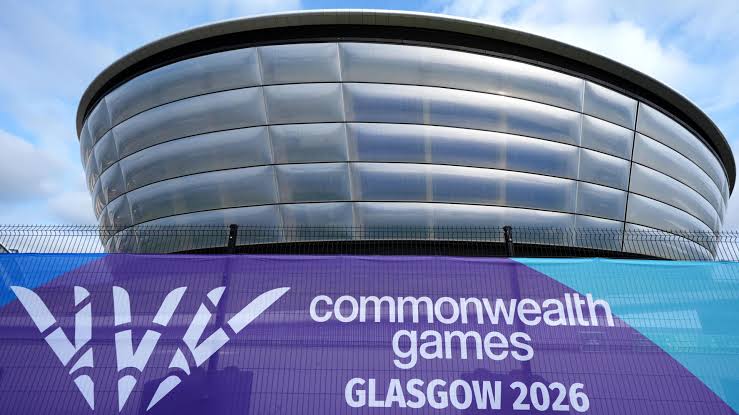
The numbers tell the story on their own. Glasgow's organizing budget for 2026 sits at roughly £150 million — about 4 percent of the sum Victoria's premier at the time, Daniel Andrews, cited when he pulled the plug on the Australian edition. There was no new stadium build, no Olympic-style village constructed from scratch, no nine-figure opening-ceremony spectacle. Organizers leaned on venues Glasgow already had lying around from the 2014 Commonwealth Games and the 2018 European Championships: the Emirates Arena, the Sir Chris Hoy Velodrome, the Scottish Event Campus's Hydro arena, Scotstoun Stadium. Four venues in total, all within a few miles of each other, all paid for long before anyone in Glasgow City Chambers said yes to hosting again.
The tradeoff was scale. Where Birmingham 2022 staged 19 sports, Glasgow 2026 is running just 10 — badminton, cricket, hockey and rugby sevens were all cut from the program, along with several others, to fit the reduced footprint and budget. Critics warned a slimmed-down Commonwealth Games risked feeling like a diminished one. Six days in, that hasn't been the dominant story. The dominant story has been a city that treated its financial constraints as a design brief rather than an excuse, and built what organizers are calling — with a straight face — a template for how mid-size cities might keep the Games alive for another generation.
The opening ceremony set the tone: a pared-down, self-aware show built around the theme of reinvention rather than an attempt to out-spectacle Birmingham or Gold Coast. In one of its more theatrical touches, King Charles and Queen Camilla made their entrance into the Hydro through a police-box-style structure nodding to "Doctor Who" — the BBC sci-fi series filmed in nearby Cardiff and beloved across the Commonwealth — a wink that captured the evening's determination to be charming rather than expensive.
Day Five: Golds, History, and a 20-Year Wait Ends
By the time competition resumed Tuesday morning, the Games had already produced one of their most emotional moments. In the para athletics women's shot put F57, India's Sharmila Dhankar won gold — ending a 20-year drought since India last claimed a Commonwealth Games para athletics medal of any color, and making her the country's first-ever para athletics gold medalist at the Games. It's the kind of statistic that can sound abstract in a results sheet and land like a thunderclap in person: two decades of near-misses and overlooked programs, resolved in a single throw.
Tuesday's schedule was packed with similarly high-stakes moments. Distance runner Gulveer Singh, the Asian champion and national record holder in the men's 10,000 meters, lined up in a direct final chasing his first Commonwealth Games podium finish. India's boxing team sent five fighters into quarterfinal bouts — Preeti Pawar (women's 54kg), Priya Ghanghas (women's 60kg), Parveen Hooda (women's 65kg), Jadumani Singh Mandengbam (men's 55kg) and Kapil Pokhariya (men's 90kg) — each one win away from a guaranteed medal. In the pool, the largest swimming session of the Games featured ten finals, including appearances from Australian Olympic champion Kyle Chalmers and England's double Olympic champion Matt Richards, both racing in front of a Glasgow crowd that has, by most accounts, shown up in numbers organizers didn't dare promise.
On the track, day five also delivered two of the meet's marquee results: the men's and women's 100-meter finals, crowning the fastest man and woman in the Commonwealth. Weightlifting and bowls each produced three golds of their own, part of a 27-gold slate that organizers pointed to as evidence that a smaller Games doesn't have to mean a smaller stage for its athletes.
"It's a fascinating case study in how to rapidly craft a major event on the cheap without any government funding" — assessment echoed across UK sports press this week, describing Glasgow's approach to hosting on roughly a twentieth of Victoria's abandoned budget.

What the Comeback Means
For India, the Games have already produced a ten-medal haul through day four — two golds, five silvers, three bronze — with weightlifters Gyaneshwari Yadav (silver, women's 53kg), Bindyarani Devi (bronze, women's 58kg) and Valluri Ajaya Babu (silver, men's 79kg) adding to a program that has quietly become one of the country's deepest at any recent Commonwealth Games. For the host nations of the UK — Scotland, England, Wales and Northern Ireland compete separately, as is Commonwealth Games tradition — the event has doubled as a low-stakes dress rehearsal for how much crowd, broadcast and civic enthusiasm a leaner, more frequent hosting model might sustain.
The bigger question hanging over Glasgow's Hydro and Emirates Arena this week isn't really about medals at all. It's about whether the Commonwealth Games Federation, and the roughly 70 nations and territories that make up its membership, now have a workable answer to a question that looked unanswerable in 2023: what do you do when hosting an international multi-sport Games has become too financially radioactive for governments to touch? Glasgow's answer — use what you have, cut what you must, and let the athletes carry the spectacle instead of the architecture — is unglamorous. It also, six days in, appears to be working.
What This Means for Fans
For everyday sports fans, Glasgow 2026 is a reminder that some of the most compelling storylines in global sport this summer aren't happening at venues that cost billions to build. They're unfolding in refurbished velodromes and long-standing arenas, in front of crowds that showed up because tickets stayed affordable and the city stayed accessible. If you've been skipping the Commonwealth Games coverage because the roster of sports looks thinner than past editions, day five is worth a second look — a 20-year wait ending in a single para athletics final is precisely the kind of moment made-for-billion-dollar ceremonies sometimes crowd out.
The Games run through August 2, with the closing ceremony set to close the book on what began three years ago as a hosting crisis and is ending, by most measures on the ground in Glasgow this week, as something closer to a proof of concept.
Published By | Sports Editor