Written By |
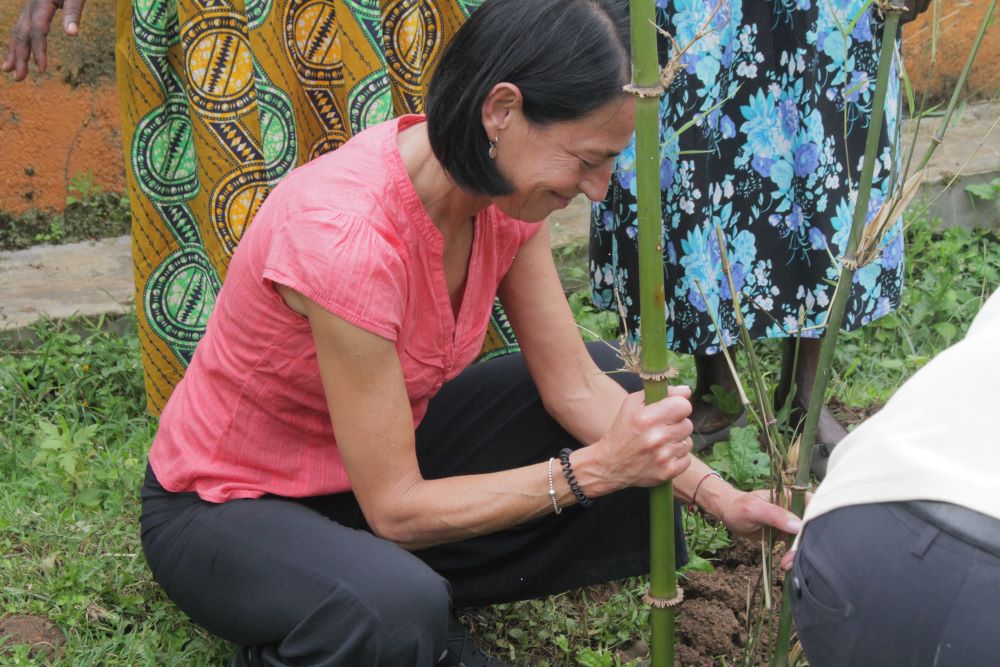
McCallum Sabine, UNEP's Program management officer plants her own bamboo in Bududa as she rallied locals to embrace local conservation interventions to address climate change.
In the face of the distending climate crisis, the United Nations Environment Programme (UNEP) and Uganda Wildlife Authority (UWA) have partnered in a campaign to plant bamboo in the Mt. Elgon area.
This fast-growing, weather friendly plant is being hailed as a potential game-changer in the fight against climate change.
The UNEP’s Programme Management Officer, Sabine McCallum arrived in Uganda last week to officially launch the bamboo growing initiative.
The coveted event took place on Friday 10th, May at the slopes of Mount Elgon, in the village of Lutsakha, Matuwa Parish, Bushiyi sub county, Lutsekhe county in Bududa district.
“We had not been in the quest for the most viable interventions but surprisingly enough, the little-known bamboo is coming in as a crucially reliable ally in the fight against Climate Change,” McCallum remarked as she unveiled the initiative.
Preventing Soil Erosion
While rallying locals to embrace bamboo growing, McCallum waxed lyrical of local women-led agency, A.W Bamboo Enterprise founded by Irene Walimbwa for championing soil retention among others.
“Bamboo's extensive root system also helps to prevent soil erosion, which is a major problem in many developing countries like Uganda and in particular, here in Bududa and the entire Elgon zone,” McCallum said.
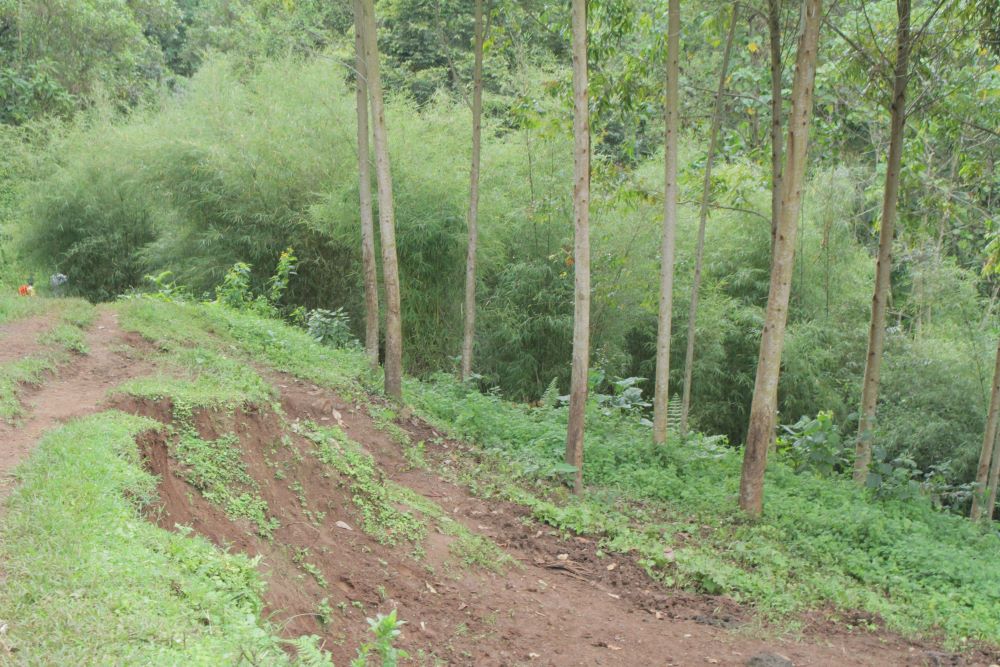
Bamboo trees, believed to be potential local and global climate change solution.
“By stabilizing soil and preventing landslides, bamboo can help to protect vulnerable ecosystems and prevent the loss of biodiversity… Adaptation to climate change and its sustainability must be local. It can only be local. The reason we are inclined to this local driven conservation is because the risks and impacts are felt locally. Climate change can better be effectively mitigated by local people using indigenous initiatives in the best way they historically know their villages and ecology.”
Absorbing Carbon Dioxide and local support
Bamboo is incredibly effective at absorbing carbon dioxide from the atmosphere, with some species able to absorb more carbon dioxide than many types of trees.
According to Josephine Kisaka, the head of research at A.W Bamboo Enterprise, “As bamboo grows it absorbs carbon from the atmosphere, with one hectare of bamboo sequestering about 17 tonnes of carbon a year.”
This is especially important in developing countries, where deforestation and land degradation are significant contributors to greenhouse gas emissions.
Walimbwa, the director of A.W Bamboo Enterprise, expressed gratitude to UNEP for identifying and earmarking her contribution which started in 2021.
“I’m very humbled by the coming of McCallum to Uganda to launch and encourage both our communities and leaders to consider bamboo as a vital tool in the fight against climate change,” Walimbwa, 63, said.
“But bamboo's benefits don't stop there. Bamboo is a vital source of income for local communities.”
In 2021, UWA under the regional leadership of Fred Kiiza, Chief Warden Mt. Elgon National Park Conservation gave Walimbwa 112.5 acres of land for bamboo growing.
To ensure community involvement, Walimbwa gave each interested resident a piece of land for bamboo growing.
“Initially, people could not understand the idea of bamboo farming because from time immemorial, our people were used to harvesting it from the wilderness,” she said.
"This journey began with the cultivation of bamboo shoots in a modest space. With determination and meticulous care, we have transformed a neglected piece of land into a thriving bamboo plantation," she said.
Bamboo also has other properties that make it as or more attractive than go-to building materials.
It’s cheap and light, so it’s easier to transport and safer to work with and, as bamboo fibres are strong, it can have an impressively high tensile strength.
A Win-Win Solution
During the launch, Bududa district leadership vowed to continue supporting the implementation of the bamboo initiative in the best way possible.
“As a district grappling with landslides and flooding for a long period of time now, we are grateful,” Salim Ngati, an official from Bududa district said.
Vincent Guloba, from UWA, revealed that the reason they supported the project is because through scientific research, they realized that while the world continues to “grapple with the challenges of climate change, bamboo is an unlikely hero that deserves our attention.”
Why Bududa?
Bududa is an area within Mt. Elgon area where several people have died in landslides over the last few years.
In 2010, the Government had to relocate and resettle more than 3,000 people from Bududa to Kiryandongo district since villages were ravaged by landslides.
The Government has also relocated thousands from Bududa to Bunambutye in neighboring Bulambuli in recent years.
Currently the district is reporting increasing volume of water in the water shades, streams and rivers which often trigger the disastrous occurrences.
It is such risks that drove the 2022 UN High-Level Meeting on Sustainable Mountain Development to devise means of protecting the trans-boundary Mt. Elgon which Uganda shares with Kenya.



