Written By | Staff Writer
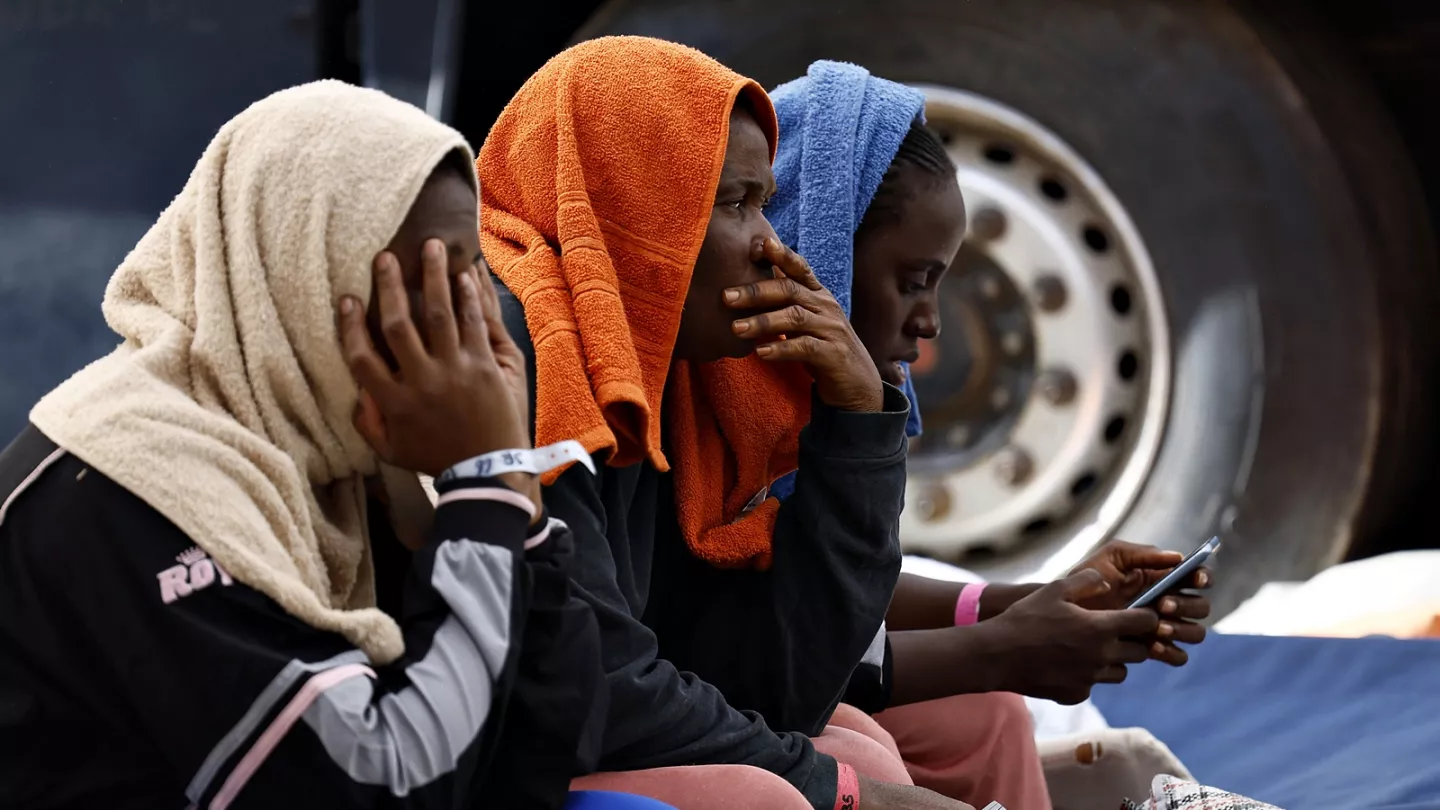
Amnesty International, citing reports, says the plan is for a Ugandan centre for up to 10,000 rejected asylum seekers by 2027.
POLITICS
Uganda is at the centre of a politically sensitive negotiation with several European governments over a facility that could house up to 10,000 migrants whose asylum claims have been rejected in the European Union. The talks, which have moved from a 2025 memorandum with the Netherlands to a wider bilateral process involving five EU states, resurfaced in Ugandan headlines this week, with the Daily Monitor reporting that the EU is considering sending 10,000 asylum seekers to Uganda. The reporting available to this briefing does not describe any signed agreement, and the details below reflect what has been published to date.
What is being discussed
The idea is known in Brussels as a “return hub”: a centre in a third country where people who have exhausted their asylum options in Europe can be held or processed while their return to a country of origin is arranged. According to EUobserver, the proposed Ugandan centre would hold up to 10,000 migrants, and the goal is for many of them to return voluntarily to their home countries rather than remain in Uganda. Amnesty International, citing reports, says the plan is for a Ugandan centre for up to 10,000 rejected asylum seekers by 2027.
The Netherlands moved first. EUobserver reports that the Netherlands and Uganda signed a memorandum of understanding, described as a letter of intent, on a return hub in September 2025. By August 2026, four other governments — Germany, Austria, Denmark and Greece — were also in talks with Kampala, and reports described the Uganda discussions as being at an advanced stage. The negotiations are bilateral, with each of the five states dealing separately with Ugandan officials. Their migration ministers were scheduled to meet in Copenhagen on 4 September 2026 to review progress. This briefing found no published account of what was decided at that meeting.
Not every EU member is on board. EUobserver says France and Spain are opposed to return hubs. The European Commission, for its part, has kept its distance: spokesman Guillaume Mercier said in August, “We are not involved in the discussions on the hubs.” Amnesty International reported the same Commission position in early September.
The legal backdrop
The talks are unfolding alongside a change in EU law. Amnesty reports that the European Parliament approved the EU Return Regulation in June, and that it still needs final approval from the European Council. Once in effect, the regulation would provide a legal basis for hubs outside EU territory. The Commission has said such hubs may only be set up with third countries that respect international human rights standards, including the principle of non-refoulement, which bars returning people to places where their life or freedom would be at risk.
That condition is exactly where critics are focusing. On 3 September, two days before the ministers were due to review the plans, Amnesty International warned that return hubs in Rwanda and Uganda risk becoming “cruel black holes” for human rights. Eve Geddie, director of Amnesty’s European Institutions Office, said the talks rest on “deep power asymmetries” between European governments and the host countries. Amnesty specifically flagged Uganda’s Anti-Homosexuality Act, which criminalises consensual same-sex conduct and makes “aggravated homosexuality” a capital offence, as a risk for any LGBTQ migrants who might be sent there.
Amnesty also pointed to a precedent. In 2023 the UK Supreme Court unanimously found substantial grounds to believe that asylum seekers sent to Rwanda would face a real risk of refoulement, which made the UK’s Rwanda policy unlawful. Rwanda, which is also being discussed as a possible hub location, has so far characterised its own talks as preliminary: government spokesperson Yolande Makolo said in August that no agreement had been reached.
Uganda’s own position and interests
Uganda is not a newcomer to hosting displaced people. EUobserver, citing the United Nations, notes that the country already hosts close to two million refugees, and it is frequently cited in Europe as a country with an open refugee policy. For the government in Kampala, a hub deal would be a diplomatic and potentially financial opportunity, though the reports reviewed here do not specify what Uganda would receive in return. Ugandan officials have not been quoted at length in the coverage found, and EUobserver describes the counterparts in Kampala only as unnamed officials.
What the Ugandan public is being told is therefore largely second-hand, filtered through European reporting and rights groups. That gap matters. A facility of up to 10,000 people would be a significant undertaking, raising questions about where it would be located, who would run and fund it, what legal status residents would have, and how long they could be held. None of these questions is answered in the published material reviewed for this briefing.
The domestic political context
The hub talks land at a moment when Uganda’s human rights record is already under scrutiny at home. The Monitor’s politics coverage on 9 October reported that the Leader of the Opposition, Joel Ssenyonyi, asked the Commonwealth to press the government on democracy and human rights. The same page reported that lawyers are seeking a new judge for the habeas corpus case of Sam Mugumya, an opposition aide whom the army and police both said in 2025 they were not holding, and for whom a court had ordered the government to produce him.
These threads are distinct from the hub negotiations, but they shape how the proposal is read. European governments say any hub must meet human rights standards; opposition figures and rights groups argue that Uganda’s record on detention, disappearances and civic freedoms makes that assurance hard to accept at face value. The government’s likely counter-argument, consistent with its long-standing refugee policy, is that Uganda is a responsible host with a record of sheltering large numbers of people.
Why it matters
For the five EU governments, return hubs are a way to show voters that rejected asylum claims lead to removals. For Uganda, the deal could bring leverage and money while exposing it to reputational and legal risk. For the people who might end up in such a centre, the stakes are far more direct: where they live, what protections they have, and whether they can be sent to places they fear.
There is also a European institutional dimension. The Commission says it is not part of the talks, yet the regulation that would legitimise the hubs is moving through the EU’s own process. If the Council gives final approval, member states would have a clearer legal footing, and the Commission would have to judge whether a given partner country meets the human rights test. That judgement would be politically fraught in Uganda’s case.
What to watch next
Several developments could settle the story. The first is whether the five governments announce an outcome from the Copenhagen meeting or sign agreements with Kampala; so far none has been reported in the sources reviewed. The second is the Council’s decision on the Return Regulation. The third is any legal challenge, in European courts or Ugandan ones, modelled on the Rwanda litigation in the United Kingdom. The fourth is whether Ugandan officials and Parliament give a fuller public account of the terms, including costs, capacity, oversight and the status of residents. Until then, the proposal remains a set of reported talks rather than a finalised arrangement.



