SCIENCE
Imagine a childhood bruise that never heals right — instead, it slowly hardens into bone. A stiff shoulder that never loosens again. A jaw that locks a little tighter every year until eating and speaking themselves become a daily battle. This is life with fibrodysplasia ossificans progressiva, or FOP, one of the rarest and cruelest genetic disorders known to medicine, affecting roughly one in every two million people born. For the first time in the history of a disease first documented more than 300 years ago, doctors say they may finally have a drug that can slow it down — and the Food and Drug Administration is expected to rule on it before this month is out.
The Disease That Builds A Second Skeleton
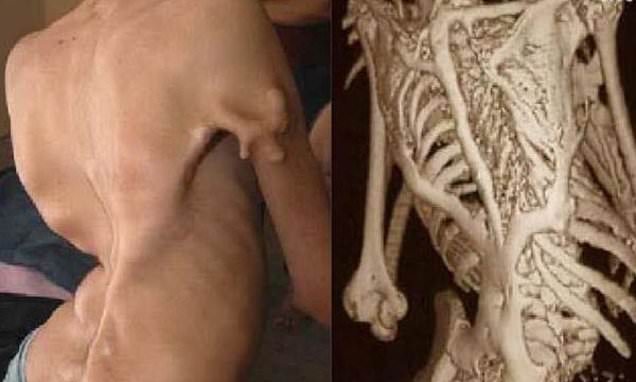
FOP is caused by a mutation in the ACVR1 gene, which causes the body to misread ordinary injury signals — a bruise, a fall, even a routine injection — as instructions to build bone. Instead of healing normally, injured muscle, tendon, ligament and connective tissue gradually calcify into a second, useless skeleton that fuses joints in place one at a time, permanently. Doctors call these episodes "flare-ups," and they can be triggered by something as minor as a child bumping into a doorframe or receiving an intramuscular shot.
Once the bone forms, it never goes away, and attempting to surgically remove it typically backfires spectacularly — the trauma of the operation itself triggers even more explosive new bone growth, which is why surgeons are trained to avoid touching FOP patients unless there is truly no other option. By age 30, most patients need a wheelchair. Many eventually lose the ability to open their jaw more than a few millimeters, making it difficult to eat or receive even basic dental care. Average life expectancy hovers between 40 and 56 years, with thoracic insufficiency — the ribcage itself fusing and restricting the lungs — among the leading causes of death.
Decades Without Hope
Because FOP is so rare — only a few thousand confirmed cases exist worldwide — it has historically attracted little pharmaceutical investment. For decades, the only tools available to patients were pain management during flare-ups and a long list of things to avoid entirely: no muscle injections, no invasive dental work without extreme precaution, no contact sports, and in some cases, no vaccines given by the standard route. Every fall, every accidental knock against furniture, carried the real risk of triggering a fresh wave of irreversible bone growth.
Patient advocacy groups have spent years lobbying for research funding, and the discovery of the ACVR1 mutation back in 2006 finally gave scientists a specific molecular target to aim at. But turning that discovery into an actual drug took nearly two more decades of painstaking research.
A Skeleton In A Museum, A Warning For Doctors
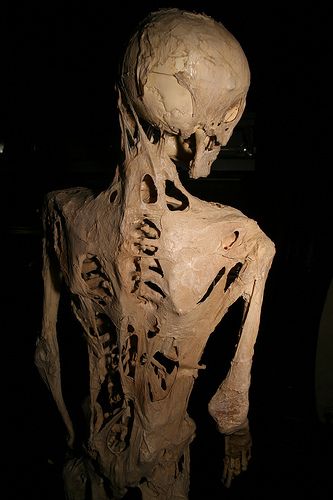
The disease's grim signature has been documented in medical literature since the late 17th century, but it wasn't formally named until the 1970s. One of the most famous cases in medical history belongs to Harry Eastlack, an American man who died of complications from FOP in 1973 at age 39; his skeleton, almost entirely fused into a single rigid structure by the time of his death, has been preserved and studied by researchers ever since at the Mütter Museum in Philadelphia, offering scientists a rare physical record of just how completely the disease can remake the human body over a lifetime.
That grim legacy is precisely why doctors are trained to treat FOP as a surgical emergency in reverse — the instinct to intervene, biopsy, or operate is almost always the wrong one. Even routine dental work has to be carefully planned around the risk of triggering a flare-up in the jaw, and physicians unfamiliar with the condition have, tragically, made patients dramatically worse by ordering a routine muscle biopsy to investigate an unexplained lump, not realizing the lump was already the disease announcing itself.

The Trial That Changed Everything
That drug is garetosmab, an antibody developed by Regeneron Pharmaceuticals that blocks a signaling protein called Activin A, which company researchers identified as a key driver of abnormal bone formation in FOP. In the Phase 3 OPTIMA trial, garetosmab didn't just slow the disease — it very nearly stopped it in its tracks. Patients receiving the drug saw a 90 percent or greater reduction in new heterotopic ossification lesions at 56 weeks compared with placebo, and more strikingly, a reduction of more than 99 percent in the total volume of new abnormal bone that formed.
The results were considered so overwhelming that the trial's Independent Data Monitoring Committee recommended patients still receiving placebo be switched over to the real drug as quickly as possible — a move typically reserved for trials where withholding treatment starts to look ethically indefensible. Some patients with the most severe, advanced forms of FOP did pass away during the trial, but investigators attributed those deaths to the underlying severity of their disease rather than to the treatment itself.
How The Drug Works
Garetosmab was built using Regeneron's proprietary VelocImmune antibody discovery platform, the same in-house technology behind several of the company's blockbuster drugs. By neutralizing Activin A, the antibody appears to interrupt the faulty signaling cascade that tells the body to convert soft tissue into bone after an injury — effectively correcting, at least partially, the biological mistake hardwired into patients' DNA by their ACVR1 mutation.
It's delivered as an injection, and unlike surgery, it doesn't carry the paradoxical risk of triggering the very process it's meant to prevent. The FDA accepted Regeneron's Biologics License Application for Priority Review back in February 2026, with a target action date now set for this month — meaning a decision could land any day.
Expert Perspective
Rare disease specialists have been closely watching the garetosmab program for years, in part because so few FOP trials have ever produced results this dramatic. Regeneron's own scientists have described the Phase 3 data as demonstrating that the drug "prevents greater than 99 percent of abnormal bone formation," a figure that would have sounded like fantasy to physicians treating FOP patients a generation ago.
If approved, garetosmab would become the first and only therapy ever shown to meaningfully reduce new bone lesion formation in adults with FOP — a category of "first-ever" that is exceedingly rare even in a field as innovation-heavy as rare disease medicine. Patient advocacy organizations that have spent decades pushing for exactly this kind of breakthrough are watching the FDA calendar closely, aware that a positive decision this month could reshape the future for thousands of families who have had nothing to offer their children beyond caution and pain management.
What This Means For You
FOP itself is vanishingly rare, so the direct impact of this approval will be felt by a small, tightly-knit patient community rather than the general public. But the ripple effects could be broader. Activin A, the target garetosmab blocks, is involved in bone and muscle biology more generally, and researchers are already exploring whether therapies built on similar biology could help with other conditions involving abnormal bone growth or muscle wasting, including certain forms of injury-related heterotopic ossification seen in trauma and burn patients who have no genetic FOP mutation at all.
For families currently living with FOP, the practical guidance from patient groups remains the same regardless of the FDA's decision: avoid unnecessary injections and surgery, disclose the diagnosis to every healthcare provider before any procedure, and stay in close contact with a specialist familiar with the condition. Anyone with a family history of unexplained progressive stiffness, or a child born with the telltale sign of malformed big toes — present in nearly all FOP cases from birth — should ask a geneticist about ACVR1 testing. Early diagnosis, doctors say, is one of the few tools that has always been within reach, since it allows families to avoid the well-meaning but disastrous medical interventions that have historically accelerated the disease in misdiagnosed children.
Conclusion
For most of medical history, a diagnosis of fibrodysplasia ossificans progressiva has meant watching helplessly as a body slowly locks itself in place, with nothing doctors could do but try to prevent the next flare-up. That may be about to change. Barring an unexpected setback, the FDA's decision on garetosmab this month could mark the moment FOP stops being a disease with no treatment at all and becomes one with a real, evidence-backed way to fight back.
For a patient community that has waited more than three centuries since the condition was first described, and decades since the causative gene was identified, it would be hard to overstate what that shift would mean. Regeneron has not yet disclosed pricing, and rare-disease therapies of this kind often carry price tags in the hundreds of thousands of dollars annually, which means the fight over access and insurance coverage is likely to become the next chapter in this story the moment approval is granted. But for now, patients and families who have spent years bracing for the next flare-up are, for the first time, allowing themselves to talk about a different kind of future — one where the disease's progress can actually be slowed rather than simply endured.
Published By | Features Editor