Written By | Sports Desk
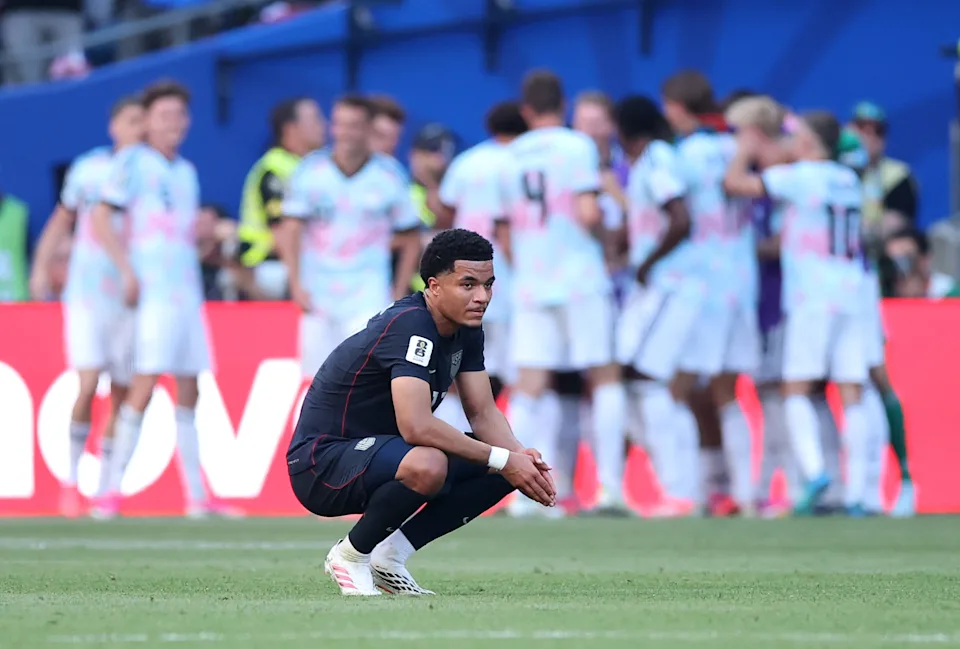
A promising home World Cup for the United States collapsed in a 4-1 Round of 16 defeat, as a Christian Pulisic ankle injury and a clinical Belgian side extinguished the host nation's hopes.
SEATTLE
A Golden Chance, Gone in a Flash
The United States men's national team entered the knockout rounds of its own World Cup with a country's expectations riding on its shoulders, and it left Seattle on Monday night with nothing but questions. In a 4-1 Round of 16 defeat to Belgium, the USMNT saw its most anticipated tournament in a generation end not with a signature moment of home-soil magic, but with a rout that exposed exactly how far the gap to the world's elite still runs.
The result sends Belgium through to a quarterfinal date with Spain on Friday. For the United States — co-host, alongside Mexico and Canada, of the largest World Cup in history, expanded to 48 teams for the first time — it means a summer of hard questions about a program many believed had finally arrived on the world stage.
Four Goals and One Freak Momentum Swing
Belgium struck first in the 9th minute through Charles De Ketelaere, silencing a raucous, sold-out crowd desperate for a run deep into July. The Americans answered almost immediately, with Malik Tillman curling home a free kick in the 31st minute to level the score and send the stadium into delirium. The lead lasted barely 120 seconds: De Ketelaere struck again in the 33rd minute, restoring Belgium's advantage before halftime and shifting the match's entire complexion.
The decisive blow came in the 57th minute, when a slip from goalkeeper Matt Freese left his net undefended and Hans Vanaken rolled the ball home to make it 3-1. Romelu Lukaku, introduced as the tournament's most feared finisher off the bench, sealed the result with a fourth goal in the 92nd minute, capping a night that swung from taut to lopsided in the space of a single half.
Pochettino's Reckoning
Manager Mauricio Pochettino did not look for cover after the final whistle. “We were not good enough today. We don't need to find another excuse,” he told reporters, adding that his team simply never found its footing. “From the beginning, we didn't connect with the game.”
Belgium were better than us, and that's it. This was very clear,” Pochettino said, a rare moment of blunt self-assessment from a manager who had spent the buildup to the tournament insisting his group was ready to compete with the sport's traditional powers on its own turf.
Pulisic's Quiet Exit
The night's cruelest subplot belonged to Christian Pulisic, the USMNT's talisman and AC Milan star, whose tournament ended in the 59th minute when he was forced off with a right ankle and knee injury. “I just totally twisted my ankle and my knee in one play,” Pulisic said afterward, visibly shaken by an exit that denied him any chance to influence the match's final half hour.
Even before the injury, Pulisic had struggled to make his customary impact, finishing with zero shots, zero chances created, and just a single touch inside the Belgian penalty box across his 59 minutes on the field. “I'm disappointed in myself,” he admitted, a sentiment that captured the broader mood around a squad that had carried far bigger expectations into the tournament than it managed to fulfill.
What a Home World Cup Was Supposed to Be
For a federation that has spent a decade selling the idea that hosting the World Cup would be the catalyst that finally pushed American soccer into the sport's first tier, Monday's defeat lands as a gut check. The 2026 tournament was designed as the ultimate proving ground: unprecedented home support, a golden generation of dual-national and Bundesliga- and Premier League-tested talent, and a federation that had invested heavily in the belief that this squad could contend deep into the knockout stage.
Instead, the Round of 16 has again proven to be the program's ceiling, just as it was in 2022. The difference this time is that there is no away-tournament excuse to lean on — the Americans lost this one in front of their own fans, on a stage built for them to shine.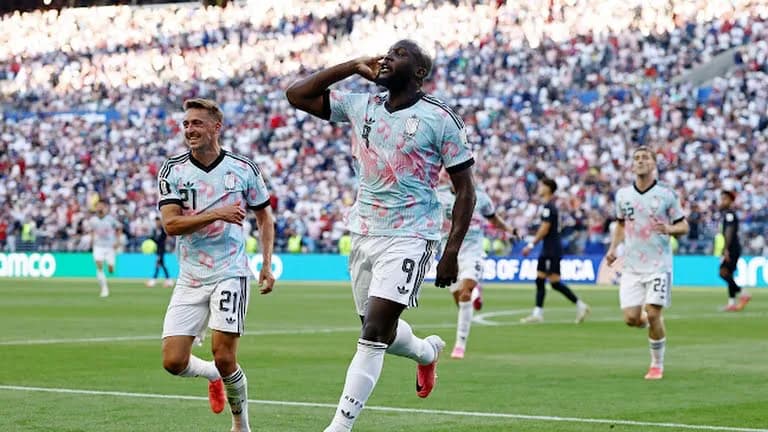
What This Means for U.S. Soccer
The immediate fallout will center on Pochettino's future and whether U.S. Soccer sticks with the Argentine coach through World Cup cycle planning, or whether Monday's lopsided scoreline becomes the final straw after a tenure that never quite delivered the tactical identity many hoped for. For a broader American sports audience newly tuned in to the World Cup, the loss is also a reality check: hosting the tournament guarantees attention, but not results, and the path to genuinely competing with the likes of Belgium, Spain, and Argentina still runs through years of development, not a single golden summer.
This marks the second consecutive World Cup in which the Americans have bowed out at the Round of 16, following the same fate at Qatar 2022, and it will renew long-running debates about player development pathways, the depth of MLS versus European-based talent, and whether the federation's investment in facilities and youth academies is translating into results on the biggest stage. Supporters who packed stadiums across the host cities this summer, many attending their first World Cup match in person, now face a familiar four-year wait to see whether this generation gets another crack at redemption.
For readers following along, there is still plenty of World Cup left to watch — Belgium's quarterfinal against Spain on Friday promises to be a heavyweight collision, and the tournament's second half will crown a champion from a field that, on this showing, the United States was not yet ready to join. The lesson from Seattle is a familiar one in American sports: opportunity and readiness do not always arrive on the same night.



